The Rimfire Report: Franklin’s Binary-Equipped F22 Pistol - First Look

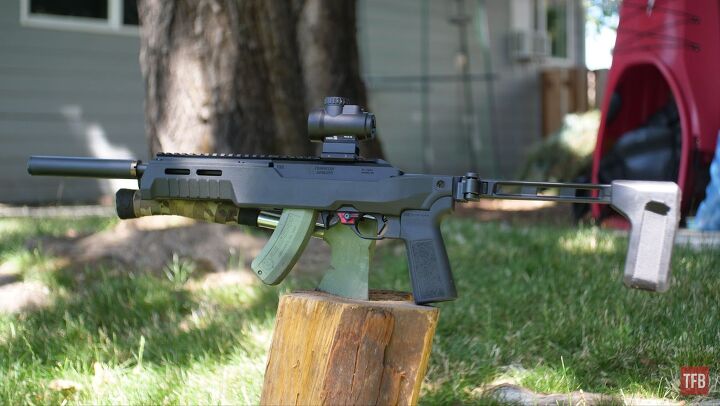
Hello and welcome back to another edition of The Rimfire Report! This ongoing series is all about the rimfire firearm world and all of its cool guns, ammo, shooting sports, and history. Today, we’re going to take a look at the recently released Franklin Armory Binary-Equipped F22 Pistol. This series is meant to give the end user a quick and easy way to the fun that binary triggers bring to a plinking day. Franklin Armory offered me the chance to check out the new series, and out of the two, I decided to check out the pistol. Today, I’ll walk you guys through a broad overview of the pistol before we take it to the range and see how it handles.
More Rimfire Report @ TFB:
- The Rimfire Report: Federal Champion 22WMR 40gr FMJ - Tested
- The Rimfire Report: Hornady 17 gr VMAX 17 HMR by the Numbers
- The Rimfire Report: The FRW Taquito 22 - The Silent Sizzle of 22LR

The Rimfire Report: Franklin’s Binary-Equipped F22 Pistol - A First Look
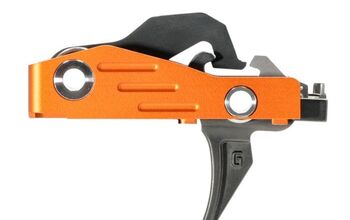
Franklin Armory’s F22 series, available in both pistol and rifle configurations, is a limited production run, according to their press release. This doesn’t mean Franklin is phasing out their binary triggers – far from it. Instead, the F22 seems like a test to see if shooters prefer a complete, factory-assembled firearm with a binary trigger over piecing one together themselves. While Franklin offers standalone BFSIII 22-C1 binary trigger systems, the F22 Pistol aims to deliver a hassle-free, optimized package for rimfire fans looking to spice up their plinking sessions without the added complication of assembling the damned thing (it’s not an easy task).
What’s in the Box?
Right out of the gate, the F22 Pistol feels like more than just a Ruger 10/22 Charger with a binary trigger slapped in. One common issue with binary triggers in 10/22 platforms is their lack of reliability, thanks to the vast array of OEM and aftermarket parts that can lead to inconsistent performance. When they work, though, binary triggers are an absolute blast at the range. The F22 seems designed to address this by offering a curated build that maximizes reliability and therefore fun. Here’s a breakdown of the F22 Pistol’s features that I think might help address some of those reliability issues:

SB Tactical Chassis and Folding Brace: A popular choice among 10/22 Charger owners, this chassis includes a 1913 folding brace, making the F22 a compact, packable option for range days or outdoor adventures. QD sling studs are standard at the rear, and the inclusion of a reduced-angle B5 grip here helps give you a better trigger position over a standard A2 grip. Plenty of M-LOK at the front for some extra accessories, too.

Franklin F22 Receiver: The in-house receiver features an integrated Picatinny rail that seamlessly extends via the SB Tactical chassis’ top rail, providing ample space for optics or accessories, and the F22 receiver is no doubt way more robust than a standard Ruger receiver.


8-inch Threaded Barrel: The barrel sports a standard taper, similar to a Ruger 10/22 Charger, and comes with an A2 flash hider (more of a glorified muzzle protector). While it’s unclear who manufactures the barrel, it’s suppressor-ready – I mounted an ultra-lightweight Fletcher Rifle Works Taquito 22 suppressor for testing.

Enhanced Components: The F22 includes an oversized knurled charging handle, auto bolt release, extended magazine release, and an upgraded firing pin for more reliable ignition even when the gun is dirty.

Every element feels intentionally built around the binary trigger, which should mean a more uninterrupted shooting experience when using the binary trigger. I believe the inclusion of a suppressor, especially for the pistol variant, might almost be a necessary inclusion, as it provides a bit more back pressure to help cycle the system in case of a slightly underloaded cartridge - a very common thing in most bulk rimfire ammo.

Binary Triggers in a Forced-Reset World
Binary triggers, like Franklin’s BFSIII, allow for a round to fire on both the pull and release of the trigger, delivering high rates of semi-auto fire in a controlled manner compared to bump firing. While I find binary triggers a bit gimmicky in centerfire firearms, they’re an absolute riot in .22LR platforms. Compared to forced-reset trigger (FRT) conversions for .22LR, which I’ve found to be about 80% reliable at best, the binary system shines for its simplicity and, most importantly, its ability to work very well in 10/22s. It’s all about learning your gun’s rhythm and running it at the right pace, and of course, having a clean and well-put-together gun. Whether the F22 Pistol delivers on that promise remains to be seen – we’ll put it through its paces at the range in the next Rimfire Report.

Thoughts Going Forward
The F22 Pistol feels like a thoughtful, purpose-built platform that takes the guesswork out of enjoying a binary trigger in a .22LR firearm. With its curated components and focus on reliability, it should prove to be a more fun, hassle-free plinking experience. That said, with the rise of FRT-style triggers, I’m curious: do you still see the appeal in binary trigger systems? Have you tried Franklin’s BFSIII or other binary setups? Drop your thoughts below – I’d love to hear from you!

Thanks for joining me for another Rimfire Report. Stay tuned for our range test of the F22 Pistol, and we’ll catch you next week!


Reloader SCSA Competitor Certified Pilot Currently able to pass himself off as the second cousin twice removed of Joe Flanigan. Instagram: https://www.instagram.com/ballisticaviation/
More by Luke C.












Comments
Join the conversation
1022 ART. (Ruger 10/22 FRT) is going to eat that binary's lunch. :/