Armenia’s New Machine Gun

This year marked the first military parade in a decade in Armenia for the Republic Day, on 28 May. The parade offered a clear glimpse into the country’s changing defense posture, as Armenia showcased a range of newly acquired weapons amid a broader effort to reduce its reliance on Russian arms and ammunition while modernizing.

FN Herstal Brings Long Rail, Modern Ergonomics to the FN MAG GPMG

FN Herstal has announced the FN MAG TACTICAL with Long Rail, the latest evolution of the company's long-serving general purpose machine gun platform. The update introduces a Long Rail Conversion Kit engineered to bring modern ergonomics and dual day/night optic capability to one of the most widely fielded GPMGs in history.

POTD: M240B Machine Guns at Sea With Marine Expeditionary Unit
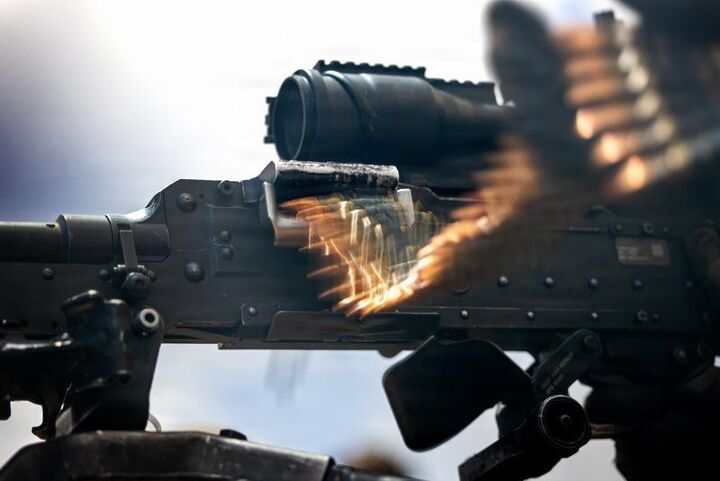
As with most people’s lives, we don’t get proper machine gun content every day, but when it shows up, it tends to deliver. Here’s to the U.S. Marines from Battalion Landing Team 3/5, part of the 11th Marine Expeditionary Unit, seen running M240B machine guns during a live-fire exercise at sea.
The RP-46 Light Machine Gun - A Belt-Fed Evolution of the DP
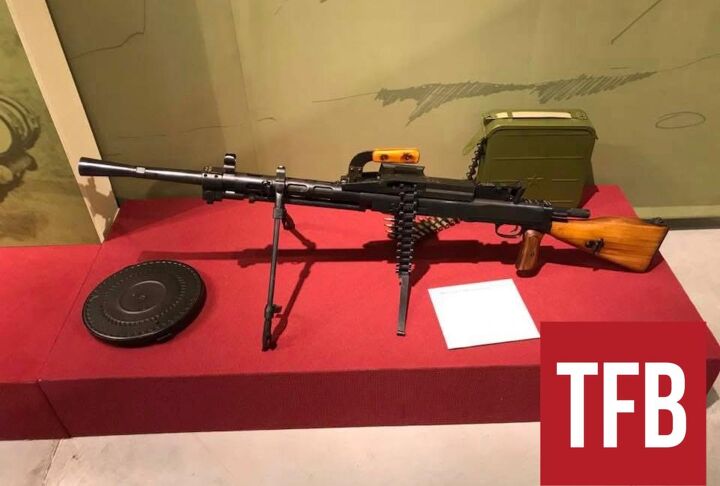
Perhaps one of the most interesting adaptations of a magazine-fed light machine gun or automatic rifle to belt feed was the Degtyarev RP-46 (Company Machine Gun), adopted in 1946, which was one of the Soviet Union’s most practical postwar attempts to improve an already proven weapon. Rather than creating an entirely new weapon, Soviet engineers took the DPM (Degtyarev Infantry, Modernized) light machine gun and adapted it to meet the changing demands of modern infantry combat, increasing its firepower. The most important change was the shift from a pan magazine to a belt feed, along with the addition of a heavier barrel to accommodate the increased firepower. These improvements gave the RP-46 greater sustained fire capability and made it more effective in longer engagements where the older DP-27/DPM system showed its limits.
Inside Russia's RPL-20 Machine Gun
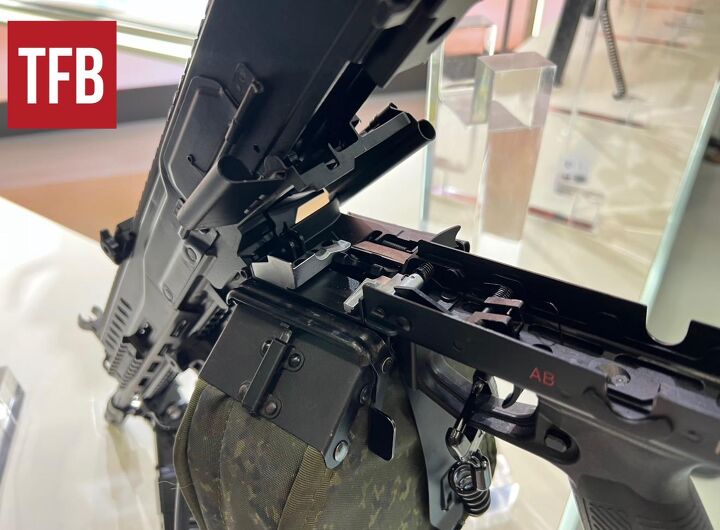
The RPL-20 follows typical Kalashnikov design trends but features a unique bottom-feed tray cover arrangement rather than a conventional top-feed tray cover. The weapon is chambered in 5.45x39, a cartridge well known for its relatively mild recoil impulse and soft shooting. When paired with the RPL-20’s overall weight and operating system, the result is a firing impulse that appears unusually smooth. In the video, the recoil impulse appears consistent with a rearward push, similar to a constant-recoil system. However, it is unlikely that the RPL-20 employs a true constant recoil in the technical sense for such a short receiver.
POTD: Gestamen Machine Guns in Hungarian Service Use
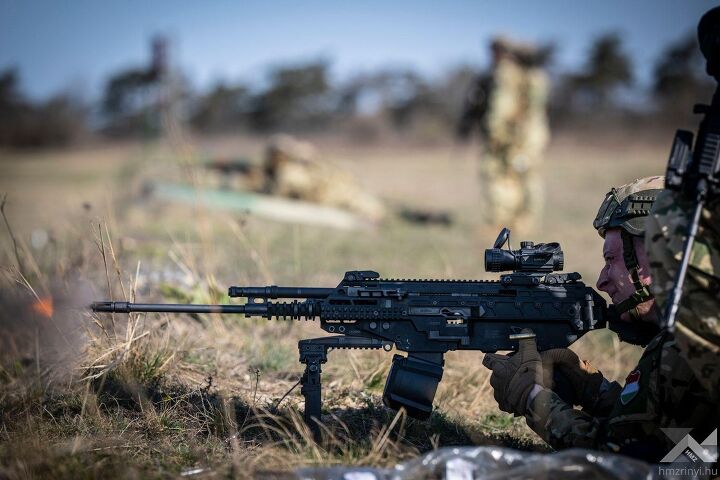
Less familiar than legacy platforms, machine guns from Gestamen Arms take the lead during a recent live-fire training in Hungary. The G224 LMG and G762 MG are both made by Gestamen in Hungary. I’m not entirely sure exactly which model is used here, as they look very similar, but they are all using Magpul drum magazines.
Hidden in Plain Sight - Russia’s Unidentified LMG
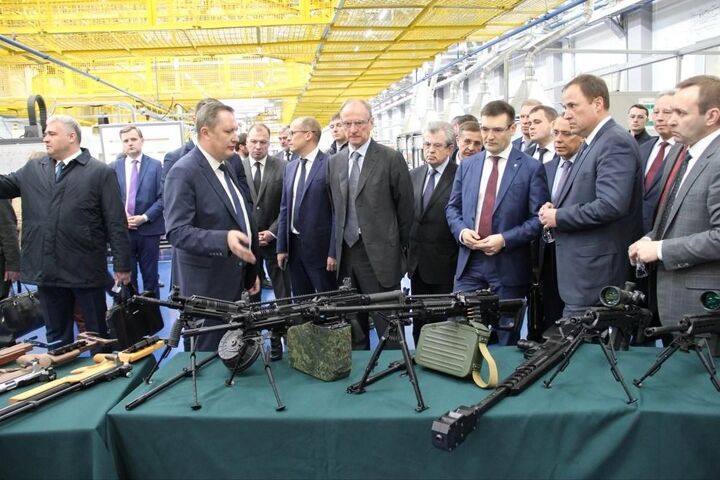
In 2019, the Russian news agency RG.RU released a photo of several new products from Kalashnikov Concern. The weapons were displayed during a visit by Nikolai Patrushev, Secretary of the Security Council of the Russian Federation, where the diversification and reduction of the military-industrial complex were among the topics discussed. The image showed several different weapons, including the RPK-16, an early prototype of the RPL-20, the 12.7x10⁸/12.7x99 SV-18 large-caliber sniper rifle, and a pair of SVCh sniper rifles in different flavors. In the center of the photo sat a unique-looking light machine gun that had not yet been publicly identified. To this day, its designation has not been officially released to the public, and details about the weapon and the program behind it remain behind closed doors.
HK’s Next-Gen Twist on the FN Minimi - The MG43

In the late 1990s, the famous German company Heckler & Koch set out to build a new 5.56x45 NATO belt-fed light machine gun for the German Army that could challenge the FN Minimi/M249, which was widely used by many NATO nations. Somehow, they used the Minimi/M249, which was designed by Ernest Vervier at FN Herstal, as the basis for the HK design and improved it. The project first appeared under the designation MG43, which is a conventional, gas-operated design that incorporates all current trends in small-arms development. HK’s design incorporated improvements to withstand heavy use and adverse conditions, and one interesting feature was the weight; the initial MG43 weighed 14.10 lbs. (6.4 kg).
The Polish Westernization of the PKM - The UKM-2000P/UKM-2020S
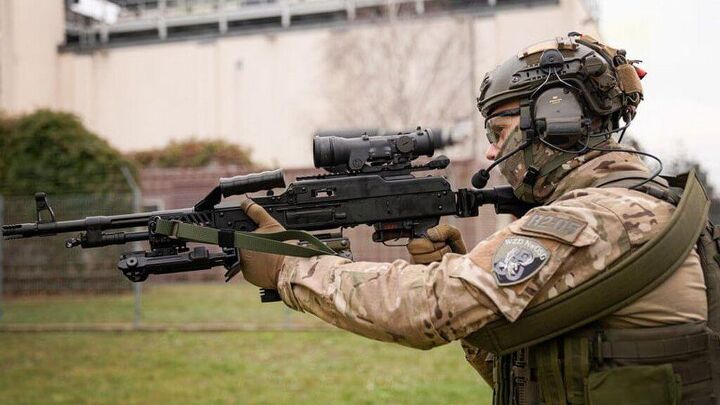
Poland’s love for the PK series of machine guns cannot be overstated. It continues to serve today, even after the collapse of the Warsaw Pact nations and the USSR, with Western modernizations that may preserve the core reliability that made the original famous. It began when the PK entered Soviet service in 1961, and in the mid-1960s, Warsaw Pact armies began replacing older medium machine guns with new general-purpose machine guns. Poland initially received a license in 1966 for the PKS-mounted version, produced at the Hipolit Cegielski Mechanical Works in Poznań, and the rest of the PK family followed soon after. Poland received the license for the modified PKM/PKMS pattern in 1973. By this time, Poland had already developed an interest in the PK series of machine guns; the PKM furthered that interest.
1970s U.S. Army Test of the PKM
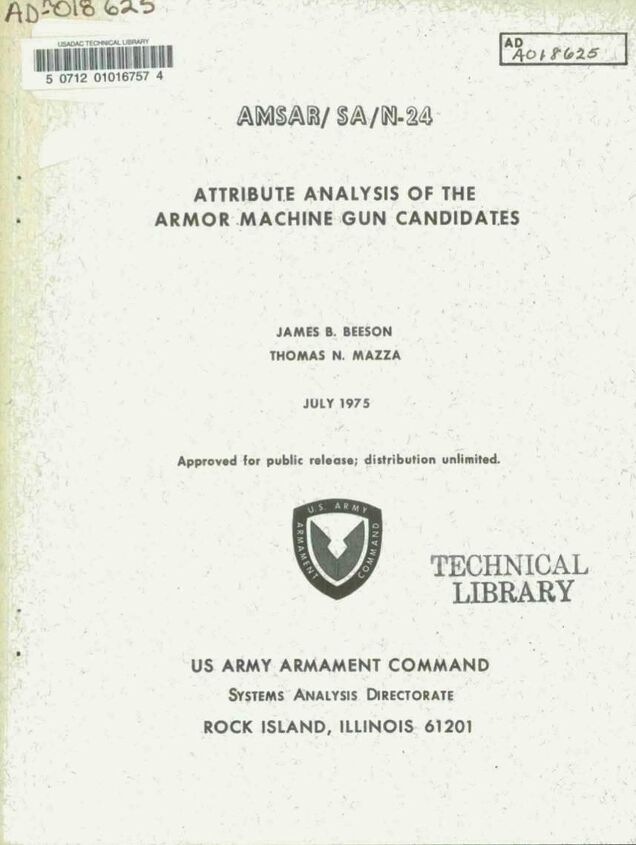
This article is based on one of the only publicly available reports I could find on U.S. testing of the Soviet PKM. In July 1975, an Army engineering team published an attribute analysis that examined a slate of off-the-shelf 7.62mm machine guns as candidates to replace the troublesome General Electric M219 coaxial weapon. The report, titled Attribute Analysis of the Armor Machine Gun Candidates (ADA018625), was authored by James B. Beeson and Thomas N. Mazza, drew together test data to rate nine weapons across 23 attributes grouped under Technical Performance, Physical Characteristics, and RAM-D (Reliability, Availability, Maintainability, Durability). Though this report is about a tank coaxial machine gun, I will focus more on the aspects of the PKM in an infantry role.
A Student's Vision of The New Generation of Russian Light Machine Gun

A recent post by Kalashnikov.ru shed light on the work of a young engineering student on a proposed light machine gun design. It was an interesting design recently submitted at the M. T. Kalashnikov Izhevsk State Technical University (ISTU), where the annual exchange between academic training and practical weapons development continues to produce promising concepts. The certification committee was chaired by Sergei Urzhumtsev, Chief Designer of Small Arms at Kalashnikov Concern, and included leading designers from the company. The review reflected the close cooperation between the university and the concern, a partnership that gives senior students the chance to work on real engineering tasks before graduation.
FN America Awarded $9.9M Contract for M240B Machine Guns

The belt-fed M240B features a cold hammer-forged, hard-chromed MIL-SPEC barrel designed for extended service life and improved durability. It uses a machined steel receiver with a top-mounted MIL-STD-1913 rail for optics and accessories. The system has a maximum range of approximately 3,725 meters.
Vietnam’s 7.62x39 Negev, The STrL-7.62 LMG
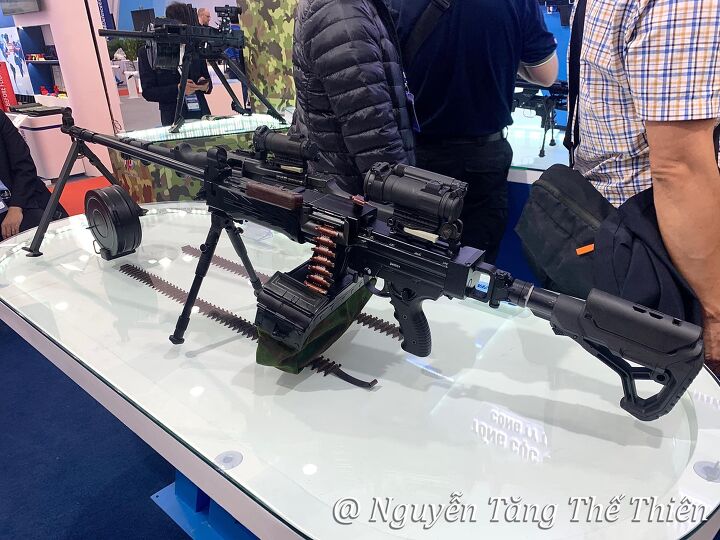
In late 2024, Vietnam’s defense industry publicly revealed a locally produced light machine gun (LMG) based on Israel Weapon Industries’ (IWI) Negev design. The 7.62x39mm-chambered variant, commonly referred to in Vietnamese sources as the STrL-7.62 or STrL-7,62VN, represents a further deliberate effort by the country’s armaments sector to modernize squad automatic weapons while preserving logistical commonality with the large stocks of ammunition, AK magazines, and RPD belts that remain in service. “STrL” translates to “medium automatic gun,” as it is intermediately chambered. The new weapon is built at Factory Z111, a state-owned small-arms factory located in Thanh Hoá, south of Hanoi. It produces Vietnam’s licensed and unlicensed production and indigenous derivatives of foreign designs.
The Soviet AO-29 Lightweight GPMG
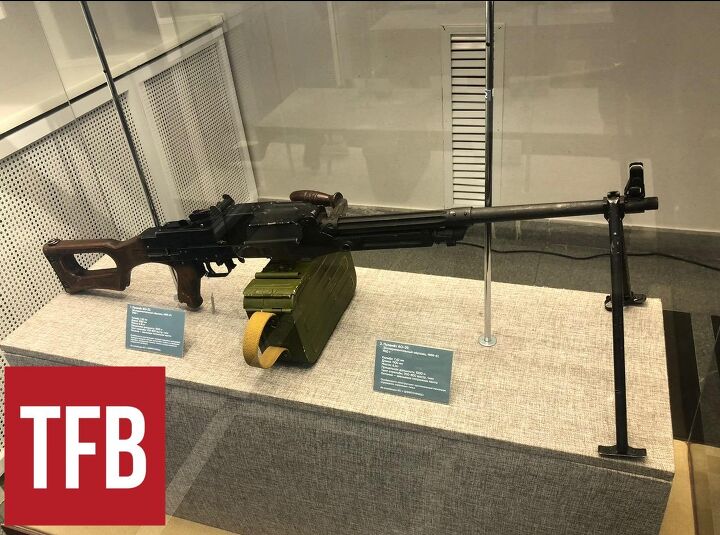
In the early 1960s, the Soviet military found itself at a crossroads. The recently adopted Kalashnikov PK general-purpose machine gun (GPMG) has solved many problems by easing logistics and supporting a single machine gun type. Still, its adoption also revealed new tactical expectations: a single GPMG was now supposed to fill a variety of roles, such as mounted roles, and be light enough to be carried by every infantry squad. The PK was accepted into service in 1961 and went into full production in 1962. Still, the weight and role tradeoffs of a universal design prompted a fresh round of experimentation aimed at a lighter, more squad-oriented automatic weapon. Simply put, the 19.84 lbs (9 kg) weight of a GPMG was too high for the Soviets, as it was also envisioned at the time to be carried by every infantry squad.
The RPK: The Soviet Choice of Commonality Over Capability
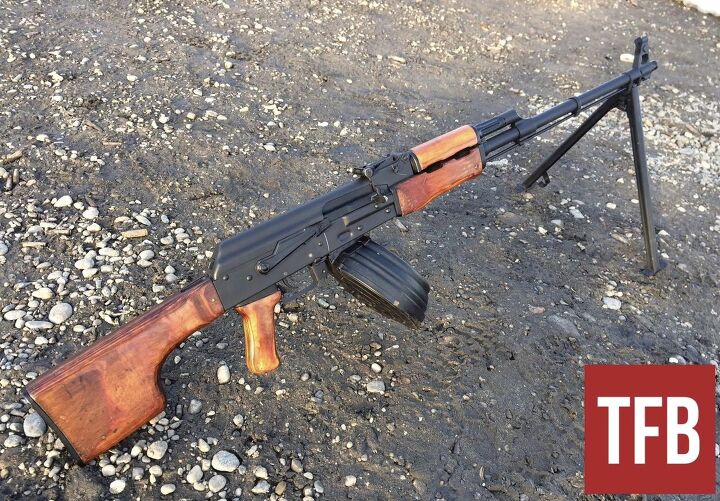
In the mid-1950s, the Soviet high command accepted a compromise that would shape frontline infantry small arms for decades: prioritizing platform commonality over dedicated squad-level suppressive fire capability. That decision, formalized with the 1959 adoption of an AK-derived automatic rifle, the RPK, sacrificed the sustained-fire advantages of the earlier belt-fed RPD in favor of simplified logistics, shared magazines and some parts, and easier training.
The RPD - Soviet Union’s First Squad Automatic Weapon
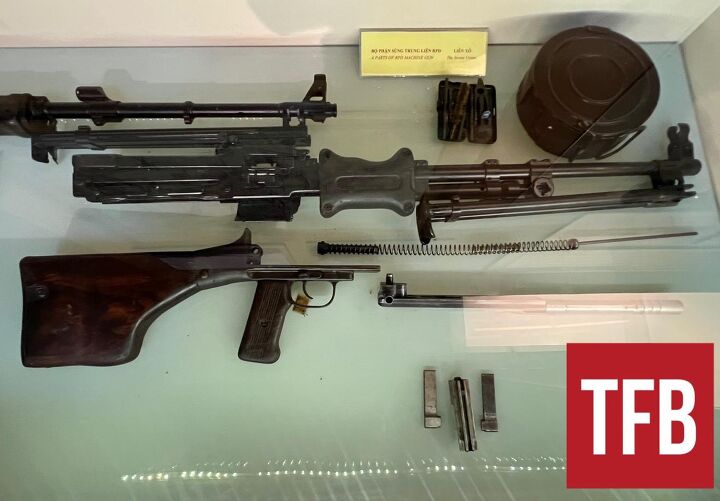
In the years after World War II, the Soviet military asked a simple question: how could an infantry squad bring a higher volume of automatic fire without surrendering mobility? A lesson they learned from the Eastern Front, where volume of fire was king. The answer, in part, was the RPD; this lightweight, belt-fed machine gun became the first Soviet weapon explicitly designed to serve as a squad automatic weapon (SAW) firing the new intermediate 7.62x39 cartridge.
Spinning Death: The GAU-2 Miniguns Over Vietnam

On my last trip to Vietnam, I decided to explore the country from the South to the North, from the chaotic, motorbike-packed streets of Saigon and Hanoi to the quieter stops in between. I ended up seeing a vast swath of the country, its lush river valleys, crowded markets, and small towns that felt like time capsules. Along the way, I kept noticing remnants of the war, old South Vietnamese and U.S. aircraft and weapons displayed in museums, which gave a glimpse of the past. There were also more guns and military relics scattered around than I’d expected, little reminders of a complicated past that still seems to linger in the landscape. The contrast between everyday life and those metal ghosts was striking; it turned the trip into something equal parts beautiful and thought-provoking. One of those thoughts was about the abundance of Miniguns I encountered.
Azerbaijan’s AN-12.7 Heavy Machine Gun
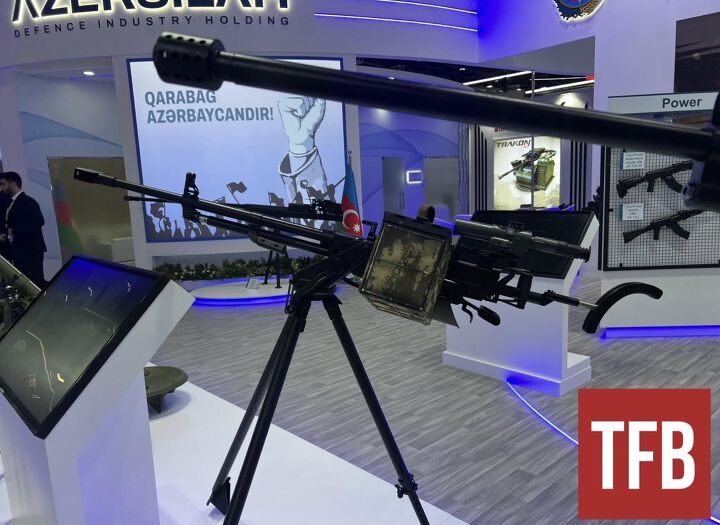
Over the years, Azerbaijan has steadily moved from licensed production toward designing and manufacturing its own weapons systems, blending proven features from established designs with local manufacturing practices. One of the latest developments has been in heavy machine guns. Azerbaijan’s AN-12.7 heavy machine gun represents a notable step in the country’s efforts to develop indigenous small arms capabilities and reduce reliance on foreign suppliers. Chambered for the widely used 12.7x108mm cartridge and produced by enterprises under the Ministry of Defence Industry, the AN-12.7 draws on two familiar heavy-machine-gun families, the Soviet DShK lineage and the Chinese W-85, while incorporating modern refinements intended to meet contemporary battlefield requirements. I examined the weapon at IDEX-2025 in Abu Dhabi, where it was on display.

Turkish MMT Machine Gun Completes NATO Qualification Tests

On December 17, MKE, the largest Turkish state-owned firearms manufacturer, announced that their MMT machine gun completed NATO qualification tests and was cleared for serial production. Previously, our fellow TFB writer Lynndon Schooler, wrote a detailed article about this machine gun.

TFB Behind the Gun #197 Machine Guns & Meltdowns w/ GoldenWebb

I'm excited to welcome fellow firearms YouTuber Ben Webb, whom I recently met during a trip to the rather impressive new Smith & Wesson facility in Tennessee, which now includes its own range facilities where it can host classes. Today’s guest, Ben, runs the GoldenWebb YouTube channel, which you may or may not have seen recently due to a fairly consistent string of FRT or full auto firearms and suppressor destructive “testing.” You can think of his channel as a blend of firearms experimentation and redneck science. Beyond his entertaining channel, Ben serves as an active duty law enforcement officer and weapons instructor/armorer based in London, Kentucky. While it would be easy to dismiss all of Ben’s videos as just “for fun,” I think Ben actually applies a lot of his LEO experience to his YouTube reviews, where he thoroughly tests and reviews firearms and gear far beyond what most reviewers will. This combination of real-world expertise and engaging reviews has earned him a fairly large audience both on the job and on YouTube. On today’s episode, we’ll talk about his inspirations, his creative process, and the story behind his channel.

Zastava's New 6.5x39 LMG Prototype

At Partner 2025, Zastava Arms unveiled what may be the next step in Serbia’s small-arms evolution: a light machine gun (LMG) derived from the company’s long-running M84 general-purpose machine gun, but chambered for the intermediate 6.5x39 (6.5 Grendel) cartridge. This new variant follows a wider Serbian program to move away from purely legacy calibers toward modern intermediate cartridges that offer improved ballistic performance without the weight and recoil penalties of full-power rifle rounds. The result is a clear operational requirement: a lighter, more accurate squad automatic weapon in 6.5x39 that extends reach and terminal effect while keeping logistics and carry weights manageable for infantry squads.
The New Zastava .338 Norma Magnum Machine Gun
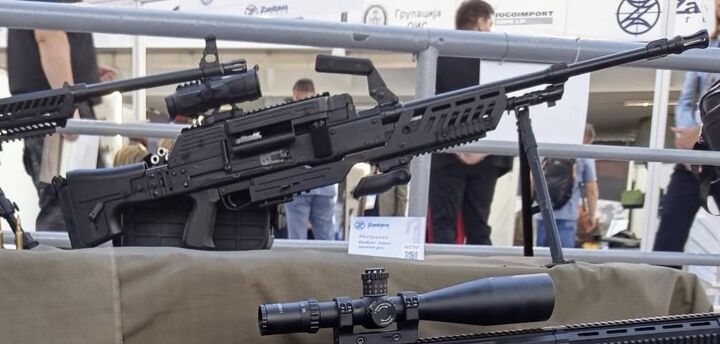
Zastava unveiled a new machine gun chambered in the increasingly popular .338 Norma Magnum prototype at the Partner 2025 arms expo in Belgrade. Partner 2025 (held September 23-26, 2025) was officially opened by the Serbian Ministry of Defense and showcased the country’s latest military technology. As a machine gun guy, observing Partner 2025, I took note of the Zastava .338 NM MG, and in my opinion, it is one of the exhibition’s most innovative infantry weapons. Overall, the system represents both a technical and strategic milestone: for the first time, Serbia joins the cadre of nations fielding next-generation medium machine guns in the .338 Norma Magnum caliber. With this entry, Zastava joins a small, select group of manufacturers and nations investigating or adopting the .338 Norma Magnum for medium/heavy machine guns, pushing the boundaries of automatic fire while keeping the company’s trademark emphasis on durability and battlefield practicality.
Vietnam’s NSV Heavy Machine Gun - The SCX-12.7V

The old-school DShK and Type 54 heavy machine guns, supplied by the Soviet Union and China, were once the backbone of Vietnam’s heavy machine gun inventory. Rugged, reliable, and brutally effective, they earned their reputation across countless battlefields during the wars against the French, South Vietnam, and the United States. Their 12.7mm projectiles can defeat light armor and low-flying aircraft, while their long range and sheer volume of fire make them invaluable in both offense and defense. Over time, these weapons became legends, remembered as symbols of Vietnam’s anti-aircraft capability.
Vietnam's PKM – The DL7N General Purpose Machine Gun
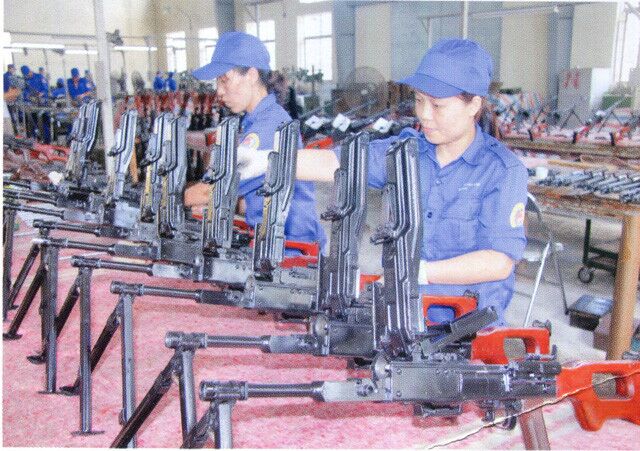
Vietnam’s defense industry has steadily grown in capability over the past decades, and one of the more interesting developments is the DL7N machine gun, a Vietnamese-produced version of the world-famous Russian PKM general-purpose machine gun. This weapon, designated DL7N (ĐL-7N), is chambered in the traditional 7.62x54mm cartridge and serves as the standard-issue machine gun for Vietnamese motorized infantry at the platoon or company level.
The Forgotten M60E1: An Early Attempt to Improve the M60 Machine Gun
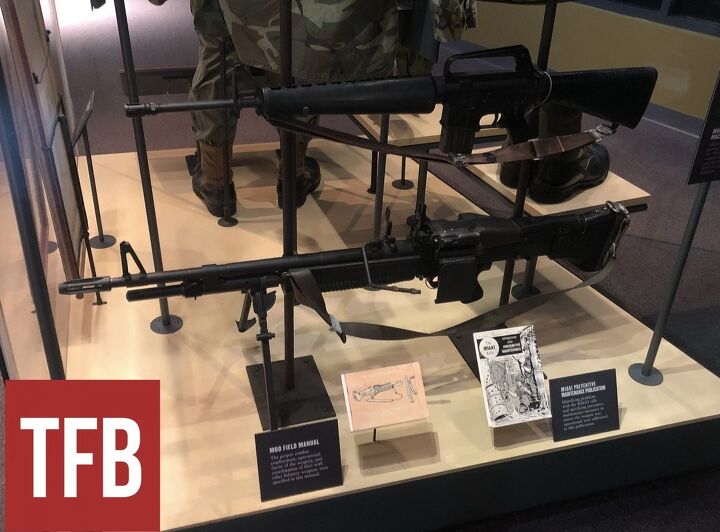
I previously covered the M60 to the M60E6, but now we turn to a lesser-known stepping stone: the M60E1. Developed as a prototype, the M60E1 represented an early attempt to correct many of the shortcomings of the original M60, which entered service in 1957, saw heavy use in Vietnam, and remained in U.S. military arsenals until its gradual retirement in the 1990s.
The New Russian OTs-142 5.45 Belt Fed LMG
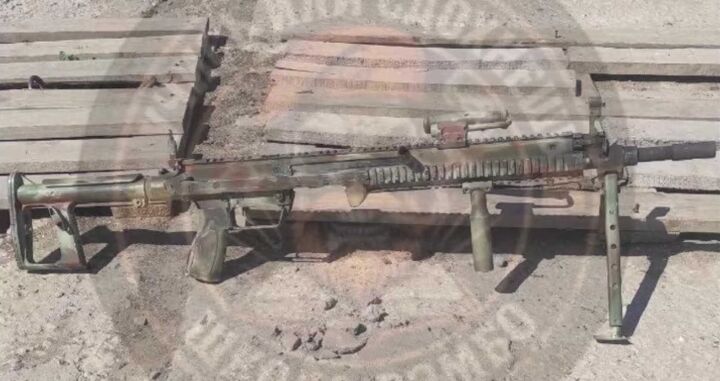
What we can do is assemble the clearest picture available: the OTs-142 appears to be a compact, squad-level belt-fed support weapon in the same family of experiments that produced the OTs-124 and OTs-128 (the Alatau-family projects which I covered earlier), where designers at TsKIB SOO and related Tula bureaus have been rethinking how to deliver automatic fire with modern ergonomics and unusual feed arrangements.
Vietnam’s Homegrown RPK, The TUL-1

Wandering through the Vietnam Military History Museum in Hanoi, I stumbled upon what looked like an RPK, only to find it was a TUL-1. Vietnam’s own, manufactured RPK. A weapon born out of necessity, ingenuity, and a fair bit of parts-bin creativity.
[Partner 2025] Zastava Unveils New Machinegun Chambered in 6.5 Grendel
![[Partner 2025] Zastava Unveils New Machinegun Chambered in 6.5 Grendel](https://cdn-fastly.thefirearmblog.com/media/2025/09/28/05281/partner-2025-zastava-unveils-new-machinegun-chambered-in-6-5-grendel.jpg?size=720x845&nocrop=1)
These days, when you roam around a defense expo, it is really difficult to find anything new and different. At the end of the day, weapons that use the same caliber and roughly the same barrel length will have very similar capabilities, regardless of cosmetic features, a country of origin or marketing claims about “increased lethality”.
FN America Secures DoD Contract for M240/M249 Machine Gun Barrels
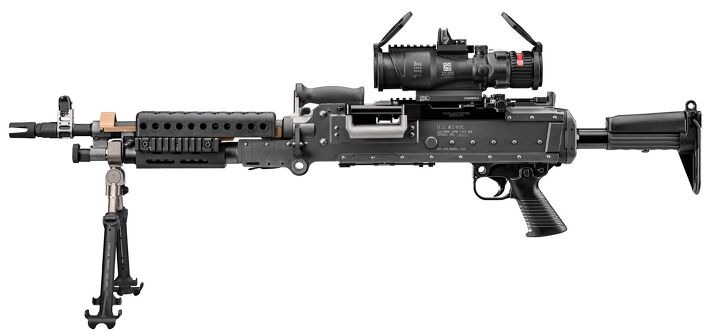
It should come as no surprise to any gun owner that barrels may wear out, and machine guns are no exception. FN America has been awarded a $6.9 million contract by the U.S. Department of Defense’s (DoD) Defense Logistics Agency (DLA) Land and Maritime for the supply of M240 and M249 machine gun barrels. The order, to be fulfilled across nine deliveries, underscores FN’s longstanding partnership with DLA Land and Maritime, a key combat support agency that provides spare parts for land-based and maritime weapon systems. Serving over 20,000 customers across all U.S. military branches, civil agencies, and other DoD organizations, DLA ensures the readiness of critical weapon systems in the field.