Vietnam’s 7.62x39 Negev, The STrL-7.62 LMG
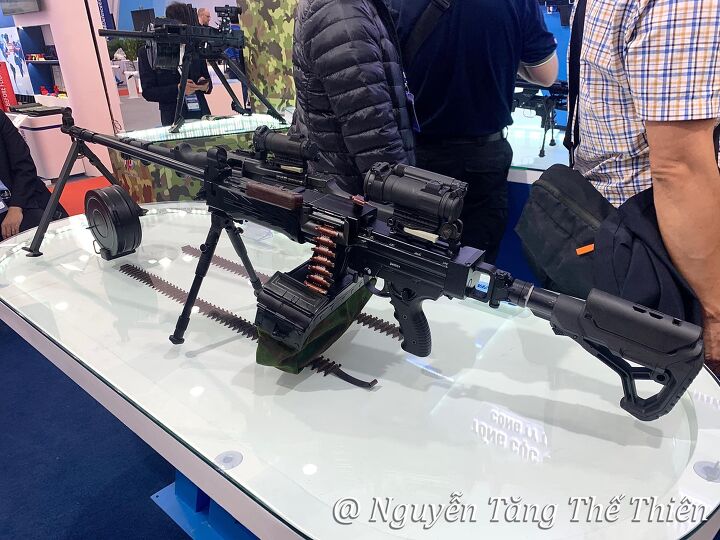
In late 2024, Vietnam’s defense industry publicly revealed a locally produced light machine gun (LMG) based on Israel Weapon Industries’ (IWI) Negev design. The 7.62x39mm-chambered variant, commonly referred to in Vietnamese sources as the STrL-7.62 or STrL-7,62VN, represents a further deliberate effort by the country’s armaments sector to modernize squad automatic weapons while preserving logistical commonality with the large stocks of ammunition, AK magazines, and RPD belts that remain in service. “STrL” translates to “medium automatic gun,” as it is intermediately chambered. The new weapon is built at Factory Z111, a state-owned small-arms factory located in Thanh Hoá, south of Hanoi. It produces Vietnam’s licensed and unlicensed production and indigenous derivatives of foreign designs.

The Gun
The Israeli Negev series (designed originally in 5.56x45mm and later adapted to 7.62x51mm in the NG-7) offers a somewhat lightweight, gas-operated, rotating-bolt layout with a feed system capable of accepting either magazines or belts, depending on caliber. Vietnam’s STrL-7.62 keeps that core of the Negev. Still, it is reconfigured for the Soviet-era intermediate 7.62x39mm cartridge and to use RPD belts, an unsurprising choice given the continued commonality of that caliber across Vietnam’s small-arms inventory. The publicly released photos show the Vietnamese variant features a fluted quick-change barrel, a PKM-style carrying handle, an M1913 Picatinny rail welded to the top of the receiver for optics, and a buffer-equipped folding stock. Those changes aim to improve sustained-fire endurance, modularity, and user ergonomics in the modern infantry squad roles. Though at the cost of increased weight for its caliber.
One of the STrL-7.62’s most notable practical attributes is its compatibility with both AK-pattern magazines and legacy RPD belt feeds. Publicly released photos suggest the gun can accept standard AK/STV/RPK magazines while also being capable of taking 100-round non-disintegrating RPD belts, though using a soft, fabric belt box instead of the RPD’s metal drum, the belt box at least for the shown examples uses a fabric PKM ammunition bag that flipped around as the RPD feed from the left instead of the right like the PKM, it also features a cut AK magazine welded to the top to lock into the magwell. That dual-feed capability is an older feature that some nations pursued at the expense of weight, complexity, and cost. Though it allows units to continue using 7.62x39mm box magazines in emergencies or for zeroing, and belt-fed for standard use. This eases the logistical burden of introducing a new platform in forces that still operate many older belt-fed and magazine-fed systems.

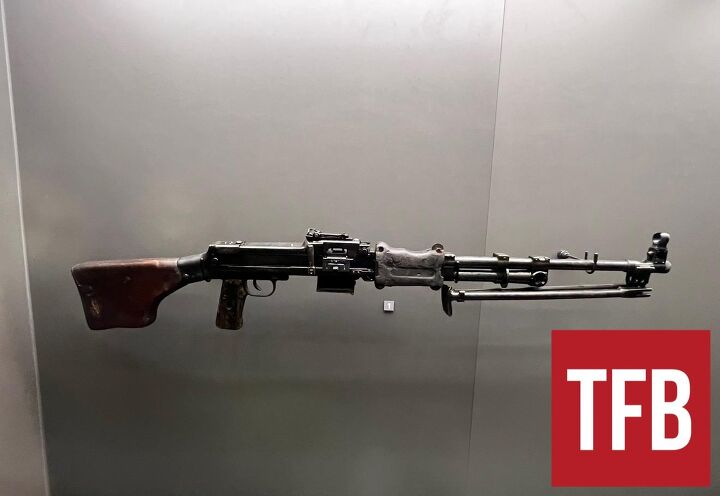
Factory Z111’s recent output is not limited to Negev-derived guns. The plant continues to produce and modernize a range of Soviet-era classics, most notably the RPD, which historically served as Vietnam’s standard squad LMG through the Vietnam War to this day. Vietnam’s domestically produced RPD variant, designated the STrL-D, remains part of the order of battle in reconditioned and upgraded forms, and Z111 maintains the capability to produce and support replacement parts and overhauls. The introduction of the STrL-7.62, therefore, looks less like a wholesale replacement than the start of a phased transition: newer units and roles may receive the Negev-derivative. At the same time, many formations preserve and operate upgraded RPDs until complete re-equipment is feasible.
Official technical specs released by Vietnamese sources are limited, but the reported weight of the STrL-7.62 is 16.31 lbs. (7.4 kg), which is on the heavy side for modern light machine guns. As the STrL-7.62 is only 1.17% lighter than the 7.62x54 GPMG, which weighs 16.5 lbs. The rate of fire depends on the route Z111 took through the gas system. IWI states that for the 5.56x45 chambered Negev, the rate of fire is 650-850 rounds per minute (regulated position 1), 850-1050 rounds per minute (regulated position 2), and 950-1150 rounds per minute (regulated position 3). This is done because the dual-feed system requires different gas volumes for belt or magazine operation.
The STrL-7.62 features a quick-change, fluted barrel that should improve sustained-fire survivability by increasing surface area to aid cooling. This is a change from the RPD, as it has a fixed barrel. It also features a M1913 Picatinny rail, which allows for the use of modern-day/night optics and enablers. In doctrine terms, the STrL-7.62 is positioned as a squad-level automatic weapon that can deliver suppressive fire at intermediate ranges while remaining mobile and adaptable to dismounted operations. Probably one of the most interesting features of the STrL-7.62 is that it is a select-fire weapon, safe, full-auto, and semi-auto. The semi-auto function aids in zeroing the gun.
The Negev's barrel-change feature is perfect for a conscript army as it requires the weapon to be cleared before changing the barrel. First, the bolt is pulled rearward and locked (as the bolt locks into the barrel), the feed tray is opened to unlock the barrel change button, and the barrel change button is pushed to release the barrel, allowing it to be removed. For those who like this feature, it allows lightly trained soldiers to swap barrels and eliminates the chances of an accidental discharge.
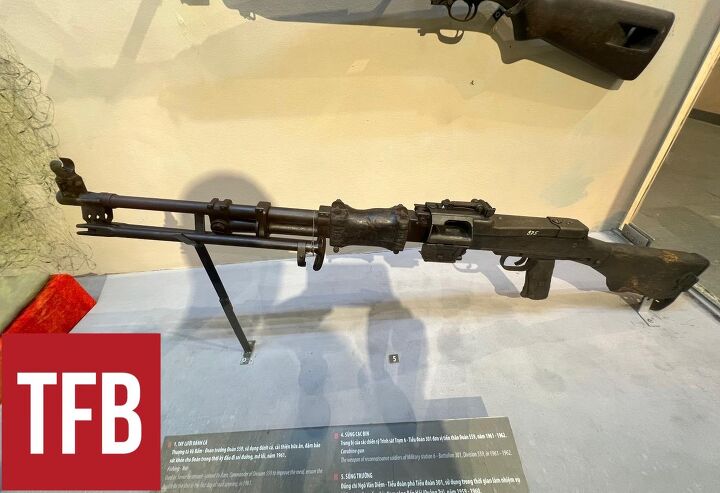
For Vietnam, the STrL program reveals two broader trends. First, the evolution of domestic small-arms production: Z111 has progressively absorbed licensed production techniques and adapted foreign designs into locally made, mission-tailored weapons. Second, the preservation of logistical cohesion: by chambering the Negev in 7.62x39mm and making it compatible with legacy systems, Vietnam avoids the immediate need to re-tool entire ammunition and magazine stocks while upgrading frontline capabilities. These allow Vietnam's industrial strategy to balance modernization with fiscal and logistical realities.

Conclusion
The STrL-7.62 is a clear example of how a proven design can be re-imagined to meet a specific country’s operational and logistical needs. By chambering the Negev light machine gun for the ubiquitous 7.62x39mm cartridge, it retains compatibility with both AK magazines and RPD belts. Vietnam has produced a bridge solution that modernizes squad firepower without breaking supply chains. Whether the STrL-7.62 will ultimately replace older RPDs across the board or serve alongside them for years will be revealed as the country continues to field, refine, and report on the system. Hopefully, on one of my future visits to Vietnam, I’ll have a chance to get a tour of Z111 and get more information to better cover the development and production of Vietnamese weapons.

Lynndon Schooler is an open-source weapons intelligence professional with a background as an infantryman in the US Army. His experience includes working as a gunsmith and production manager in firearm manufacturing, as well as serving as an armorer, consultant, and instructor in nonstandard weapons. His articles have been published in Small Arms Review and the Small Arms Defence Journal. https://www.instagram.com/lynndons
More by Lynndon Schooler





Comments
Join the conversation
You needed to show more pictures of the machine gun. I know what a RPD is (have one). The first picture looks like it has two bipods.
Moose
Semper FI
Who gives a crap what the VietCommies do?
The Vietnam Veteran's Memorial on the Mall in DC says it all.