1970s U.S. Army Test of the PKM
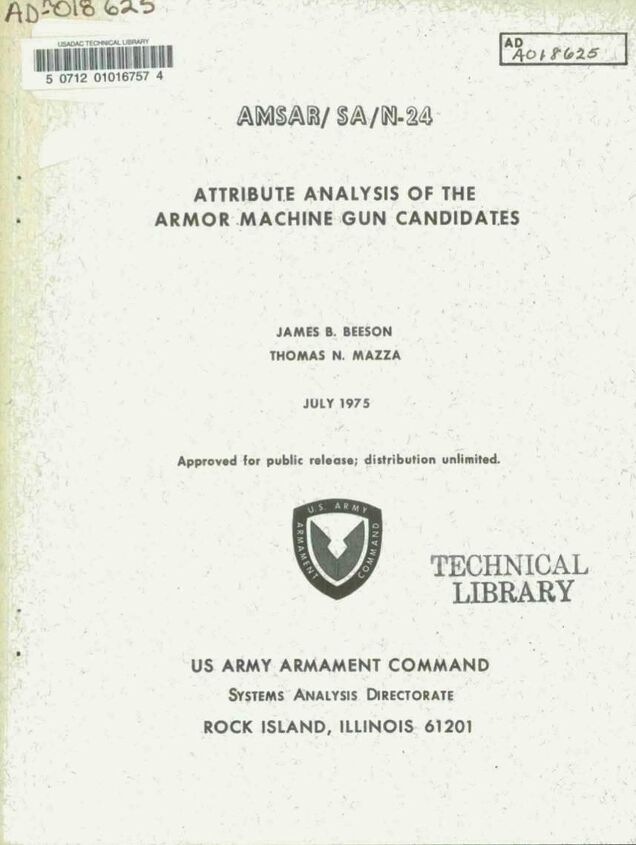
This article is based on one of the only publicly available reports I could find on U.S. testing of the Soviet PKM. In July 1975, an Army engineering team published an attribute analysis that examined a slate of off-the-shelf 7.62mm machine guns as candidates to replace the troublesome General Electric M219 coaxial weapon. The report, titled Attribute Analysis of the Armor Machine Gun Candidates (ADA018625), was authored by James B. Beeson and Thomas N. Mazza, drew together test data to rate nine weapons across 23 attributes grouped under Technical Performance, Physical Characteristics, and RAM-D (Reliability, Availability, Maintainability, Durability). Though this report is about a tank coaxial machine gun, I will focus more on the aspects of the PKM in an infantry role.
The Guns
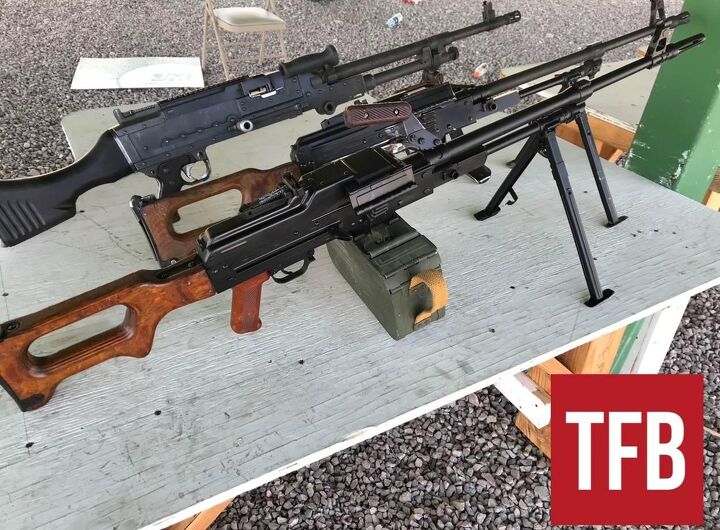
The Soviet PKM emerged from the assessment as a notable contender in the trial. It did reasonably well, though it could have done better if tested properly. It was tested under U.S. laboratory conditions at H.P. White Laboratories using standard test procedure MTP 3-2-045. However, only a single PKM was available for evaluation, and the ammunition consisted of a mix of Soviet and Chinese 7.62x54mm cartridges of inconsistent quality; the report notes some showing corrosion or degradation. The foreign candidates were also evaluated using Rodman’s earlier testing at Rodman Laboratories (Rock Island Arsenal). Still, direct comparisons across weapons were difficult because each test program used different mounts, procedures, and sample sizes. And lack of familiarity with the foreign counterparts is evident. The contenders in the trial included the U.S. M60E2, Belgian FN MAG 58, M219, M219PI, Canadian C1, UK L8A1 (coaxial MAG 58), French AAT52, and the German MG3.
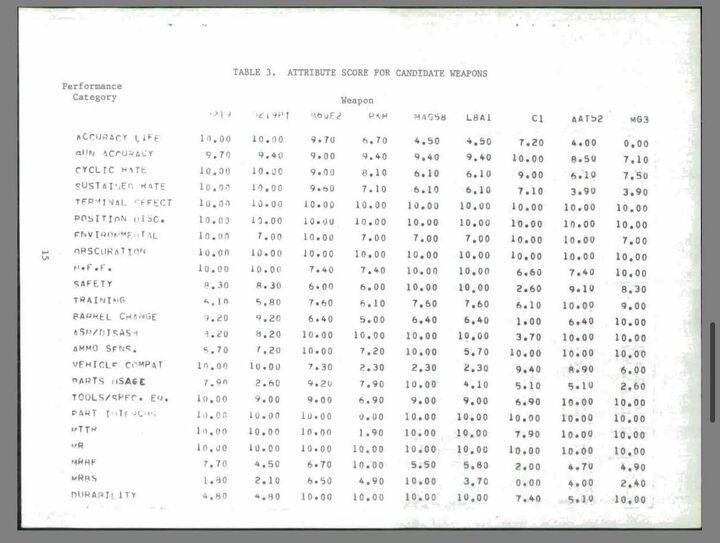
The panel ranked each candidate across the 23 attributes, then converted the ranks to 0-10 scores. The 23 attributes included: Accuracy Life, Gun Accuracy, Cyclic ROF, Sustained ROF, Terminal Effect, Position Disclosing, Environmental Performance, Obscuration, Human Factors Engineering (HFE), Safety, Training, Barrel Change, Weapon Assembly/Disassembly, Ammunition Sensitivity, Vehicle Compatibility, Parts Usage, Tools and Special Equipment, Parts Interchangeability, Mean Time to Repair (MTTR), Maintenance Ratio (MR), Mean Rounds Before Failure (MRBF), Mean Rounds Before Stoppage (MRBS), and Durability. For the PKM, the report records standout scores in several technical and durability attributes:
- Durability: 10.00 -The PKM received a perfect score for durability.
- Mean-Round-Between-Failure (MRBF): 10.00 - indicating excellent performance in the measured trials.
- Mean-Round-Between-Stoppage (MRBS): 4.90 - a comparatively low score that points to stoppage with the ammunition used.
- Mean Time To Repair (MTTR): 1.90 - a low MTTR score. The report indicates it has longer repair times than others, most likely due to a lack of parts and familiarity.
- Gun accuracy: 9.40 - high accuracy was demonstrated at 1,000 meters.
- Accuracy life (barrel life): 6.70 - middling compared with U.S. candidates.
- Environmental: 7.00 - “based on mud, cold, hot, sand, and dust tests; noteworthy, however, is the cold-test problem the report flagged: splitting cartridge cases were observed,” possibly due to ammunition quality or improper headspacing.
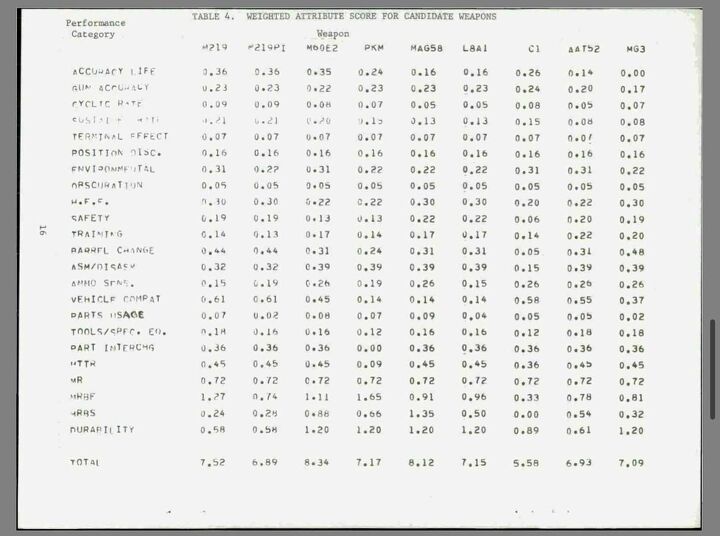
Because of varying test objectives, mounts, and sample sizes across the programs, direct apples-to-apples conclusions are expressly cautioned against in the report. Besides that, the PKM did pretty well with the odds against it.

After converting individual attribute scores into weighted totals, the PKM ranked overall, and the weapons were clustered into three groups. The high group was led by the U.S. M60E2 (score 8.34) and the Belgian MAG58 (8.12). The PKM (7.17) fell into the middle group, alongside the M219, M219PI, the UK L8A1, the French AAT52, and the German MG3, a block whose scores ranged roughly from 6.89 to 7.09. The low group contained only the Canadian C1 (5.58). In short, the PKM’s mix of exceptional durability and accuracy, but some stoppage and ammunition-related environmental sensitivity, placed it in third place.
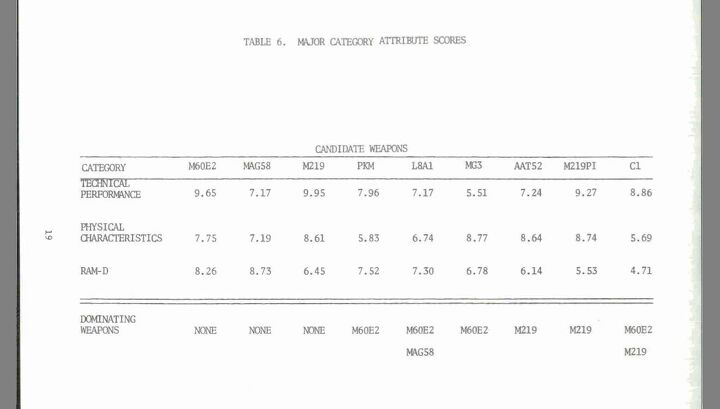
Those attribute scores were summarized into major-category numbers for the PKM:
- Technical Performance: 7.96
- Physical Characteristics: 5.83
- RAM-D: 7.52.
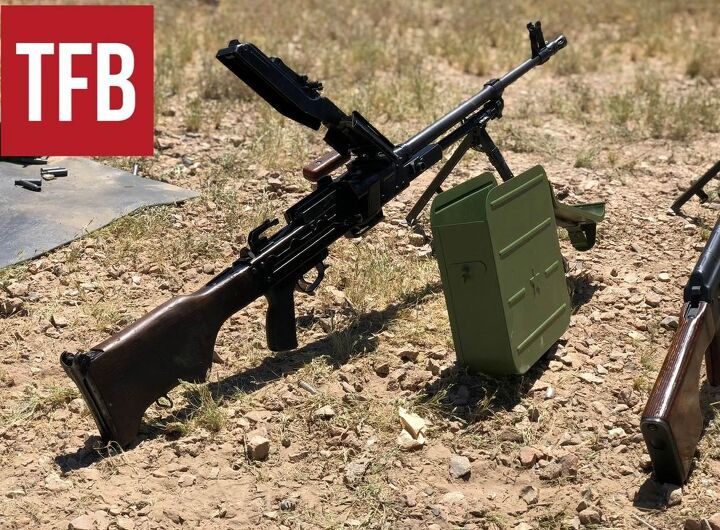
This evaluation may have ultimately contributed to the Army’s adoption of the FN MAG in 1977 as the M240C, a coaxial tank machine gun.
The Conclusion
The report remains a rare snapshot of the limited U.S. testing of the PKM that I could find and how it was viewed by U.S. evaluators in the mid-1970s. The weapon demonstrated clear strengths, particularly its durability and accuracy, confirming its reputation as a rugged and effective machine gun. However, the evaluation was constrained by several factors that affected its overall ranking. U.S. testers had limited familiarity with the weapon, only a single example was available for testing, and the trials relied on Soviet and Chinese 7.62x54mm ammunition of inconsistent quality, some of which showed corrosion and degradation, which hampered its ranking in the test. The PKM showed promising performance in several areas. Still, the results were not considered sufficient to fully assess its potential without additional testing under more controlled and standardized conditions, which I would one day like to conduct as a side-by-side evaluation of the M240 and PKM.
Source: Attribute Analysis of the Armor Machine Gun Candidates

Lynndon Schooler is an open-source weapons intelligence professional with a background as an infantryman in the US Army. His experience includes working as a gunsmith and production manager in firearm manufacturing, as well as serving as an armorer, consultant, and instructor in nonstandard weapons. His articles have been published in Small Arms Review and the Small Arms Defence Journal. https://www.instagram.com/lynndons
More by Lynndon Schooler








![[SHOT 2026] Arken's 3000 Yard $600 On-Gun Laser Rangefinder](https://cdn-fastly.thefirearmblog.com/media/2026/01/23/16321/post.jpg?size=350x220)


Comments
Join the conversation
and?