Silencer Saturday #421: Should You Change Your NFA Ownership Structure

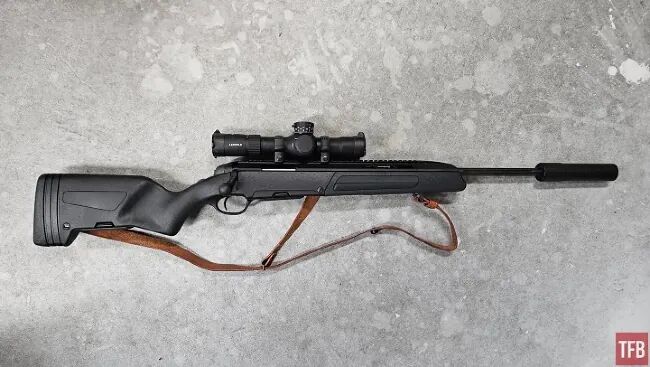
Good afternoon, everyone, and welcome back to TFB’s Silencer Saturday, brought to you by Yankee Hill Machine, manufacturers of the new Victra 20-gauge shotgun suppressor. Are your NFA items in the right ownership structure? With free tax stamps available, now may be a good time to reassess the ownership structure you have in place and make changes if that is right for you.
Silencer Saturday @ TFB:
- Silencer Saturday #420: Peculiar Patents
- Silencer Saturday #419: Reflex Resurgence
- Silencer Saturday #418: Lawsuit And Legislation Update
- Silencer Saturday #417: What's New In Subsonic Ammo
- Silencer Saturday #416: Recovering From SHOT Show
Disclaimer: This is not legal advice. Do not make any decisions based on what you read here. Everyone has different situations, and a competent lawyer with knowledge of your individual circumstances.

Ownership Structures
The National Firearms Act controls fun things like machine guns and silencers, and for much of its history, it was primarily used for individual people to register items for their own use. The initial text of the NFA made it illegal for any person who was required by law to have a tax stamp to not have that tax stamp.
That sounds like it would apply in a very obvious way, but law and lawyers being what they are, it is more complicated than that. A "person" is not always just a human being in this context. Other things are treated as "people" too, even if they are not a person the way that word is used in conversation. In addition to individual people, businesses organizations like corporations, and legal structures like trusts are also "people."
Clever individuals figured this out and started to have corporations and trusts apply for the tax stamps. The big advantage of these structures over individual ownership is having multiple users have access to the NFA items. Unlike an individual tax stamp, where that one person must be with the item if it is not locked up, trusts and corporations can have multiple people hold access to the items.
This eventually got a little out of hand. Trusts and corporations did not need to file any passport photos or fingerprints because, in short, those don’t exist for a legal entity. Eventually the ATF cracked down on this with Rule 41F in 2016. That rule required every “responsible person” file the information to submit to a background check.
Personally, I am a big fan of trusts. Even though the responsible people must still file their background check information, having a structure for multiple people to access the items is very nice. My spouse and other family members on a trust can still use the item when I am not there. This is really helpful in hunting situations, where I might need to swap guns with my brother. Technically, with individual ownership, we would have to stay in close proximity. But if we are both trustees we can head into separate canyons without any legal risk. Now, the odds of there actually being a law enforcement issue during that hunting situation is very, very low, but not zero. This also allows for longer-tern swaps, like trading suppressors to use during load development or sharing a more specialized suppressor that is not used frequently.

Is It Time For A Change?
With that explanation out of the way, let’s turn to the actual process. A transfer between two parties who are not dealers is submitting a Form 4. Many people may not know this, but a Form 4 does not require a dealer be involved in the transfer. The parties fill out the appropriate paperwork and submit it to the ATF. When that approval comes back, the transferee can take the item home.
This process also works to make transfers between entities in your control. With a free Form 4, you can move a personally-owned silencer into that trust you were meaning to set up before you bought your first silencer, but that you never got around to. You can also combine items from various trusts into one trust.
One situation where this is worth a lot of consideration is if you are a user of “single shot” trusts. That model uses a separate trust for each NFA item. There is only one responsible person when the trust is formed and submits the Form 4. Once that Form 4 comes back, additional trustees can be added without requiring additional background checks, so long as no additional items are added to that trust. Successive purchases go on separate trusts.
While this does work, it also creates a huge paperwork nightmare for your family when you die. Each item will need to be matched up to its trust, and each trust will need to follow the process described in the trust for what happens when the trustee dies. If you are not an organized person this will be a huge pain to work through, and even if you are organized it will still not be fun.
The new free tax stamp paradigm is a great opportunity to clean this up. You can collapse all of those trusts into one trust by processing Form 4s to transfer ownership into the trust or business entity you want to use. This also makes it much easier to show your trust to an enquiring ATF agent, which is a thing I have heard of happening, though I have not personally experienced it.

If you have a mess of trusts, or some items owned individually and others in trusts, or even just want a fresh slate with a trust that has a much shorter name that is easier to engrave on new SBRs, there is an opportunity to work that out for free. Give it some thought, and maybe discuss it with your lawyer before making any changes. But it would be a shame to slog through maintaining a full roster of trusts and corporations when you could simplify it for free.

SILENCER SHOP – HANSOHN BROTHERS – DEADEYE GUNS
MAC TACTICAL
ALL YHM PRODUCTS AT BROWNELLS
DEALERS: If you want your link to buy YHM suppressors included in future Silencer Saturday posts, email: silencers@thefirearmblog.com
AKA @fromtheguncounter on Instagram. Gun nerd, reloader, attorney, and mediocre hunter.
More by Daniel Y


![[SHOT 2026] Nosler 400 Legend Whitetail Country & Reloading Bullets](https://cdn-fastly.thefirearmblog.com/media/2026/01/27/20381/post.jpg?size=350x220)


![[SHOT 2026] US-Made SR-3M Clone by Roswell Rifle Works](https://cdn-fastly.thefirearmblog.com/media/2026/01/22/12201/post.jpg?size=350x220)

![[SHOT 2026] CVA Gets Into The Rimfire Game With New Cascade Rimfire](https://cdn-fastly.thefirearmblog.com/media/2026/01/23/17451/post.jpg?size=350x220)


Comments
Join the conversation
I thought they eliminated the engraving requirement a few years ago.
When the trust thing started getting popular, I thought about it but was told I had to pay another $200 for each item. That was $2,400 then. Even with the "Taxless Stamps" I would be looking at $3,000, (14 MGs, 1 DD). Is this still the case?