Fudd Friday: Is A Shotgun Ammo Crackdown Coming?

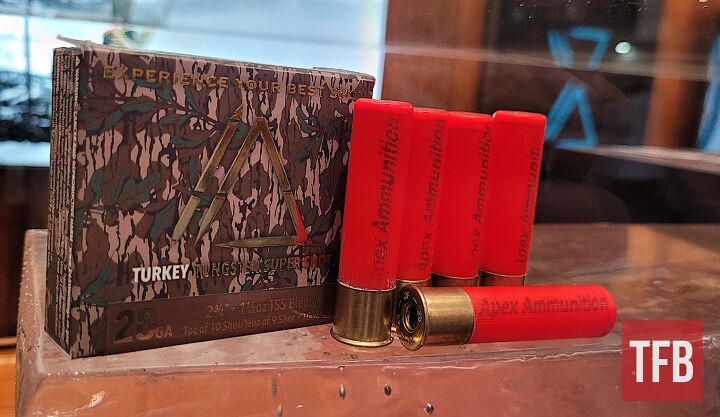
Over the past half-decade, the cost of centerfire rifle cartridges has risen a lot; I would say the vast majority of hunters complain, but it doesn’t much affect them. You’ve heard the griping when some Fudd buys a rifle in a whiz-bang new PRC or Creedmoor cartridge and has sticker shock when they buy a box of shells. Or even when they pick up a box of .30-06 or .30-30 and see the price has doubled since COVID-19 … but since so many hunters never shoot more than a box or two a year, if that, it doesn’t really affect their finances.
But, watching the movements behind the scenes in firearms and hunting regulations around the world, I suspect we are on the verge of a full frontal assault on shotgunners, including bird hunters and clay shooters. If things play out the way that regulators and environmentalists want them to, an ammo crackdown is coming that will significantly drive up the price of shotgunning, since shotgunners use such a high volume of shells compared to rifle shooters.
Shotshell development @ TFB:
- Remington Awarded US Navy Contract of 12 Gauge Slug, Duty Shotshells
- Federal's Top Gun Lead and Steel Shotshells With Paper Wad
- New HEVI-Hammer Bismuth-Steel Dove Shotshells from HEVI Shot
- 'In The Air' With The CCI 9mm BIG 4 Shotshells
The move to sweeping non-toxic laws
Anyone who hunts migratory birds (mostly ducks and geese) in North America is familiar with the rules requiring you to hunt with non-toxic shot. Back in the 1980s, the feds outlawed the use of lead shot in the U.S. and Canada. Some hunters accepted the new rules, believing lead poisoning was indeed killing ducks at a widespread level. Other hunters were angry about the requirement to shoot more expensive shells with non-toxic pellets (steel, in those days) that also had worse performance than lead pellets and potentially damaged older full-choked shotguns. Some hunters quit waterfowl hunting entirely, while others kept at it while nursing a grudge.

No other law change had such a widespread change on North America’s wingshooting scene, not even the pre-World War II restriction on three shots or fewer, laid out in the Migratory Bird Treaty Act. And, if you look around North America and other developed countries where wingshooting is still popular, we see a new move to require non-toxic loads for a wider range of scenarios.
Consider the UK, where an almost total ban on lead shot is coming into effect by 2029. The Brits already have similar restrictions to North America’s non-toxic shotshell laws for migratory birds, but starting in the summer of 2026, they’re phasing out the legal use of lead shot for any hunting purpose and even for shooting clays. You can read their reasoning here, but it basically boils down to a claim that they’re saving hundreds of thousands of birds from lead poisoning and also protecting kids, who could otherwise be poisoned by eating wild game killed by lead shot.

Lest you be tempted to cynically point out that these regulations are coming into place in the UK, which is the bastion of bad laws in the West, we can also see similar laws coming into place in North America. Or at least, legislators are trying their best.
- In 2010 and 2012, environmentalist groups unsuccessfully petitioned the EPA to ban the sale and production of lead-based ammunition in the U.S.
- California has had a lead shot ban on all wild game hunting since 2013, with the rules actually coming into effect in 2019.
- Both Minnesota and Iowa have rules against hunting with lead shot on specific state lands for specific wild game. This is not a comprehensive ban, but it is a ban in some hunting areas. Iowa’s regulators have pushed back against lead shot bans in the past, though.
- In 2025, Maryland’s lawmakers considered a ban on lead shot in that state; it was ultimately rejected.
- In recent months, lawmakers in Maine and the state of New York have both started poking around the issue of lead shot as well. While neither jurisdiction has banned lead shot, they both have bans on lead fishing sinkers and New York is considering banning the use of lead shot for hunting on specific state lands.
And so it goes. In the coming months, more states will undoubtedly consider lead shot bans, which will drive up ammunition costs for hunters and possibly require them to replace older, otherwise reliable shotguns with tight chokes. This isn’t necessarily terrible for turkey hunters who shoot a low volume of ammo and indeed see a significant performance increase from some current non-toxic ammo, but it will impact many other shooters.

And once the bans start, they won’t just apply to hunters, either; some environmentalists are already proposing similar bans for sporting clays, and Minnesota has already considered banning youth clay shooters from using lead shot.
The anti-plastic brigade
The other big move we see coming from environmentalists is a desired ban on plastic shotshells and wads. These bans could either come as a specifically-worded ban on shotshells that use plastic due to their impact on the environment if not cleaned up; a ban on plastic shotshell components could also come as part of restrictions on single-use plastics. After coming for your plastic drink straws and shopping bags, shotshells could be next.

Are biodegradable shotshell hulls and wads possible? Certainly, long before plastic shotshells were available, ammunition manufacturers built paper hulls that were much cheaper than brass hulls. Companies like Bioammo have shells today with both wad and hull made of modern biodegradable materials. You can also buy old-school paper hulls still, but they tend to be used for clay shooting, not hunting.
A big part of the reasoning behind this is that paper hulls are prone to swelling in wet or humid weather (in World War II, GIs in the Pacific Theater had to shift their riot guns to brass-cased ammo as a result).
While there are probably workarounds to this problem, a switch to biodegradable hulls is still not practical for many outdoorsmen at this point. It’s less of a problem at skeet ranges, where environmental conditions have less impact, but then, this is where the problem isn’t really a problem anyway, since those areas are much more easily cleaned than a duck marsh. But even in a marshy environment, most hunters can pick up the majority of their empty shells if they really want to.

A switch to biodegradable wads would not be the end of the world for shooters, although it would likely still drive up pricing, especially for sub-gauges, which are already priced unreasonably for many shooters. But since this is a component that most shooters will never be able to recover from the wild, practically speaking, it almost seems inevitable that we will see this happen, at a bare minimum, as a new rule from fish-and-game departments across North America in the next few years.
The bottom line
Anti-gunners will use any angle to attack firearms owners. Along with bans on black rifles or standard-capacity handgun magazines, they’ll also attack the Fudd Faithful by making it more difficult to hunt and target shoot.

It is well worth paying attention to what laws are being proposed in your jurisdiction that will influence what ammunition you can legally use. While some changes towards increased environmental friendliness would not greatly harm shotgunners, they will have an impact, and outdoorsmen need to be aware of outright bad and stupid laws that effectively ruin our hunting opportunities.
Professional hoser with fudd-ish leanings.
More by Zac K


![[SHOT 2026] Kimber Moves Forward With New 1911 DS Warrior](https://cdn-fastly.thefirearmblog.com/media/2026/01/19/21191/post.jpg?size=350x220)


![[SHOT 2026] Sightmark Adds Strikon Prisms, Shade Thermals](https://cdn-fastly.thefirearmblog.com/media/2026/01/22/00141/post.jpg?size=350x220)


Comments
Join the conversation
I tend to prefer technological solutions to problems rather than political solutions, for the main reason that they actually work and don't cause massive side effects. Also we need to prioritize liberty at every junction, lest we lose it to people who can't control their anxiety about the next "major problem."
Why aren’t we going after large corporations that own the old industrial sights across the nation that have polluted it with forever chemicals? Lead occurs naturally in the environment and upland game hunters produce such low levels of lead while hunting that it has a negligible impact on the environment .
I only use my shotguns for home defense. I could give a crap if the guy I shoot get lead poisoning.