Disposable Firepower: XM72 LAW - From Design to Jungles of Vietnam
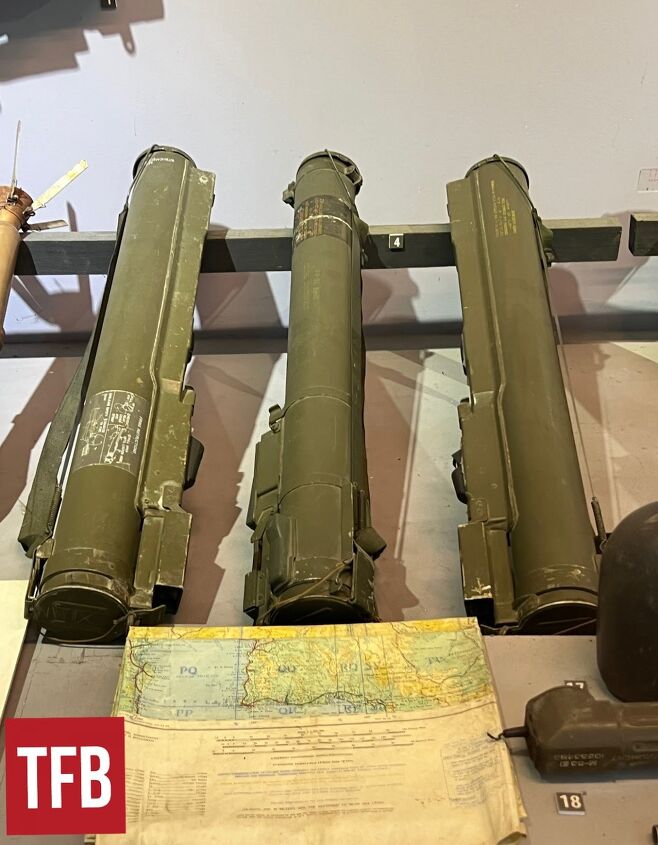
Next in my coverage of Vietnam War weaponry is the M72 Light Anti-Tank Weapon (LAW). By the late 1950s, U.S. infantry needed a far lighter, truly man-portable anti-armor weapon than the bulky Bazookas or rifle grenades of World War II and Korea.
In World War II, the U.S. had introduced the shoulder-fired Bazooka rocket launcher, but the German Panzerfaust had inspired the idea of a compact, one-shot, disposable weapon. In Korea, the 3.5-inch Super Bazooka and the HEAT rifle grenade were fielded, but both proved either heavy or limited in range. By 1960, the Army sought a single-shot launcher that could combine the Bazooka’s firepower with the Panzerfaust’s portability. The M72 LAW emerged from this requirement and was developed to replace the rifle grenade and cumbersome M20 Super Bazooka in squad-level anti-armor roles. In essence, it fused the light weight of a throwaway anti-tank grenade with the range of a rocket launcher.

The LAW
Development began in 1959 at Redstone Arsenal, Alabama, under the U.S. Army Ordnance Missile Command, with Hesse-Eastern Division (Norris-Thermador Co.) as the prime contractor. Two critical innovations defined the weapon early: a compact solid rocket motor developed at Redstone’s Rohm & Haas lab in 1959, and a telescoping launch tube that kept the weapon compact in transit but ready for action once extended. Hesse-Eastern, supported by subcontractors such as Picatinny Arsenal, refined the design through extensive trials in varied environments. The prototype was initially designated the XM72, and by 1961, it was well into testing, conceived by, developed by, and managed by Hesse-Eastern, under Army ordnance oversight.
In early 1963, the weapon was standardized as the M72 LAW and adopted by the U.S. Army and Marine Corps. Production began that year at Hesse-Eastern, delivering the first 66mm LAW launchers and rockets. The design was simple: a 66mm HEAT rocket packaged in a two-piece fiberglass/aluminum launch tube. The outer tube held the trigger, safety, sights, and rear cover; the inner tube carried the firing pin assembly. To ready the weapon, the operator pulled a pin, flipped off the front cover, extended and locked the inner tube, which cocked the weapon and deployed the spring-loaded sights. The M72 weighed just 5.5 lbs. (2.5 kg) in the A1 and A2 versions.
When fired, a percussion cap ignited the propellant, sending the rocket downrange with a backblast but virtually no recoil. Six stabilizing fins are deployed immediately after launch.
The rocket carried a shaped-charge HEAT warhead with a piezoelectric impact fuse. The nose crushed a crystal on impact, producing an electric current that detonated a base booster and the main charge. A setback safety kept the detonator grounded until the rocket had traveled a few meters, preventing premature arming. Early M72A1/A2 models could penetrate 8-12 inches (20-30cm) of rolled homogeneous steel. After firing, the launcher was discarded.
Initial Production and Fielding

The M72 was rushed into production and quickly issued to infantry. By mid-1963, Army and Marine units had begun receiving LAWs as their new squad-level anti-armor weapon. It rapidly became a standard kit: inexpensive to produce, light to carry, and ideally suited for jungle operations. Reports noted that a three-man rifle squad could carry two or three LAWs in addition to rifles and grenades, giving them a sudden anti-vehicle capability without heavy support.
Use in Vietnam
The first LAWs arrived in Vietnam, but with few tanks in the conflict’s early years, they quickly found broader uses. Infantry employed them against bunkers, pillboxes, and fighting positions rather than tanks. They proved highly effective for blowing through bunker walls, demolishing fortifications, or suppressing enemy firing positions. Squads often held a LAW for ambushes or defensive actions.

When armored vehicles did appear, most notably PT-76 light tanks, the LAW was used at 50-150 meters. Its effectiveness against armor was mixed. It worked well on lightly armored M113 APCs and half-tracks, but Soviet tanks often withstood direct hits. The most famous case was the 1968 Battle of Lang Vei, when 12 NVA PT-76s attacked a U.S. Special Forces camp. Defenders had about a dozen LAWs and organized ad hoc anti-armor squads. Many rockets malfunctioned or struck without detonating, though at least one tank was destroyed. The defenders relied more on recoilless rifles, artillery, and air support. By war’s end, the LAW had seldom scored tank kills; armor was rare in jungle fighting, but it was invaluable in bunker-busting and urban combat. During the 1972 Easter Offensive, South Vietnamese troops successfully used LAWs in city battles to stop advancing NVA PT-76s and T-54s.
Jungle conditions also tested the system. Early M72s were prone to misfires, and humidity sometimes corroded components or compromised the fuse. The piezoelectric impact system was more intricate than simple mechanical alternatives. Reliability improved by 1968, though dud rounds persisted in some battles. Even so, troops valued the LAW’s portability and fire-and-forget simplicity. Unlike the two-man Bazooka, a single Marine or soldier could fire the LAW independently, perfect for Vietnam’s patrols, where squads often carried two to three LAWs each.

Notable engagements included Lang Vei in 1968 and countless smaller actions. Marines credited LAWs with neutralizing Viet Cong machine-gun nests and mortar pits. They were also indispensable in urban fighting, such as Hue and Da Nang, where the M72s were used against buildings and fortifications.
Advantages and Limitations
The LAW’s strengths were clear. Lightweight, simple, and disposable, it required no reloads or crew. A dispersed squad still retained organic anti-armor capability. Its 200m effective range matched the enemy’s RPG-2, but the LAW was lighter and more rugged. Its fiberglass tube was water-resistant and demanded less care than the Bazooka’s delicate electrical ignition system. It excelled at breaching bunkers and fortifications in both jungle and urban fighting.
Yet limitations persisted. Its small warhead was insufficient against heavy armor like the T-54, and often, multiple hits were required even on lighter tanks. The original sighting system had issues where troops often misused the sight, reducing hit probability. The M72A1 incorporated stadia lines in its reticle to help gunners gauge distance against known target sizes, though early M72s lacked these. Even with improvements, effective use required more training than expected.
M72 Influence
The M72’s influence extended far beyond U.S. forces. Inevitably, captured LAWs fell into North Vietnamese and Soviet hands. Moscow’s engineers examined the weapon closely and were impressed by its portability, simplicity, and one-shot philosophy. Soviet doctrine had emphasized reloadable systems such as the RPG-7, but the LAW demonstrated the advantages of cheap, lightweight firepower easily used by conscript armies.
The result was the RPG-18, a near-copy of the LAW. Using a collapsible fiberglass tube and a one-shot 64mm HEAT rocket with pop-out fins, it entered Soviet service in 1972. The similarities were unmistakable. The Soviet Union had effectively reverse-engineered the LAW concept. From there, a lineage of disposable Soviet and later Russian launchers followed, all tracing their origin back to the LAW. What began as a solution to Bazooka and Panzerfaust lessons reshaped Soviet infantry doctrine and fueled a lasting Russian obsession with disposable rockets.

Conclusion
The M72 LAW answered the Vietnam-era call for a lightweight, disposable anti-armor weapon that every infantryman could carry. Drawing on lessons from World War II, squads were immediately given rocket firepower without crew-served systems. It was first issued in 1963, with widespread fielding beginning around 1965. It was valued for its portability, bunker-busting effectiveness, and ease of use, even if its tank-killing ability was limited.
After Vietnam, the LAW evolved through new variants and continued in service worldwide, shaping U.S. and Soviet doctrine. Its most enduring legacy, however, was proven in Southeast Asia: a compact, disposable 66mm launcher that placed destructive power in the hands of the individual soldier. That shift became most evident after the U.S. withdrawal, as the conflict transformed from a guerrilla war into a conventional combined-arms struggle fought primarily by South Vietnamese forces.
Sources:

Lynndon Schooler is an open-source weapons intelligence professional with a background as an infantryman in the US Army. His experience includes working as a gunsmith and production manager in firearm manufacturing, as well as serving as an armorer, consultant, and instructor in nonstandard weapons. His articles have been published in Small Arms Review and the Small Arms Defence Journal. https://www.instagram.com/lynndons
More by Lynndon Schooler


![[SHOT 2026] Ghoststar Tactical AR15 Stocks Take Glock Mags](https://cdn-fastly.thefirearmblog.com/media/2026/01/28/01511/post.jpg?size=350x220)

![[SHOT 2026] RISE Triggers Rev 535 - Snap-In AR Trigger System](https://cdn-fastly.thefirearmblog.com/media/2026/02/05/00372/shot-2026-rise-triggers-rev-535-snap-in-ar-trigger-system.jpg?size=350x220)


![[SHOT 2026] XS Sights Has New Lever-Gun, Pistol Options](https://cdn-fastly.thefirearmblog.com/media/2026/01/21/00441/post.jpg?size=350x220)

![[SHOT 2026] Savage Arms Builds A Better Model 110 (And Slug Guns, Too)](https://cdn-fastly.thefirearmblog.com/media/2026/01/23/15021/post.jpg?size=350x220)


Comments
Join the conversation
The early LAWs were ineffective at Lang Vei for a number of reasons but, two stand out. Soldiers were not trained well on how to employ the "new" weapon" and many of them were fired inside the minimum safe arming distance. The war head would not go off unless the projectile had gone a certain minimum distance. Same concept employed on 40mm M79/M203/M320.
the law wasn't cocked by locking it open. you still had to pull the little lever forward to cock it. also still used it the U.S. military