The Best Beginner AR-15 in 2026

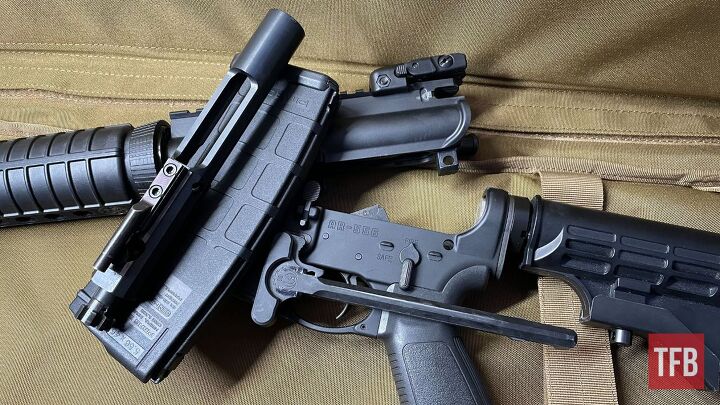
I’ve had buyer's remorse when purchasing a new gun, so in this article, I strive to help you avoid that awful feeling by providing you with the best beginner AR-15s on the market. I love building AR-15s, but my first wasn’t a build-your-own project, and I’m glad I purchased a complete gun because I didn’t know what I wanted until I’d taken it to the range several times. This is why all the ARs below are functioning firearms out of the box; you won’t have to order a lower from one company and an upper from another or install any parts (but you’ll get there one day!). I gathered input from other AR-15 experts at TFB, checked reviews, and tested (fired 1,000+ rounds through) several beginner ARs to compile this list. Let’s start with my top pick.
More AR-15 Content @ TFB:
- Best AR-15 Upgrades
- Best Optic for the AR-15
- The Best Suppressor For The AR-15
- Best AR Pistols
- Best AR-15 Charging Handles for 2025
- Best AR-15 Cleaning Kits
- AR Barrels, Explained
- How to Choose the Ideal Twist Rate for Your AR-15
- Best AR-15 Slings
- The 5 Best AR-15 Tools for Your Gun Bench in 2025
- How to Clean Your AR-15: A Complete Guide
TFB Best Entry Level AR-15 Picks
Model | Price | Barrel Length | Barrel Type | Gas System | Weight | Our Verdict |
Ruger AR-556 | $750 | 18” | Cold Hammer-Forged 4140 Chrome-Moly Steel | Mid-length | 6.8 lbs | Best Starter AR-15 |
PSA PA-15 | $530 | 16” | Chrome-Moly Vanadium 4150V Steel | Mid-length | 6.5 lbs | Best AR-15 Under $1,000 for Beginners |
Springfield Saint Victor | $1,100 | 16” | Chrome-Moly Vanadium | Mid-length | 6.9 lbs | Best Mid-Tier AR-15 |
Geissele Super Duty MOD1 | $2,125 | 16” | Cold Hammer Forged, Chrome-Lined | Mid-length | 7.6 lbs | Best Top-Tier AR-15 |
BCA BC-15 | $450 | 7.5” | Chrome Moly Vanadium 4150 Steel | Pistol-length | 4.7 lbs | Best Entry-Level AR-15 Pistol |
What To Look For In Your First AR-15
Knowing what matters and what’s just marketing fluff is overwhelming when you’re purchasing a new firearm. Here are a few things to keep in mind while searching for your first AR-15.
Barrel Material
The barrel material or treatment it receives affects the barrel life, accuracy, and overall quality. Cold-hammer-forged barrels are durable, but chrome lining adds longevity, especially in extreme heat, such as during rapid fire or full-auto. Nitride is often the best choice for beginners because it offers good accuracy, is corrosion-resistant, and costs less, but it’s not as durable as chrome lining.
Gas System (Pistol vs. Carbine vs. Mid-Length)
The better gas system depends on the barrel length you choose. In most instances, a mid-length will be ideal because it provides a smooth, lower-pressure impulse and wears less in 14.5”+ barrels. However, a carbine-length system is better for barrels 10”-14.5” (also for suppressed shooting) because it cycles more reliably, but it’s a little snappier. Pistol-length gas systems are best in 10” and shorter barrels.
Twist Rate
The barrel’s twist rate affects how the bullet stabilizes in flight, directly correlating to accuracy. Faster twist rates are better for stabilizing heavier, longer bullets, while slower twist rates are better for lighter, shorter bullets. Most AR-15 twist rates will be 1:8, 1:7, or 1:6 when chambered in 5.56 NATO. 1:6 is a fast twist rate, whereas 1:10 and 1:12 are slower twist rates.
Furniture Standards
When discussing firearms, the term furniture refers to the grip, stock, handguard, and other features that affect comfort and feel. These are items that can often easily be replaced on an AR-15, and entry-level AR-15s won’t have the comfortable feel of the top-tier custom AR’s. While it’s important to purchase an AR that’s comfortable, remember the beauty of the AR platform is how simple it is to replace broken, worn-out, or unwanted parts.
How Much to Actually Spend
Many new shooters automatically assume that they can spend their entire budget on the firearm and forget about optics, spare magazines, ammo, slings, cases, cleaning supplies, a gun safe, and training. A $1,000 rifle can quickly turn into a $3,000 rifle by the time you purchase everything else. I always recommend firearms training for everyone, new and experienced shooters. Firearms training should be continuous, so always leave room in your budget for it.
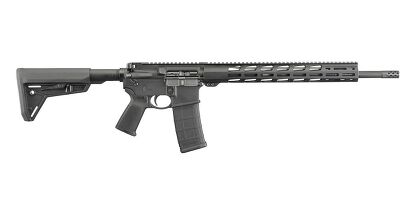
Ruger AR-556 MPR - Best Starter AR-15 Overall
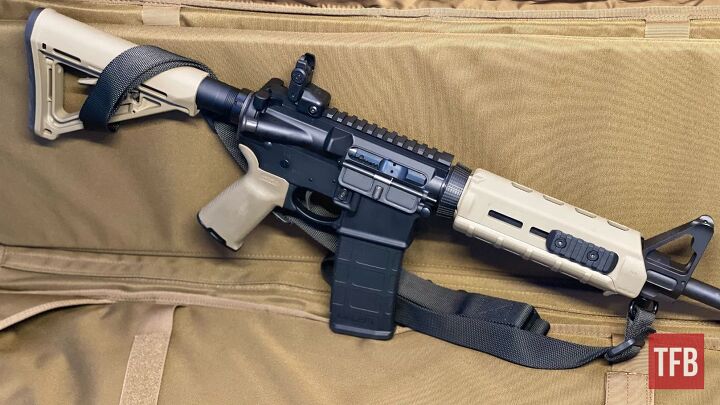
Specs:
- Caliber: 5.56 NATO
- Overall Length: 38.25”
- Barrel Construction: Cold Hammer-Forged 4140 Chrome-Moly Steel
- Barrel Length: 18”
- Twist Rate: 1:8
- Weight: 6.8 lbs
Pros & Cons
Pros:
- Trusted Brand
- Reasonably Priced
- Reliable
- Quality Components
Cons:
- Upgrades Are Likely In Your Future (trigger and charging handle)
- Soon to be replaced/ phased out
Why I Chose It
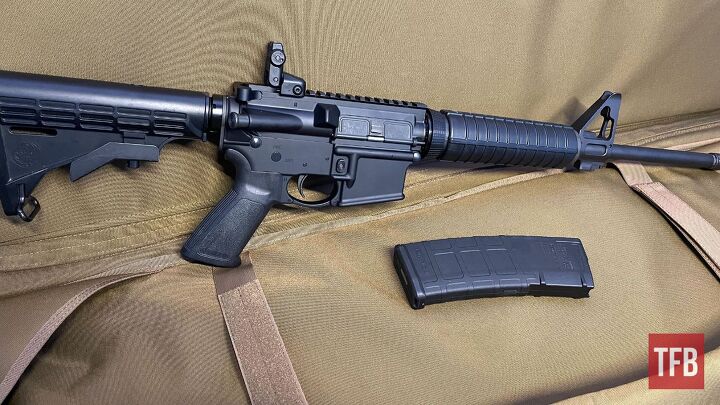
The Ruger AR-556 is the best beginner AR-15 because it’s manufactured by a trusted brand, is affordable, and goes bang when you pull the trigger. While it’s not a high-end AR (we’ll get to one in a minute), it’s ready to slap an optic on, buy some ammo, and head to the range.
Ruger priced this AR about the middle of the road, so you’ll find cheaper and more expensive ones, but Ruger used quality components to ensure reliability. For example, the barrel is cold hammer-forged chrome-moly 4140 steel, which is on par with others in this price range (and on the list). The twist rate is 1:8, which means you get one rotation every eight inches, most ARs will be 1:7, 1:8, or 1:9.
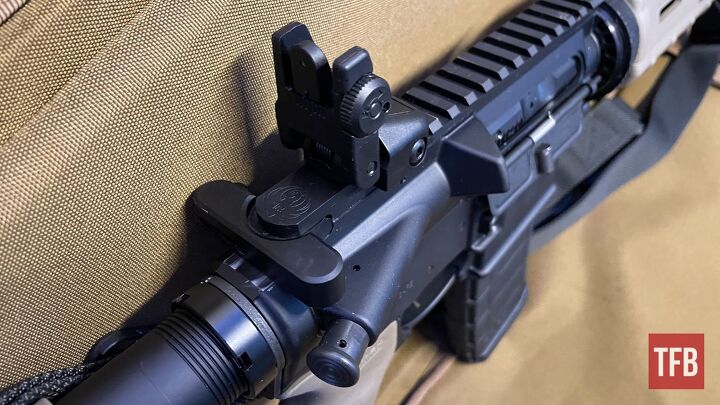
Eventually, you’ll find some parts to upgrade, but that’s the case with EVERY AR I’ve owned, so I can’t knock it too much for that. The charging handle and trigger are two of the first parts that most shooters upgrade. The furniture (anything that doesn’t directly affect the shooting capabilities like the stock, grip, foregrip, and other AR accessories) are also parts you’ll want to upgrade in the future. But they are by no means a must for a new AR-15 owner. You won’t be disappointed when starting with the Ruger AR-556.
Ruger launched the new Ruger Harrier at the SHOT Show 2026. I haven’t had a chance to test it at the range yet, but by the looks of it, it should only improve upon the AR-556 and soon replace it as our top pick for the best AR-15 under $1,000 for beginners.
Ruger AR-556 MPR
Palmetto State Armory PA-15 - Best Budget-Friendly AR-15
Specs
- Caliber: 5.56 NATO
- Overall Length: 33”
- Barrel Construction: Chrome-Moly Vanadium 4150V Steel
- Barrel Length: 16”
- Twist Rate: 1:7
- Weight: 6.5 lbs
Pros & Cons
Pros
- Inexpensive
- Reliable
- Decent Components
Cons
- Furniture Upgrades Are In Your Future
Why I Chose It
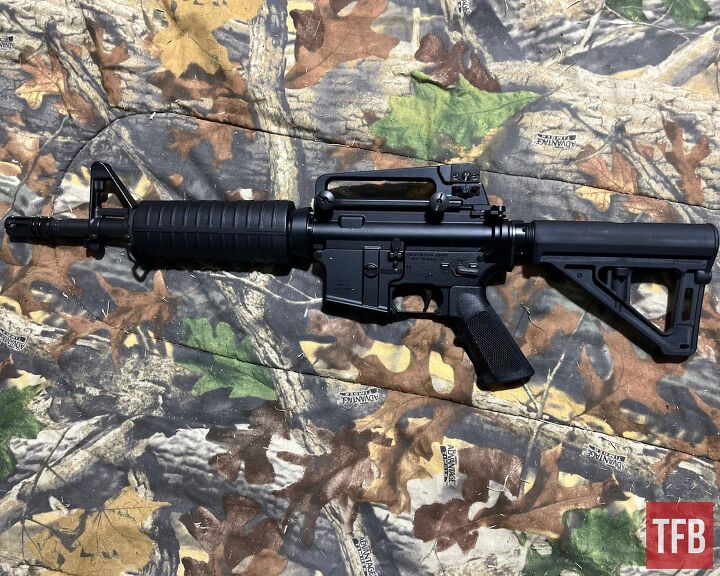
The PSA PA-15 (and nearly all PSA ARs) is one of the best cheap AR-15s you’ll find because it’s reliable and uses decent components. My brother owns two and loves them. You can save even more money if you pick up a BLEM—a gun with often only slight blemishes, often sold at a deep discount.
Some guys knock PSA ARs because “they’re not as good as the XYZ brand.” Then you see that the XYZ brand costs three or more times the price of the PSA AR-15. No one claims this is the ultimate AR-15. You’ll definitely find some things you’ll want to upgrade (trigger, grip, and stock are the first things most upgrade), but you’ll be hard-pressed to find a better one at this price.
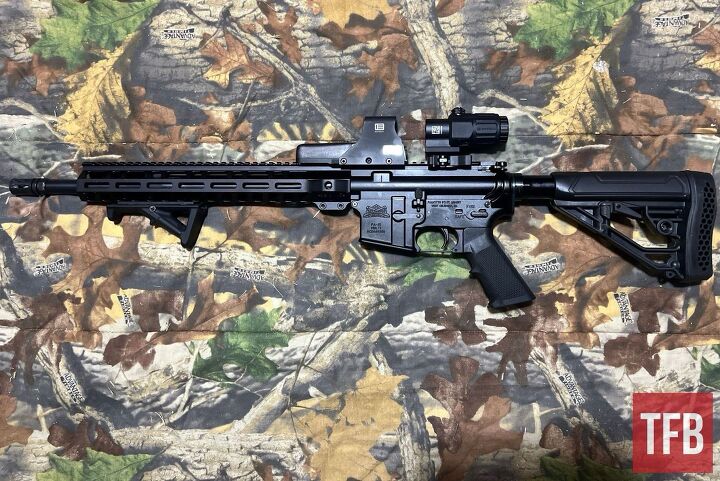
Many advanced AR-15 lovers recommend using a PSA lower when building your first AR, but most also agree that a Mil-spec lower is a Mil-spec lower.
I’ve fired my brother's PSA ARs without any problems and have helped upgrade some parts on them. If I were looking for my first AR, I wouldn’t hesitate to start with the PSA PA-15 because it’s inexpensive, leaving a lot of room in the budget for high-quality optics and any other upgrade you might want.
The Smith & Wesson M&P15 Sport III is a very close second and nearly overtook the PSA PA-15 for the best budget AR-15 (it was just a bit costlier at $650 to $800). The Sport III replaced the discontinued Sport II with several upgrades, including a free-float M-LOK handguard, a mid-length gas system, and 5 RH rifling (1:8 twist). If you’re willing to spend a little bit more on a reputable name like Smith & Wesson, then the Sport III is well worth the investment for the best entry-level AR-15.
Springfield Saint Victor - Best Mid-Tier
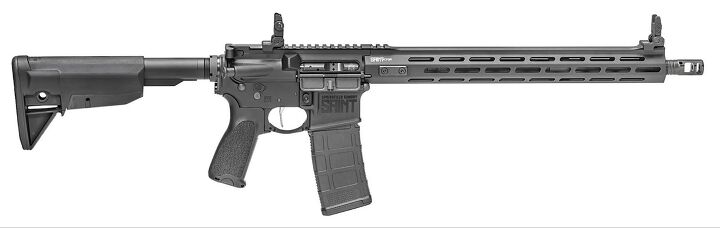
Image sourced from Springfield-armory.com.
Specs
- Caliber: 5.56 NATO
- Overall Length: 35.5”
- Barrel Construction: Chrome-Moly Vanadium
- Barrel Length: 16”
- Twist Rate:1:8
- Weight: 6.9 lbs
Pros & Cons
Pros
- Trusted Brand
- Reasonably Priced
- High-quality components
- Reliable
Cons
- More Costly Than Other Mid-Tier AR-15s
Why I Chose It
The Springfield Saint Victor is perfect for us middle-of-the-road shooters. If you’re looking for quality without the high-end price tag, this is the AR-15 for you.
The Springfield Saint Victor is crafted with high-quality components, such as Springfield’s free-floating M-LOK handguard, nickel-boron trigger, Melonite-coated barrel and carrier group. Thus, this AR is exceptionally reliable.
However, it is on the higher end of the mid-tier range because it utilizes the parts mentioned above. Still, the Springfield Saint Victor is an excellent AR-15 to ignite the addiction.
An alternative to the Springfield Saint Victor is the IWI Zion-15; it’s a duty-grade 5.56 rifle that costs just under $1,000. The 4150 Chrome Moly Vanadium HB 16” barrel will last you for thousands of rounds, and the adjustable B5 stock ensures a good fit for your starter AR-15. The quality and reliability are a given with this IWI AR-15, and it didn’t edge out the top spot because other AR lovers at TBF raved about their Springfield Saint Victor.
Geissele Super Duty MOD1 - Best Premium Beginner AR-15
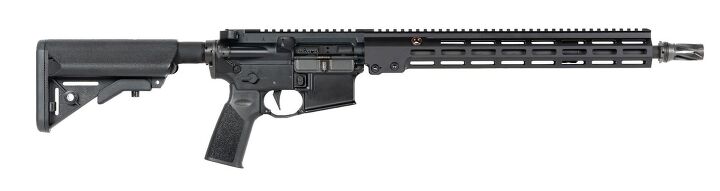
Image sourced from Geissele.com.
Specs
- Caliber: 5.56 NATO
- Overall Length: 36.875”
- Barrel Construction: Cold Hammer Forged, Chrome-Lined
- Barrel Length: 16”
- Twist Rate: 1:7
- Weight: 7.6 lbs
Pros & Cons
Pros
- Premium Brand
- Highest-Quality Components
- Reliable
- Needs Minimal Upgrades
- Match-Grade Accuracy
Cons
- Expensive
Why I Chose It
If you’re in the “buy once, cry once” crowd, the Geissele Super Duty MOD1 is the perfect beginner AR-15. It is a custom-quality AR straight out of the box, requiring minimal upgrades (if any).
At this price point, reliability and high-quality components should be a given. The heavy profile Cold Hammer Forged, chrome-lined barrel and Nanoweapon-coated Reliability Enhanced Bolt Carrier Group (BCG) handle high rates of fire while maintaining accuracy and reliability. The SSA-EX two-stage trigger gives you incredible control and performance, as well as many other high-end components you won’t find on a cheap AR.
But all of this comes at a steep price compared to the rest of the AR-15s on this list.
If you have no interest in building an AR in the future, the Geissele Super Duty MOD1 is an excellent place to begin (and end). If you’re looking for an ultra-compact premium rifle, the Geissele GFW or GDP with Triport gas systems were announced at SHOT Show 2026 and are worth checking out for all the incredible features packed into these firearms.
Bear Creek Arsenal BC-15 - Best AR-15 Pistol for Beginners
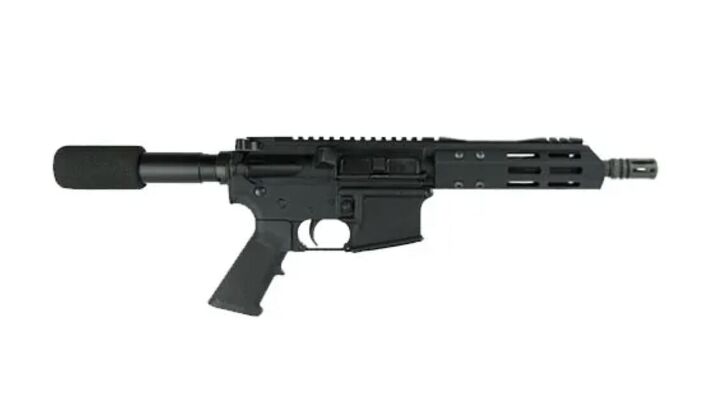
Image sourced from BearCreekArsenal.com
Specs
- Caliber: 5.56 NATO
- Overall Length: 22”
- Barrel Construction: Chrome Moly Vanadium 4150 Steel
- Barrel Length: 7.5”
- Twist Rate: 1:7
- Weight: 4.7 lbs
Pros & Cons
Pros
- Inexpensive
- Solid Feel
- Unique & Fun
Cons
- Less Accurate Than a Carbine or Rifle
- Upgrades Are In Your Future
Why I Chose It
If you’re looking for an AR-15 pistol, I’ve been impressed with my BCA AR after several trips to the range. The BCA BC-15 is inexpensive, feels solid, and functions well.
When I first saw the price of Bear Creek Arsenal ARs, I was shocked by how inexpensive they are, even when they’re not on sale (many of them often are, so you get an even better deal!).
Despite what I’ve seen on the internet, I’ve had a great time with my BCA BC-15 and haven’t experienced why so many hate on BCA.
When I pulled my BCA AR out of the box, I was impressed with how solid it felt. There were no rattling parts (indicating everything fit snugly), and it just didn’t feel cheap. It also doesn’t function like a cheaply built AR-15. It cycles most ammo well (I don’t recommend feeding it the cheapest ammo and expecting no malfunctions)
In general, I like AR-15 pistols because they’re different. Their shorter barrel and lack of stock (to comply with federal regulations) give them a special look and a unique (and exciting) shooting experience. The BCA BC-15 does this for much less than many of its competitors, which is why I still believe it’s a great choice for a starter AR-15 pistol after hundreds of rounds fired through it.
However, there are a couple of downfalls you’ll run into.
The first has to do with the shorter barrel; it will be less accurate than a 16” barrel, but you’ll rarely notice it at typical pistol distances (within 50 yards). The other con is that you’ll want to spend more money on upgrades. I would recommend a pistol brace to aid in accuracy, and I’m considering changing my grip and upgrading the trigger.
I've been impressed with the BCA AR pistol and would recommend it to any first-time AR-15 pistol buyer, despite the naysayers. For plinking at the range and learning how to properly fire an AR-15 pistol, it’s a great deal. However, the PSA Dagger AR Pistol and new Hi-Point HP-15 (just announced at SHOT Show 2026) are two other solid options for beginners. Each one offers comparable pricing and reliability.
Bravo Company Manufacturing - Honorable Mention
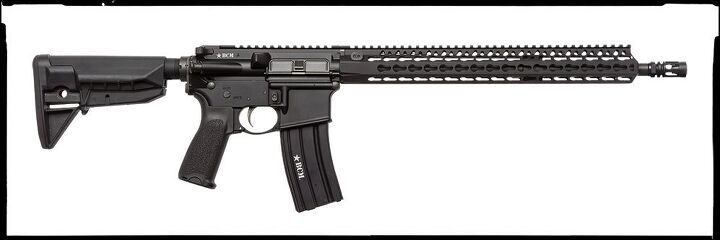
Image sourced from Bravocompanyusa.com
Specs
- Caliber: 5.56 NATO
- Overall Length: 35.5”
- Barrel Construction:
- Barrel Length: 16”
- Twist Rate: 1:7
- Weight: 6.1 lbs
Pros & Cons
Pros
- Premium Brand
- Custom Quality Components
- Requires Minimal Upgrades
- Reliable
Cons
- Expensive
Why I Chose It
I must mention the BCM RECCE-16 KMR-A because it’s another high-end AR with a large and loyal following. If you want an AR that needs virtually no upgrades out of the box, then a BCM AR is the way to go.
You can trust that it will go bang and cycle reliably every time you pull the trigger because BCM uses high-quality parts designed to perform in a home defense situation or at the shooting range.
The biggest drawback is the initial price tag, but as I said earlier, “buy once, cry once.” If you’re comfortable with the idea as a beginner, a common cost-saving trick is to buy an upper receiver from BCM and then a lower receiver from a budget outlet like Palmetto State Armory.
Note From The Author:
Several readers have unsurprisingly asked about Colt's and a few other AR-15 manufacturers' absence from the list, and the answer is simple. This isn’t an all-encompassing list of every starter AR-15 on the market. Colt makes some excellent AR-15s and has a dedicated fanbase thanks to their quality and reliability. Colt was outshone by some of its mid-tier competitors in terms of price and personal preference for features similar to its own.
FAQs
Is an AR-15 a good beginner gun?
Yes, an AR-15 is a good beginner gun.
What size AR-15 is best for home defense?
An AR-15 pistol or PCC is best for home defense.
What is a good starter rifle?
A bolt-action 22 LR is a good starter rifle; the next step up would be an AR-15 chambered in 5.56.
How much should I spend on my first AR-15?
You should only spend as much as your budget allows on your first AR-15. You still don’t know whether you’ll like it or how often you’ll use it, so I recommend starting with a less expensive option and working your way up over time.
Should I build or buy my first AR-15?
Buying your first AR-15 is generally the best option, so you know what to look for when you build your next one.
What caliber is best for a beginner AR-15?
5.56 NATO is best for a beginner AR-15 because it’s very common, inexpensive, and generates little recoil.
We are committed to finding, researching, and recommending the best products. We earn commissions from purchases you make using the retail links in our product reviews. Learn more about how this works.
Growing up in rural Oklahoma has given me the privilege of hunting and shooting my entire life. I built a shooting range to sight-in my deer rifles and send some lead downrange with my pistols.
More by WesKL




Comments
Join the conversation
I have a "cheap" DPMS AR 15 "service rifle" that I used in rifle matches. Made expert with it. A friend of mine had to have his Rock River AR rebarreled (lots of rounds through it) and I loaned him my DPMS. I had to arm wrestle him to get it back.
Those were "the good old days". I still have that AR. (first one I bought and I bought it "used")
If you live on the east coast and many other places the furthest real world range you would have to shoot at something would be 150 meters. You dont need an expensive rifle to do that but you will need to replace that crappy milspec trigger.