Silencer Saturday #415: How To Choose Your First Suppressor

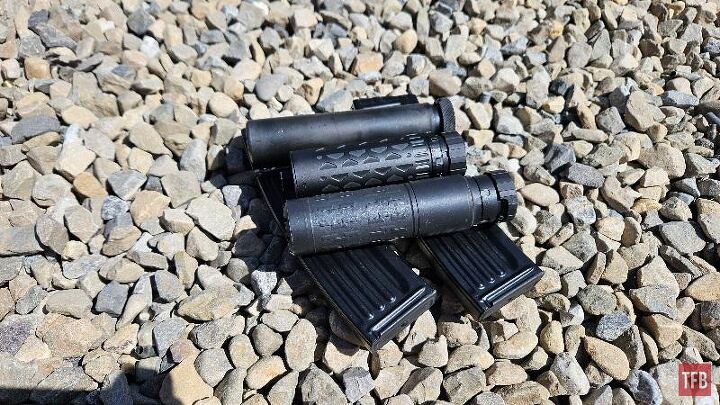
Good afternoon, everyone, and welcome back to TFB’s Silencer Saturday, brought to you by Yankee Hill Machine, manufacturers of the new Victra-20 shotgun suppressor . This week, we are discussing how to choose your first silencer. There are so many options that it can be overwhelming to figure out what you need, but we can help you figure out what is right for you.
Silencer Saturday @ TFB:
- Silencer Saturday #414: AAC Legacy Suppressors Return (...kind of)
- Silencer Saturday #413: eForms Situation Report
- Silencer Saturday #412: Precision Armament TiTrex Suppressor
- Silencer Saturday #411: The CMP Allows (Some) Suppressors
- Silencer Saturday #410: What Does 2026 Hold?

Defining Priorities
The first step in selecting a silencer purchase is deciding what your priorities are. Back when I was working a gun counter, I was asked probably thousands of times “what silencer should I buy?” and the answer was always the same: “What do you want to use it for?” The ideal next silencer for a person who already owns dozens of them will be very different from a first silencer purchase.
My advice would be picking a silencer that covers the thing you shoot the most, with bonus points if it works on your next most used gun as well. What exactly that is for you may be different, but for most people .30-caliber rifle suppressor is a good place to start. That is one of the most popular options because it handles the vast majority of common rifle cartridges. It also will work well enough on smaller cartridges like 5.56 NATO, 6mm ARC, and 6.5 Creedmoor. It will not be ideal and will not work quite as well as a suppressor made for those applications but it will be much better than nothing!
This is not a hard and fast rule, and there are reasons why you would choose to do something different. One example is a hunter who wears ear protection religiously for his shooting on the range, but never wears it when touching off his .300 PRC on the hunt. The hearing damage from shooting magnum rifles (especially with muzzle brakes!) without ear protection is a real concern, and protecting your hearing by limiting your worst source of exposure is a good idea.
Another good place to start is a rimfire suppressor. This may be the most fun type of suppressor, combining cheap subsonic ammo with excellent noise reduction. They also tend to be pretty inexpensive, and there are many good options for threaded host guns. One downside is that most rimfire suppressors are only rated for use up to .22 magnum or 5.7x28, which limits you to a small group of calibers. But this is also a great way to introduce new shooters to guns with the least drama possible.


How you will be using the suppressed firearm also plays into this. For example, let’s say you spend a lot of time clearing houses and always wear hearing protection with integrated communication systems. In that use case, a short “K” suppressor can make a lot of sense because you are not really trying to make the gun quiet, you want to tame the noise a little without making it hard to maneuver indoors. But for most people, a shorty rifle suppressor is a let down because they were wanting more suppression.
Another example is a backcountry hunter who hauls a rifle many miles on his back. That guy will care greatly about a few ounces of weight reduction between models. For a shooter who only visits the local range that weight difference will not make much of a difference. Knowing what you will use the suppressor for helps sort out the right first option for you.

How Much Do You Want To Spend?
Let’s talk about money. Most of us do not have unlimited discretionary funds. If you do, feel free to skip this part, but you better buy some weird, interesting, expensive suppressed guns if this is you.
As with guns, optics, electronics, motorcycles, watches, and myriad other products, a huge percentage of the price tag comes from trying to capture the last few percentage points of performance. An 80% or 90% solution may cost 50% of what the top of the line item costs. But unlike other products, it is hard to resell a silencer for Americans. It can now be done without a $200 tax stamp, but it still requires a clunky process and a lot of trust between buyer and seller.

There are a few features you should pay close attention to. One of the foremost is the mounting system. As a general rule, quick detach suppressors will cost more than direct thread models. The additional material and expense of the muzzle device and mounting mechanism accounts for that extra cost. If your silencer will live on one gun all or most of the time, then quick detach is not necessary. If you are not sure how you will use it down the road (and even if you are), look for a model with HUB threads. This industry standard thread system allows you to change the mounting system out for QD, direct thread, or a “coarse thread” mount like the Dead Air Xeno.
Exotic materials can have very impressive properties but they can drive up the price significantly. Aluminum and steel are the most “normal” materials used in silencers, and while they are not cutting edge they can work just fine. Titanium adds some expense but is common in lightweight suppressors, however, it is not the best choice for very hard use or full-auto applications. Fancy materials like Inconel and Haynes 282 are incredibly durable without being too heavy, but also cost more.
Complex designs can also add to the price point, but this is less true than it used to be thanks to additive manufacturing. Traditional silencers were made of a metal tube with baffles welded inside. Now, thanks to 3D printing, very complex one-piece designs can print out without taking a ton of machine time. This keeps costs down while offering a sturdy and high performance product.
These newer designs usually include some form of gas venting that reduces backpressure buildup. On older silencers, the baffles trapped gas and forced it back down the barrel and gas system which cycled the bolt harder. These new designs reduce backpressure with varying levels of effectiveness, usually by venting from the front of the silencer. This is a feature to look for if you will be using the silencer on a semiauto.
One feature that is very worthwhile on rimfire suppressors is an easy cleaning method. The lead projectiles used on most cheap .22LR ammo causes lead buildup inside the silencer body. If enough lead builds up then there is no room for the gases to expand, making the silencer less effective. Make sure a rimfire can has some way of taking it apart or has a design that can be cleaned in an ultrasonic cleaner.
Warranty service is another thing to keep in mind. It is worth doing a little checking around to see if the manufacturer you are considering has a reputation for good warranty service. A warranty is worthless if the company that backs the product is not around to honor it.

The Paperwork Process
The prior advice works for people anywhere that silencers are legal, but this next part is for Americans navigating the buying process. You cannot submit paperwork until you have paid for a specific silencer and have a serial number to put on the paperwork. That is why we put the buying process before the paperwork.
It is best to work through a dealer for your first silencer purchase. It is possible to purchase a silencer from another private individual without going through a dealer, but the process is clunky and a lot of trust is involved. Stick with a dealer on the first one, and it is usually best to use a dealer that does a high volume of NFA work with silencers, machine guns, short barrel rifles, and such.
Two major players in the silencer sales space are Silencer Shop and Silencer Central. Both offer streamlined processes to purchase the silencer, and walk you through the steps in a clear way. Whether you should buy your silencer as an individual or through a trust or business entity is a more complicated topic we will leave for another day. But with tax stamps lowered to $0, you can transfer items into or out of an entity at no cost if you change your mind.

Thanks for joining us for this guide to picking the right first silencer for you. I intentionally did not list specific brands or models because the landscape is changing so quickly and my recommendations will probably be different six months from now. But hopefully this guide can help you ask the right questions to sort out what you need from what you want and make a choice you are happy with.
We’ll see you back here next week with silencer coverage from SHOT Show!

SILENCER SHOP – HANSOHN BROTHERS – DEADEYE GUNS
MAC TACTICAL
ALL YHM PRODUCTS AT BROWNELLS
DEALERS: If you want your link to buy YHM suppressors included in future Silencer Saturday posts, email: silencers@thefirearmblog.com
AKA @fromtheguncounter on Instagram. Gun nerd, reloader, attorney, and mediocre hunter.
More by Daniel Y


![[SHOT 2026] Pulsar Updates: New Trail 3 LRF Optics](https://cdn-fastly.thefirearmblog.com/media/2026/01/27/17181/shot-2026-pulsar-updates-new-trail-3-lrf-optics.jpg?size=350x220)



Comments
Join the conversation
I'll choose mine based on which companies see the writing on the wall and start selling good quality cans for reasonable prices instead of the absurdist captive-audience pricing the big names have been coasting on for a generation. Or I might make friends with someone who works at a machine shop and just take a bag of my own popcorn to the movies.