Front Line Friday #9: Range Qualification Realities

Passing the qual and being ready to shoot are not the same thing. Most agencies have built their training calendar around one and called it the other.
Front Line Friday is a weekly column on duty-grade realities for first responders.
Welcome back to Front Line Friday. This week is an editorial, and the topic is one that tends to produce uncomfortable agreement when it comes up among training officers and rangemasters: range qualification, as it’s practiced in most agencies, measures compliance more reliably than it measures readiness. Front Line Friday is brought to you by Dead Air Silencers, whose support keeps this column going every week.

That’s not an indictment of the people running these programs. Most qualification standards were designed under real constraints, and most rangemasters and training officers are doing the best they can with the time, ammunition, and administrative calendar they’re given. The problem is structural, and structural problems don’t get solved by working harder within the existing structure. They get solved by naming the gap honestly and making deliberate choices about where to invest limited training time.
Front Line Friday @ TFB:
- Front Line Friday #1: The Reality Between Policy and Pavement
- Front Line Friday #2: Why Patrol Rifles Should Be Suppressed
- Front Line Friday #3: Stop Buying Gimmicks—Buy Time
- Front Line Friday #4: Patrol Rifle Setups to Reduce Training Burden
- Front Line Friday #5: Why Teams Fail at Simple Coordination
- Front Line Friday #6: Duty Belts, Vests, and Real Load Management
- Front Line Friday #7: Writing SOPs That Actually Stick
- Front Line Friday #8: The Small Gear That Prevents Lost Workdays
What Qualification Actually Measures

A qualification course measures whether an officer can hit a target, under low-stress conditions, in a structured sequence, with adequate preparation time, using equipment they know is functioning. That is a useful baseline. It is not a readiness standard.
The conditions under which the qualification is conducted are almost exactly opposite to the conditions under which firearms are actually deployed. Qualification happens in daylight or well-lit conditions. Real incidents frequently happen in poor or mixed lighting. Qualification involves a known target at a known distance on a predictable signal. Real incidents involve unknown threat indicators, decision-making under cognitive load, and no preparation signal. Qualification allows a deliberate shooting stance and an unobstructed lane. Real incidents involve vehicles, door frames, covers, and positions that no one practices. While many departments do have night/low-light quals, not all do.
None of this is new information. Most experienced training officers could recite this critique without prompting. The reason it matters to revisit it is that most agencies have responded to it by acknowledging the limitation while continuing to structure their training calendar primarily around the qualification event. The qualification becomes the destination rather than the baseline, and the training calendar is built backward from it.
When qualification is the goal, training produces officers who can pass the qualification. When operational readiness is the goal, qualification is one checkpoint within a broader program. Those are different training philosophies that produce different results, and it’s worth being explicit about which one your agency is actually running.
The Check-the-Box Dynamic and How It Develops

Check-the-box qualification culture doesn’t develop because someone decided it was a good idea. It develops because of competing pressures that are all real and all legitimate.
Qualification days are expensive. They consume range time, instructor hours, ammunition, and officer time that comes off patrol coverage. Every additional training evolution added to the qual day costs more of each of those resources. Administrators managing staffing shortages, tight ammunition budgets, and a training calendar already competing with mandatory legal and policy requirements have strong structural incentives to make qualification efficient. “Efficient” frequently means standardized, predictable, and short.
The qualification course itself is often constrained by accreditation requirements, state POST standards, or legal precedent around what constitutes adequate training documentation. Agencies operating within those frameworks may have limited flexibility to modify the qualification format without generating liability questions. Even when the people running the program know the qualification doesn’t fully reflect operational needs, they may be constrained in how much they can change it.
The result is a qualification culture that is defensible on paper and insufficient in practice. Officers pass the qual. The boxes get checked. The documentation supports the agency if a shooting goes to litigation. And the skill set that matters most in an actual critical incident, decision-making under stress, performance degradation management, low-light shooting, movement, and positional shooting, is trained inconsistently, if at all.
The Performance Gap Under Stress

The most consistent finding in law enforcement shooting research is that performance degrades significantly under the stress of an actual critical incident compared to range performance. Fine motor skills deteriorate. Perceptual narrowing affects target identification and situational awareness. Time perception distorts. Heart rate and adrenaline affect grip, trigger control, and follow-through. Officers who shoot clean qualification scores in a calm range environment frequently perform significantly below that standard when the situation is real.
This is not a character failure. It is human physiology. The degradation is predictable, well-documented, and only partially mitigable through training. But “only partially mitigable” is not the same as “not worth addressing.” The extent to which an officer can maintain functional performance under stress is directly related to how much of their shooting skill has been trained to the point of automaticity rather than conscious execution.
Conscious execution of shooting fundamentals, deliberately thinking through grip, sight alignment, and trigger press, is what happens during qualification and early training. Automatic execution occurs after enough high-quality repetitions, when the fundamentals run without attention. The difference matters under stress because cognitive load during a real incident is high, and attention is scarce. An officer who has to consciously manage their fundamentals while simultaneously making threat assessments and decision-making calls is splitting attention across too many tasks.
This is why volume of fire and scenario complexity matter more than qual score as indicators of readiness. An officer who has fired thousands of rounds under varied conditions and passed qualification at 85% is better prepared for a real incident than an officer who fires the minimum required rounds in a controlled format and passes at 95%. The qualification score measures something. It doesn’t measure the right thing.
What Stress Inoculation Actually Requires

Stress inoculation in firearms training means creating conditions during training that produce some of the physiological and cognitive responses associated with real incidents, so that officers have experience performing under those conditions before the first time it actually matters. It does not require elaborate scenario construction or expensive simulation technology, though both can help. It requires intentional design.
A few elements that produce meaningful stress inoculation within the constraints most agencies actually operate under:
Time pressure. Adding a realistic time constraint to a drill produces elevated heart rate and increases cognitive load in ways that better reflect field conditions. “Fire two rounds” and “fire two rounds in two seconds” produce different physiological states. Training with time pressure builds the ability to work efficiently under urgency without becoming rushed and sloppy, which is exactly the calibration a real incident requires.
Physical exertion before shooting. Brief, intense physical activity immediately before a shooting drill, a short sprint, a push-up set, jumping jacks, elevates heart rate and introduces some of the physiological effects of stress. Officers who have just shot after physical exertion must maintain their fundamentals under conditions that more closely resemble a real incident. This costs nothing to add to a training session and produces measurable benefit.
Decision-making requirements. Any training element that requires the officer to make a shoot/no-shoot decision, identify a target characteristic, or respond to a verbal cue rather than simply waiting for a signal increases cognitive load and better reflects field conditions. Even simple additions, “fire if the target has a weapon, hold if it doesn’t”, move training closer to the decision-making environment of a real incident.
Non-standard positions. Officers who have only ever fired from a standing, squared, unobstructed position have trained in one context. Patrol incidents happen from seated positions in vehicles, from one knee behind cover that wasn’t designed to be cover, from awkward angles in tight spaces. Training that includes a variety of positions, even periodically, not every session, builds a broader skill foundation.
None of these requires a major program redesign. They require intentional addition of elements that cost little in time or resources but add meaningful training value.
The Frequency Problem

The second structural problem in most qualification programs, after the content gap, is frequency. Quarterly qualification is the most common standard. Some agencies qualify semi-annually. A meaningful number qualify annually.
Firearms skill is perishable. The research on this is consistent: without regular reinforcement, shooting performance degrades measurably within weeks to months of the last training session. An officer who qualified in January and doesn’t fire again until April is not at the same performance level in March as they were in January. An officer who qualifies once a year is operating at degraded performance for most of the year.
The logical response is more frequent training, but resource constraints are real. Range time is limited. Ammunition is expensive and supply-constrained. Instructor availability varies. Most agencies cannot realistically add full qualification events to their calendar without removing something else.
The practical answer is not more qualification events, it’s more dry fire and skills maintenance that doesn’t require a range. Dry-fire practice, when conducted correctly, builds and maintains fundamental skills with no ammunition cost and minimal time investment. An officer who dry-fires for 10 to 15 minutes, two to three times per week between live-fire events, maintains more of their skill than an officer who waits for the next range day.
Most agencies have no formal dry-fire guidance, no encouragement of personal practice, and no tracking of officers' practice outside of formal qualification. Providing guidance on safe, effective dry-fire practice and encouraging it as a professional responsibility costs nothing and yields measurable performance maintenance.
Qualification Design: What Better Looks Like
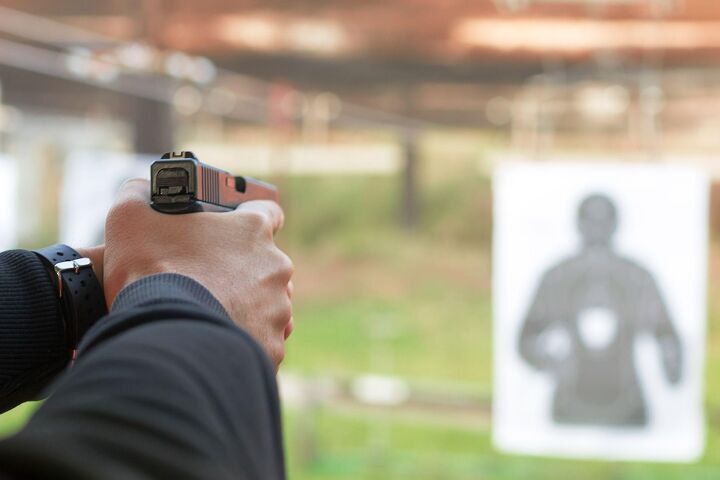
Redesigning a qualification course is constrained by accreditation requirements, legal standards, and resource constraints. But within those constraints, there is usually more flexibility than agencies exercise. A few principles that push qualification closer to a readiness measure:
Distance variety. Most qualification courses concentrate rounds at a small set of distances. Adding a few rounds at distances that reflect real incident data, which generally favors very close engagements, better reflects operational conditions without requiring major infrastructure changes.
Low-light components. If officers work in conditions where lighting is less than ideal, and nearly all of them do, some portion of their qualification should reflect that. Even a brief low-light or reduced-light component adds value that a daylight-only qualification doesn’t capture.
Reload and malfunction clearance. Qualification courses that never require a reload or simulate a malfunction do not measure a complete skill set. Including at least one reload and one simulated malfunction clearance in the qualification sequence measures skills that matter and builds them through the qualification process itself.
Documented performance trend. Tracking individual officer qualification scores over time is more useful than tracking whether they passed. An officer whose score has declined over four consecutive qualifications may be exhibiting early signs of a skill-maintenance problem or an equipment issue. An officer who consistently shoots at the top of their cohort may be a candidate for range staff or peer training roles. The data is there; most agencies don’t use it.
Fire/EMS: The Medical Skills Parallel

The qualification-versus-readiness gap in firearms training has an exact parallel in medical skills training for EMS and fire. Initial certification establishes a baseline competency. Recertification requirements maintain documentation. The skills most frequently needed under stress, such as tourniquet application, airway management, hemorrhage control, degrade without practice, just as firearms skills do, and the recertification timeline doesn’t always align with the decay curve.
EMS providers who perform a skill regularly maintain it. EMS providers who are certified on a skill and haven’t used it in 18 months may have significant performance gaps that a recertification written exam won’t reveal. The solution, frequent, brief, scenario-based skills reinforcement rather than relying on infrequent formal recertification, is the same solution that applies to firearms. The resource constraints are similar. So are the consequences of not addressing them.
For fire departments, the parallel applies to both medical skills and fireground operations. Certification documents competency at a point in time. Regular drills and skills maintenance sustain that competency. Departments that treat drill nights as administrative time rather than genuine skills practice are paying the same cost as agencies that treat qualification as a readiness standard.
Common Objections + Straight Answers
“Our officers pass the qualification. That means they can shoot.”
Qualification measures whether officers can pass the qualification course. It measures that reliably. The question is whether the qualification course reflects the conditions under which officers will actually need to shoot. If it does, passing the qualification is meaningful. If it doesn’t, passing the qualification is a necessary but insufficient indicator.
“We don’t have the budget or range time for more training.”
More training isn’t the only answer. Better use of the training time already available, adding time pressure, physical exertion, and decision-making requirements to existing drills, costs nothing and increases training value. Dry fire guidance and personal practice encouragement cost nothing. Small additions to existing qualification events can capture more useful data without requiring additional range days.
“We’re constrained by POST/accreditation requirements.”
Most accreditation frameworks set minimum standards, not maximum ones. An agency can exceed those minimums. The constraints are real, but they typically define a floor rather than a ceiling. Adding optional elements, tracking performance data beyond what’s required, and building a supplemental training program alongside the required qualification all fall within most accreditation frameworks.
“Officers don’t want more training requirements.”
There’s a difference between mandatory requirements and available opportunities. Officers who are given access to good training resources, encouraged to maintain their skills as a professional responsibility, and shown the connection between skill maintenance and performance under stress will often engage voluntarily. Framing maintenance of framing skills as a professional standard rather than an administrative burden significantly changes the reception.
Bottom Line / What to Do Monday
- Pull your qualification course design and ask honestly: what conditions does this measure, and how do those conditions compare to the actual incidents your agency has documented?
- Add one stress inoculation element to your next training session. Physical exertion before a drill, a time constraint, or a basic shoot/no-shoot decision requirement. Evaluate the effect on performance, then adjust accordingly.
- Develop a one-page dry fire guidance document for officers. Safe setup, recommended exercises, suggested frequency. Make it available at qualification and on any agency training portal.
- Begin tracking qualification scores over time per individual rather than just pass/fail. Look for trends over four or more qualification cycles.
- Identify two or three officers whose scores have declined across consecutive qualifications. Follow up individually to understand whether it’s a skills issue, an equipment issue, or something else.
- Add at least one reload and one malfunction clearance to your qualification course if it doesn’t currently include them.
- For rangemasters: run one low-light or reduced-light training evolution in the next quarter. It does not need to be elaborate. A single relay at dusk or under reduced artificial light adds value that no daylight course can capture.
- For supervisors: encourage voluntary dry fire and personal practice as a professional standard, the same way you’d encourage staying current on case law or department policy updates.
- For Fire/EMS: apply the same analysis to your medical skills refreshers. When did staff last perform tourniquet application under time pressure? If the answer is “at initial certification,” that’s the same gap.
- At your next training planning meeting, ask one question: Is our qualification the ceiling of what we train, or the floor? The answer shapes everything else.
Sign-Off
That’s Front Line Friday for this week: passing the qual proves you showed up. Readiness is what you built before you got there.
Next week: vehicle considerations, securing long guns, med gear, and comms without turning the car into a rolling junk drawer.
Tom is a former Navy Corpsman that spent some time bumbling around the deserts of Iraq with a Marine Recon unit, kicking in tent flaps and harassing sheep. Prior to that he was a paramedic somewhere in DFW, also doing some Executive Protection work between shifts. Now that those exciting days are behind him, he teaches wilderness medicine and runs an on-demand medical staffing business. He hopes that his posts will help you find solid gear that will survive whatever you can throw at it--he is known (in certain circles) for his curse...ahem, ability...to find the breaking point of anything.You can reach him at tom.r AT thefirearmblog.com or at https://thomasrader.com
More by Tom R


Comments
Join the conversation