The State Of The Canadian Gun Ban/Buyback


What’s going on in the Canadian gun world these days? Same as always—more legal wrangling back-and-forth between shooters and the government. But there have been some relatively major recent developments with the federal government’s so-called buyback. The feds are steaming full speed ahead, or trying to, while an increasingly large number of partners are telling the government, “We’re not helping.”
The Canadian gun scene @ TFB:
A quick recap
Canada’s current firearms bans are nearly six years in the making. In the aftermath of the Portapique murders in the province of Nova Scotia back in 2020, when a gunman dressed as an RCMP officer went on a rampage, then-Prime Minister Justin Trudeau announced his government would target a wide range of semi-automatic rifles with bans. The bans would cover both restricted rifles (already unavailable to anyone without special clearance of a restricted license; this includes the AR-15) and some non-restricted rifles (anyone with a standard Possession-Acquisition License can own non-restricted rifles; examples include the Ruger Mini 14).

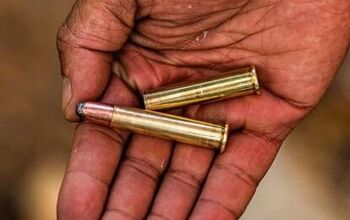
Since that first announcement, there has been much discussion about what is going to be included in the ban. The Liberal government has added many models to the list; just about every semi-auto PCC is banned now, along with some guns that bear zero resemblance to the semi-autos that were first targeted by Trudeau’s cabinet. These include big-bore hunting rifles such as those used by dangerous game hunters. See Jim Shockey’s example below:
Time would run out if we were to detail all the machinations of the federal government in the years since 2020; handgun transfers were banned, unless you were on an approved list of purchasers (basically, police, security services and Olympic shooting competitors). Other bans based on firearms’ features were proposed, then shot down after close scrutiny by lawmakers. The first gun bans of 2020 saw an amnesty offered, so shooters didn’t have to turn in their ARs or CZ858s right away; the government needed time to set up the program and spend millions to do so.

Now that setup time is supposedly over, the federal government has opened its buyback scheme up as of winter 2026.
The current state of affairs
As of January 19, 2026, the firearms buyback program opened; gun owners with now-banned firearms have until March 31 to declare their forbidden firearms to the feds. They have until October 30, 2026, to dispose of their firearms by handing them into authorities or deactivating the banned guns.
The program opened with a much-ballyhoo’d test run on Cape Breton Island, where the police chief responsible had family ties to the Liberal government. Based on lessons learned there, the federal program would spread across the country.
Bumps in the road
The buyback/seizure program (you say tomayto, I say tomahto) ran into trouble early. The Cape Breton program was planned to get 200 guns from the hands of locals, but only got 25 for the feds. Documentation of the Cape Breton experiment saw names of the firearms blacked out. There were rumors that all the feds took were standard hunting-style firearms from a widow cleaning out her husband’s collection. These rumors are unsubstantiated, but it is certain that authorities did not seize anywhere near as many firearms as they hoped.

This is no surprise; Canada’s gun orgs have filled social media with messages urging gun owners not to cooperate. Their line of reasoning is that if everybody says “No,” the government doesn’t have enough agents or funds to deal with mass non-compliance.
The feds face a far worse problem than cranky, non-cooperative gun owners, though. They currently lack the manpower to grab the guns, because police across the country are saying they won’t cooperate.
This should also be no surprise, because currently, police officers are one of the largest population groups that owns now-banned rifles. Mounties, city police and other Canadian cops have been issued ARs for years, but they also privately bought such rifles for practice sessions outside work hours, or because they just like guns. And all those officers are now being told to hand them in, with no guarantee of compensation (that’s right—the feds have said the buyback might not actually buy anything, as they might not have the money to pay). Those officers know that they, personally, aren't the problem. They know that licensed civilian gun owners, statistically speaking, are not likely to be criminals, especially if they hold a restricted firearms license. And they know that taking firearms from law-abiding gun owners does nothing to seize firearms from the hands of bad guys. From the very start of the federal bans, police departments have voiced their opposition.

But that opposition has ramped up considerably in recent months. At the provincial and municipal government level, politicians have thrown up roadblocks against the firearm seizures (Alberta, for instance, demands licensing of anyone seizing firearms—don’t expect that province to ever issue many such licenses). Several provinces, including the right-leaning prairie regions like Alberta and Saskatchewan, have flat-out said they aren’t going to spend any of their provincial budget on the seizures. Since law enforcement is paid out of that budget, things are gonna get complicated.
At the police department level, some of the country’s largest departments have also stated that they will not participate in the grab. The police force in Toronto, the country’s largest city and a hotbed of left-wing politics, says they won’t participate. Many smaller cities’ police agree. What about the RCMP, the nationally-run police force that patrols a lot of rural Canada? Many RCMP detachments have said they won’t participate either.

Currently, the federal gun seizure architects say they will activate the RCMP reserve to seize firearms, but that sounds like a long shot.
The bottom line
The federal government has its hands full and its pockets empty, but they have laid down fall of 2026 as a deadline to get the seizure done. They certainly have other tricks they can use to get the guns they want, maybe over a longer term if needed, but they’ll get it done if they really want to. But its job actually looks tougher than it did back in 2020 when the current bans were first announced, and the problems with their plan aren’t going to be solved easily while keeping taxpayers happy at the same time.
Professional hoser with fudd-ish leanings.
More by Zac K





![[SHOT 2026] Six New Dead Air Silencers: OTB Nomad, RXD910Ti, & CT5P](https://cdn-fastly.thefirearmblog.com/media/2026/01/22/19471/post.jpg?size=350x220)
![[SHOT 2026] New Diamondback SDR-A Aluminum Frame .38 Special Revolver](https://cdn-fastly.thefirearmblog.com/media/2026/01/20/17351/post.jpg?size=350x220)
![[Partner 2025] Zastava Unveils New Machinegun Chambered in 6.5 Grendel](https://cdn-fastly.thefirearmblog.com/media/2025/09/28/05281/partner-2025-zastava-unveils-new-machinegun-chambered-in-6-5-grendel.jpg?size=350x220)



![[SHOT 2026] North Country Armory Reduced Heat Signature Suppressor](https://cdn-fastly.thefirearmblog.com/media/2026/01/21/23141/post.jpg?size=350x220)
![[SHOT 2026] Ruger Goes All-In On *Almost* Everything](https://cdn-fastly.thefirearmblog.com/media/2026/01/22/01521/post.jpg?size=350x220)
Comments
Join the conversation
A pretty accurate synopsis of the Bravo Sierra in Canada.
Now if the Canadian government (and other countries) would focus on the problems that create the events (misuse of firearms and the safety of citizens), such as mental illness; repeated criminality; and slap-on-the-wrist bail and sentencing ... maybe taxpayer funds spent on those actions would prove a better return than any gun-grab by the left.