Fudd Friday: Are Iron Sights on a Hunting Rifle Obsolete?

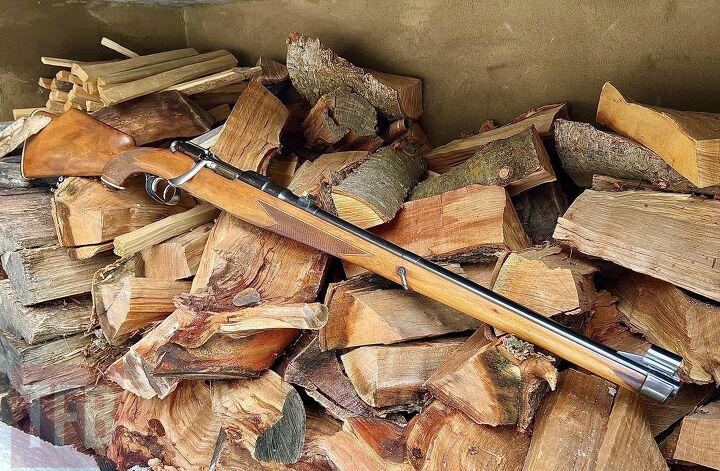
These days, hunting rifles usually sport as clear and crisp optics as a hunter can afford. The vast majority of hunting rifles now sold either don’t come with iron sights or have no provision for mounting them. For most hunters and hunting situations, a magnified optic provides more precision, a clearer, closer picture of their quarry's vitals, and aids in continued target verification (though initially finding and identifying one’s quarry is always best done with binoculars or a spotting scope).
This begs the questions: Are iron sights on a hunting rifle still viable? Are they still a desirable feature on your primary arm? In this one hunter’s opinion: Yes, in certain situations, iron sights are still useful and helpful to have. I’m not one to say “Muh iron sights” or to dismiss the obvious superiority of a magnified optic or red dot or even a DBAL in most hunting situations, but I still believe there’s a use case for irons. Let’s take a look at certain situations in which I believe they are a massive, though lightweight, asset to have along on your hunt.

1. As backup in remote or rugged hunting situations
If you're lucky enough to hunt off of your front porch or within one mile of your vehicle, damage or failure of your scope or red dot isn’t a big deal. If you've hiked miles into the wilderness or are dropped off by a bush plane in the middle of Alaska, it can be a hunt-ruining incident. For any hunt where I’m off in the middle of nowhere, it is a huge comfort to have the option of using iron sights should my primary optic go down. Sure, you probably will have to stalk closer to your game, but it’s better than heading home altogether.

When I headed to an extremely remote part of Alaska to hunt moose, I made sure that both my rifle and those of other hunters I was bringing had iron sights as backup. I have also had several people who I’ve hunted with fall and break optics, or at least alter their zero. In these situations, a set of irons can be invaluable.

2. For unobstructed situational awareness in close range or driven hunts
In any situation hunting large numbers of driven game, or animals that need to be culled for property destruction, like wild pigs, being able to shoot quickly and transition from target to target in a fast manner is a good use case for open sights. Your peripheral vision is unobstructed, letting you be aware of the next target to transition to. Being that I practice with iron sights quite a bit, I am often the cleanup shooter for pig culls that I’ve been on, positioning myself in an area where they will likely run through to escape once the other hunters start shooting.
You also don’t need or want to be zoomed in to 6 or greater power in dense woods/jungle, as you might lose or not see your potential target due to tunnel vision. While these situations are good for LVPOs or red dot sights, they are useful situations for iron sights as well.
3. As a sighting solution for poor weather or light conditions
Dense fog, freezing fog, heavy rainstorms and blizzards are all hell on magnified optics. I’ve been on more than one mule deer hunt where heavy, wet snow will cause occlusion or fogging on my riflescope, and I had to rely on the irons instead. Lower to mid-grade optics also don’t have the best light transmission, and you can lose crucial first and last light opportunities when hunting animals that are most active at dusk and dawn. I did have to harvest my first deer with irons rather than an optic due to poor light conditions and an entry-level scope, so I was very glad to have the option of using iron sights in that situation.
Types of Iron Sights useful in Hunting:
Buckhorn
Think of Ralphie with his Red Ryder or any old western lever action, and most of them had buckhorn sights. These are fast, open sights with the rear sight usually mounted on the barrel. While great for fast offhand shots on running game or shooting from horseback, their drawback is that you have a shorter sighting plane and they can be hard to perfectly place the front post in the middle. Their advantage is that they leave the receiver totally open to mounting a primary optic.
Battue
“Battue” comes from the French root “Battre”, referring to “beaten” or “driven” hunts. They are usually ramped, with a rather shallow rear sight notch and a painted post to line up the front sight in. Like buckhorn sights, what they lack in precision, they gain in ease of focusing more on a moving target than the sight itself. They are best suited for driven hunts or culling fast-moving game such as wild hogs. Also, like buckhorn sights, battue sights are almost always barrel-mounted, so they leave the receiver open to the use of a primary optic.

Ghost Ring/Peep
Most ghost ring sights and peep sights have the longest sighting plane possible on a rifle, with the rear aperture mounted to the rear of the receiver. Ghost ring sights allow you to instinctively center the front post, and when your eye focuses on the front sight, the rear aperture hardly appears at all. Peep sights can aid greatly in using iron sights at precise variable ranges, but where they excel in precision, they lack somewhat in light transmission and only provide a very narrow sight picture.
Many sights of this nature also come as “flip sights”, allowing them to be tucked down when not needed.

Hang onto your irons
In short, it is this one hunter’s opinion that iron sights are still viable in hunting situations. Whether they’re on your backup handgun or physically attached to your rifle, iron sights are one more good tool to keep in the hunter’s toolbox.

Having always had a passion for firearms, Rusty S. has had experience in gunsmithing, firearms retail, hunting, competitive shooting, range construction, as an IDPA certified range safety officer and a certified instructor. He has received military, law enforcement, and private training in the use of firearms. Editor at Outdoorhub.com
More by Rusty S.






Comments
Join the conversation
Definitely appreciate iron sights and gee the reference marks on the Benelli sight looks handy!
It should be illegal to sell any gun without quality adjustable iron sights on it. That being said, a rifle without a scope is only half a rifle. I have no problem reconciling these seemingly opposing beliefs. Optics do break, and certain circumstances require an open sight (charging game at kissing distance, downpours or blizzards). Plus a front sight keeps your rifle from tipping when leaned up against a tree.