Front Line Friday #14: Officer Safety and the False Comfort of Routine


The data on how officers actually get hurt, and why the calls that look harmless are the ones that need better preparation.
Welcome back to Front Line Friday. This week is an editorial, and the topic is the language officers use to describe the work, specifically the language that makes the work more dangerous. "Just a domestic." "Routine traffic stop." "Welfare check, probably nothing." Every shift uses some version of these phrases, and every officer who has been on the job long enough has watched one of them come apart in their hands. The calls that come pre-labeled as low-threat are not low-threat. They are calls that haven't gone bad yet. The data has been saying that for fifty years, and the conventional wisdom in squad rooms still hasn't caught up.
Front Line Friday is brought to you by Dead Air Silencers, whose support keeps this column going every week.

Front Line Friday #14: Officer Safety and the False Comfort of "Routine" Calls
This isn't a piece about paranoia or about treating every contact like a felony stop. It's about the gap between how a call is labeled at dispatch and what actually shows up when you arrive, and the discipline of refusing to pre-decide which one of those matters more. The officers who survive long careers do not get there by being lucky. They get there by maintaining the same baseline of preparation across calls that seem dangerous and calls that seem boring, because the call you prepared for is rarely the call that hurts you.
Front Line Friday @ TFB
- Front Line Friday #10: The Patrol Vehicle Setup That Actually Works
- Front Line Friday #11: Interagency Interoperability
- Front Line Friday #12: The Curriculum Problem
- Front Line Friday #13: Must-Have Patrol Car Gear: What Policy Doesn't List
What the data actually says
Start with the numbers, because the numbers are not what most officers think they are. The FBI's Law Enforcement Officers Killed and Assaulted (LEOKA) data collection is the source of record for how officers get hurt and killed in this country. The FBI released its 2024 Special Report in May 2025, and the picture it presents should be in every roll call briefing in the country.
- 64: Officers feloniously killed, 2024
- 258: Felonious deaths, 2021-2024 (highest 4-year total in 20 years)
- 85,730: Officers assaulted, 2024 (10-year high)
- 13.5: Assaults per 100 officers, 2024 (highest rate in past decade)
Break the 2024 fatalities down by circumstance at the time of attack, and the numbers tell a story that cuts against the idea of any call being routine:
- Response to unlawful or suspicious activity accounted for 14 deaths.
- Traffic stops accounted for 11.
- Follow-up investigations and tactical situations each accounted for 7.
- Pursuits accounted for 7 more.
- Routine patrol, other than a traffic stop, accounted for 3.
- Medical, mental health, or welfare assistance calls accounted for 1.
No category on that list is zero. No category on that list is safe.
The assault numbers are larger and trending in the wrong direction. In 2024, 85,730 assaults on officers were reported at a rate of 13.5 per 100 officers, the highest officer assault rate recorded in the past decade. Approximately 457 officers were assaulted and injured, specifically by firearms. From 2020 through 2024, the number of officers assaulted and injured by firearms exceeded 300 every single year.
One detail from the five-year data deserves particular attention. Of the 304 officers feloniously killed from 2020 to 2024, 33 percent had less than five years of sworn law enforcement experience. Of those 304 deaths, 130 occurred on a highway, road, alley, street, or sidewalk. Another 97 occurred in residential locations. The calls that produce those locations are not rare specialty situations. They are on patrol work.
The line every academy class hears, that domestic violence calls are the most dangerous calls in policing, is not what the data shows. A 1984 reanalysis of the underlying FBI data found that DV calls specifically accounted for closer to 5.2 percent of officer homicides, not the 22 percent the original 1970 study cited. Subsequent research has consistently found that robbery and burglary calls produce higher per-call death rates than DV calls. PolitiFact reviewed the claim in 2023 and concluded it overstated what the data actually supports.
This matters not because domestic violence calls are safe (they aren't) but because the wrong framing produces the wrong preparation. The honest version is duller and more useful: disturbance calls are consistently in the top tier of dangerous categories, alongside investigative activity, ambushes, pursuits, and warrant service. No single call type is uniquely safe. The variance within any category is larger than the variance between categories. And complacency on a "routine" stop kills officers at the same rate as overconfidence on a high-risk warrant.
Where the false comfort comes from
The squad-room shorthand exists for a reason. These informal labels, the phrases that compress a call type into an assumed threat level before anyone arrives on scene, are how officers manage a high-volume job without burning out by noon. Every shift takes dozens of calls, and the human brain cannot run a felony-stop levels across all of them. Triage is necessary. Some calls genuinely are lower-risk than others, and treating a barking-dog complaint with the same posture as a robbery in progress is neither sustainable nor sane. The shorthand is doing real work. The problem is not that officers triage. The problem is that the shorthand starts to replace assessment, and once that happens, the assessment stops getting done.
Three patterns produce this drift. The first is repetition. An officer who has worked 250 traffic stops in the last six months without incident has built a strong prior that the 251st stop will also be uneventful. The prior is not wrong on average. It is wrong specifically at the stop where the driver has a warrant, a weapon, or a reason to fight. Probability does not care that the previous 250 stops went fine. The 251st stop is a fresh draw.
The second is dispatch labeling. Calls come in pre-classified, and the classification carries authority that it usually does not deserve. "Welfare check" sounds benign because the words sound benign. The reality is that welfare checks regularly produce the discovery of barricaded suspects, in-progress overdoses, mental health crises, and active domestic violence that the caller did not describe accurately. The label is shorthand for "we don't actually know what's happening at this address," not for "nothing is happening at this address." Officers who let the label do their threat assessment have outsourced their threat assessment to a dispatcher who is reading from a script.
The third is fatigue. Late-shift calls feel routine partly because they are objectively less novel by hour 10 than by hour 2, and partly because tired brains take cognitive shortcuts. The officer at 0300 is not the same officer at 1500, and the threat assessment that came naturally early in the shift requires deliberate effort by the end of the shift. This is not a character problem. It is a physiology problem, and the only fix is treating it like one.
The combination of these three patterns produces the officer who walks up to the driver's window with one hand on the seam of the door, weight back, eyes on the rearview mirror, asking for license and registration like he has done it a thousand times because he has. That officer is fine on 999 of the next 1,000 stops. The 1,000th stop is the one that gets written about.
The calls that don't look like calls
Traffic stops
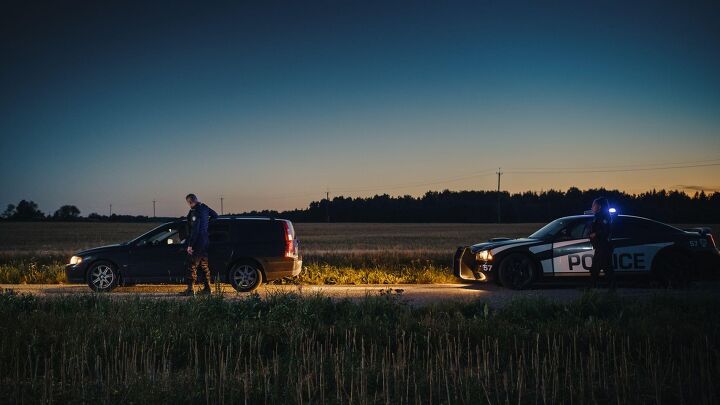
The single largest source of officer-citizen contact in American policing, and the second-leading circumstance for felonious officer deaths in 2024, with 11 fatalities. The risk profile is not "every stop is a deadly threat." The risk profile is that any individual stop can transition from routine to deadly faster than the officer's reaction time can absorb. Approach posture, vehicle positioning, lighting, and the willingness to call for backup before anything goes wrong are the controllable variables. A second unit en route during a stop on an unfamiliar vehicle in an isolated location is not paranoia. It is a low-cost insurance policy that an officer pays for in the only currency that matters at 0200: his or her continued presence at the next shift's roll call.
Disturbance and DV calls
These are not the most dangerous calls in policing, but they are reliably in the top tier, and the operational reasons are well understood. The suspect knows the geography, often knows the responding agency, and has had time to prepare. Emotions in the household are already at a peak before the officer arrives. Weapon access is high, especially in residences that contain firearms for legitimate reasons. The September 2025 ambush of three officers from the Northern York County Regional Police Department during a stalking and domestic violence investigation is a recent and brutal example of the failure mode. The lesson is not that DV calls require more body armor than other calls. The lesson is that "domestic" as a descriptor tells you nothing about what's actually waiting inside the residence, and the gap between what the caller reported and what is actually happening tends to be wider on these calls than on most.
Welfare checks
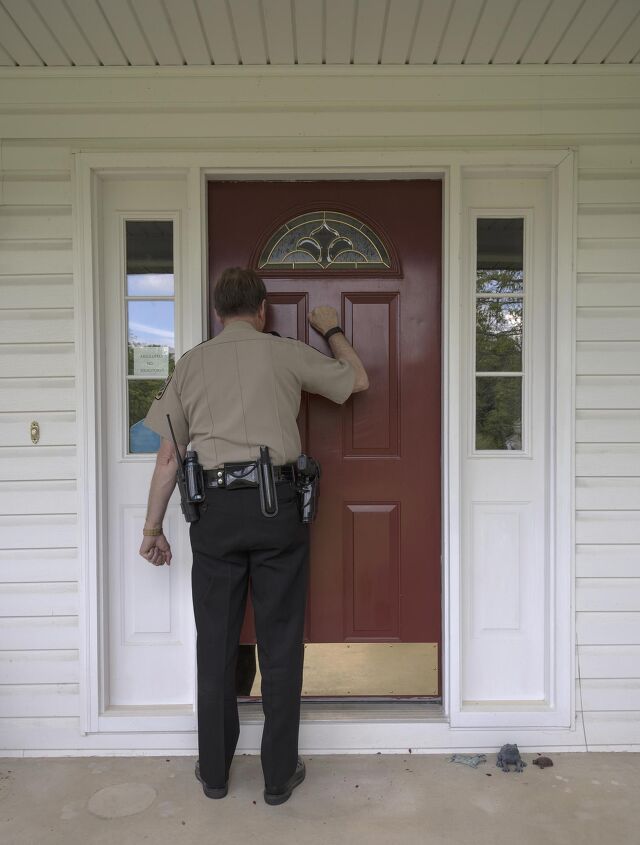
The call type in which the gap between the dispatch label and on-scene reality is widest. The call comes in as a concerned family member who hasn't heard from a relative. The officer arrives to find anything from an elderly person who fell and can't get up to a barricaded subject in a mental health crisis with weapons access. The right preparation is not to escalate every welfare check to a high-risk approach. The right preparation is to maintain sufficient situational awareness during every welfare check so that escalation is available the moment the call shifts.
Investigative and enforcement activity
The LEOKA category that produces one of the highest sustained shares of felonious deaths year over year, and the one that gets the least specific training attention because it covers everything from a foot pursuit to a follow-up interview. The officers killed in this category are usually killed during transitions, the moments when the situation is changing from one phase to another, and the officer's posture has not adjusted yet. Walking back to the cruiser after a contact is one of these moments. So is the moment when a suspect realizes the conversation will end with handcuffs.
What actually works
Most of what reduces officer assaults and deaths is neither new nor exotic. It is a small set of practices applied with discipline to both important and unimportant calls.
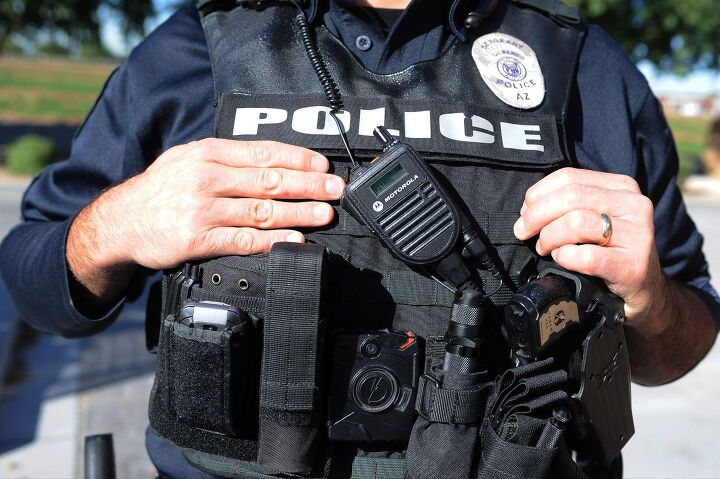
Pre-shift gear checks belong to this category. Vest fastened. Radio battery is fresh. Backup magazine indexed. Tourniquet accessible. Light works. None of this prevents an ambush. All of it preserves the officer's ability to respond when the call goes bad. The officers who skip these checks on routine days do so because routine days don't seem to require them, which is exactly the false-comfort dynamic the rest of this column is about. The check is not for the day you expect to need it.
Position and approach discipline is the single highest-leverage practice for traffic stops and door knocks. Stand off the door's seam. Keep weight back. Avoid silhouetting against windows during welfare checks. Position the cruiser to provide cover and to angle the headlights into the suspect vehicle. Brief your partner on the approach plan before you exit the cruiser, even on calls that feel obvious. Two officers running the same play beat two officers improvising, every time.
Backup is cheap. Calling for a second unit on an isolated stop, an unfamiliar address, or a welfare check that is generating any unease at all costs costs the agency a few minutes of officer time. The cost of not calling, on the small percentage of calls where it matters, is much higher. The officers who consistently survive bad calls tend to call for backup before the call becomes bad.
Watch the hands. This is academy material, and it never stops being relevant. Hands kill officers. Eyes telegraph intent. Subjects who break eye contact, look at exits, or move their hands toward their waistband or behind their back are providing information that should change the encounter. The officer's job is to receive that information rather than dismiss it because the call was labeled routine.
Brief everything. The patrol partners who survive long careers tend to be the ones who exchange more information per call, not less. "I'll take the driver, you take the passenger" is a brief. "I don't like this. Give me a minute before we make contact," is a brief. The radio traffic that establishes location, situation, and intent before the contact begins is brief. Briefs are cheap and prevent the most common failure mode in two-officer responses: two officers running different plays against the same suspect.
Fire/EMS parallel
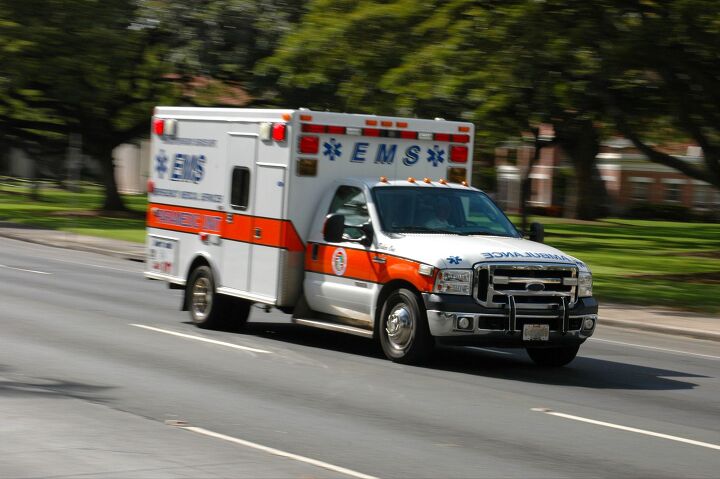
The same dynamic shows up in fire and EMS work, and the parallels are precise. The "routine medical" turns out to be a stabbing in progress. The "smoke investigation" turns out to be a working fire with backdraft conditions. The "lift assist" at an address with a violent psychiatric history that wasn't flagged in dispatch. Fire and EMS personnel are killed and assaulted on calls that came in benign at a rate that should be more discussed than it is, and the pattern is consistent across professions: the call you prepared for hurts you less than the call you didn't.
The protective practices are also consistent. Stage and wait for law enforcement on calls with violence indicators, even when the indicators seem soft. Approach scenes with a 360-degree awareness rather than a tunnel-vision focus on the patient. Stay in radio contact. Position the apparatus for egress, not just for access. Check the cot, the bag, and the airway kit before the shift starts, every shift, not just when something feels off about the day.
Bottom line / what to do Monday
- Rewrite the squad-room shorthand. The next time you hear "just a domestic" or "routine traffic stop" come across the radio or out of your own mouth, treat it as a flag. The phrase is doing assessment work that the call hasn't earned yet.
- Run a pre-shift gear check on every shift, not just on high-risk shifts. Vest, radio, magazine count, tourniquet, light, comms test with dispatch. Five minutes. Every shift.
- Call for backup earlier than feels necessary. Isolated locations, unfamiliar vehicles, and welfare checks at addresses with no history. The cost of a second unit is minutes. The cost of going alone is occasionally everything.
- Brief every contact, even the ones that feel obvious. Two officers running the same plan beat two officers improvising. The brief takes thirty seconds. Skipping it is where two-officer responses break down.
- Audit your own calibration. If you've worked the same beat for five years, your sense of what's normal has drifted, and the drift is invisible to you. Ride with a different partner for a shift. Work in a different sector. Notice what makes the new partner uncomfortable. The discomfort is information.
- For FTOs and supervisors: pull the LEOKA data into roll call once a quarter. The numbers are public, the breakdowns by circumstance are useful, and the conversation that follows pays for itself. Specifically address the DV-call myth, because it is one of the few cases where conventional wisdom in law enforcement is measurably wrong, and miscalibration on the high end produces miscalibration everywhere else.
- For agencies: review your dispatch labeling and your CAD history at addresses. The address with a five-year history of violent calls is not a "routine welfare check" address, regardless of what the caller said today. CAD that surfaces history at the moment of dispatch produces better officer preparation than CAD that hides it.
Sign-off
That's Front Line Friday for this week. Routine is a description of what hasn't happened yet, not a prediction of what will. The officers who finish long careers are not the officers who guessed right about which calls would be dangerous. They are the officers who stopped guessing, applied the same baseline of preparation across the entire spectrum of patrol work, and let the call tell them what it actually was, rather than accepting the label dispatch handed them.
Tom is a former Navy Corpsman that spent some time bumbling around the deserts of Iraq with a Marine Recon unit, kicking in tent flaps and harassing sheep. Prior to that he was a paramedic somewhere in DFW, also doing some Executive Protection work between shifts. Now that those exciting days are behind him, he teaches wilderness medicine and runs an on-demand medical staffing business. He hopes that his posts will help you find solid gear that will survive whatever you can throw at it--he is known (in certain circles) for his curse...ahem, ability...to find the breaking point of anything.You can reach him at tom.r AT thefirearmblog.com or at https://thomasrader.com
More by Tom R


Comments
Join the conversation
Whatsapp: +33 754.090.961, How i buy W33d in Dubai, read full story .
Order the free ebook on Whatsapp: +33 754.090.961 of how i buy Hash in Qatar. With fast delivery and professional packaging, your product arrives securely and promptly: uaetherapist*com/ the online drop.
I was seat in MAYBACK with 3 naked girls , one of them told me that to just wait lil we will be at the store house .They located under the building the place is very silent, they delivery C0cain in Abu Dhabi 24/7 Give them your delivery adress . The payment process in Dubai is fastly. In the Emirates , they use Cryptocurenccies like USDT , TRONX, Ethereum, … you can also use your Visa Card for buy Ex0tics in United Arab Emirates.
Read the story on Whatsapp: +33 754.090.961 then don’t worry about buy Fishscale in Ras el Khaïmah (UAE).
Contacts:
Telegram: Go0dTherapist
Gmail: uaetherapist*gmail*com
Signal: addsilkroad.47
#uaetherapist*com
#uaetherapistdotcom
#dubaidispensary
#uaemedicated