Front Line Friday #12: The Curriculum Problem

The gap between what academy training builds and what the street requires has nothing to do with individual officers not trying hard enough.
Welcome back to Front Line Friday. This week's editorial is about a problem that gets misdiagnosed constantly: the belief that the gap between academy training and street readiness is a matter of motivation or effort. Officers get blamed for not being prepared. Training academies get blamed for not being rigorous enough. The real issue is structural. The curricula are built around institutional liability and checkbox compliance, not on the actual cognitive and behavioral demands that arise when the call goes sideways. Front Line Friday is brought to you by Dead Air Silencers, whose support keeps this column going every week.

The Liability Problem
Academies design curricula to minimize institutional risk. That is not cynicism, it is economics. A training program that produces graduates who get involved in incidents with negative outcomes creates legal and political exposure for the department. A program that graduates people who can’t handle the street creates different problems. The incentive structure within most academies pushes toward covering liability rather than building capability.
The result is a training environment where the emphasis falls on measurable and defensible elements: shooting scores, legal knowledge, and memorization of use-of-force policies. These are not unimportant. But they are the parts of the job that are easiest to document, test, and defend. The harder skills, the ones that don’t reduce cleanly to a checklist, get compressed or skipped entirely. This also happens in EMS. Training centers on the information you will be tested on, and then you go to the field for your ride-alongs to see how things are actually done. But then you have to relearn how to pass the test; reality and curricula are not the same.
What the Street Actually Requires
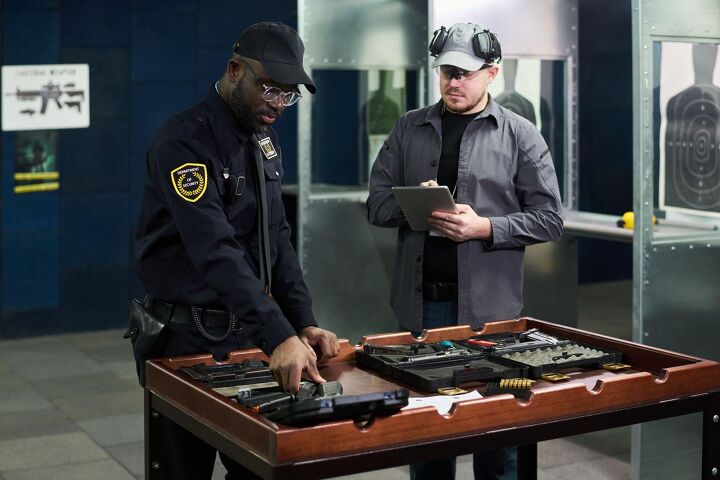
Academy training operates in a controlled environment with known variables. Officers practice skills in structured, predictable, and usually calm conditions. The street does not provide those conditions. The street requires:
Decision making under incomplete information. Officers arriving at a scene rarely have the full picture. They have fragments, and they have to act on those fragments within seconds, with consequences that can be irreversible. Academy training that presents only clean scenarios, in which the threat is clearly identified and the appropriate response is obvious, does not build this capacity.
Emotional regulation under physiological stress. A body under stress does not perform the way it does in a classroom. Heart rate elevates, fine motor control degrades, and perceptual narrowing occurs. Officers who have only trained in calm conditions experience these effects at full intensity when they first encounter real stress. Training that does not include controlled exposure to elevated stress states leaves officers completely unprepared for how their own bodies will respond.
Adaptive thinking when the plan falls apart. The street does not follow the scenario. Plans collapse, situations escalate, and the call you were briefed for is not the call you arrived at. Officers who have only practiced following structured procedures in linear scenarios lack a framework for adaptation. They either freeze or revert to whatever prepackaged response is closest to what they were taught, whether or not it fits the situation.
Communication under chaos. Radio traffic, bystander noise, partner coordination, suspect behavior, and the communication environment at a real incident are nothing like the radio practice in a controlled setting. Officers who have not trained in realistic communication environments under stress default to silence or oversimplification, neither of which helps the outcome.
The Curriculum Gap
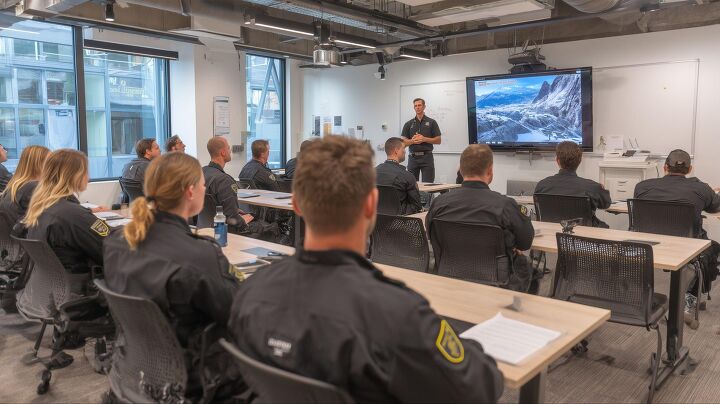
The structural problem is that most academic curricula are designed by committee and governed by mandate. The committee includes academy leadership, legal counsel, HR, and sometimes police union representatives. The mandates come from the state POST board, the department’s use-of-force policy, and federal guidelines. What ends up in the curriculum reflects what each of those stakeholders needed to cover to protect themselves, not what officers actually need to survive and succeed on the street.
This is not a conspiracy. It is a predictable institutional outcome. But it creates a specific pattern: the subjects that are easiest to mandate and document get the most time. The subjects that are hardest to teach and hardest to measure get the least time, or are taught in ways that satisfy the requirement without actually building the skill.
Defensive tactics are a clear example. The curriculum covers the required techniques. Officers graduate knowing the required techniques. But defensive tactics training that happens in a gym with a willing partner, in fixed patterns, with no adrenaline involved, produces officers who can demonstrate the technique in training and cannot access it under stress. The academy covered the liability. It did not build the capability.
Why Officers Get Blamed for a Curriculum Problem
When officers struggle in the first years on the street, the default explanation is that they are not trying hard enough, not committed enough, not mentally prepared. That explanation is comfortable because it puts the problem on the individual, not the institution. It does not require the academy to examine its own practices. It does not require the department to rethink its investment in training.
The data does not support that explanation. Officers who are highly motivated, who train extra on their own time, and who are genuinely committed still struggle with the same things: the physiological response to stress, decision-making under uncertainty, and adaptive thinking when the situation changes. These are not motivation problems. They are design problems. The curriculum did not build capacity, and no amount of individual effort can compensate for a curriculum that did not cover the right material in the right way.
What Good Academies Do Differently
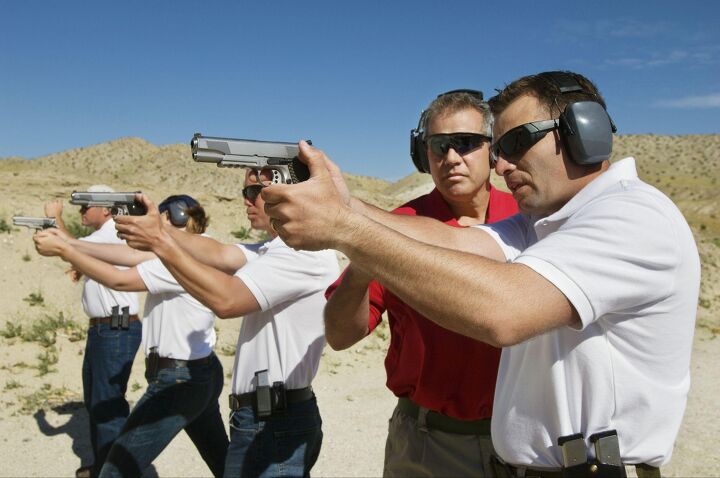
The academies that produce officers who are actually ready for the street share several characteristics that have nothing to do with training hours or equipment budgets.
They use stress inoculation systematically. Not just “this is stressful” but carefully controlled, progressively increased stress exposure that teaches officers what their own physiological responses feel like, and builds the capacity to function through those responses. The goal is not to find out who can handle stress. The goal is to build the stress tolerance that everyone can develop with the right exposure pattern.
They train decision-making, not just procedure. The curriculum includes scenarios without clear answers, in which the officer must make a decision with incomplete information, live with the consequences, and review the outcome afterward. This is messier and harder to grade than procedure recall. It is also the only thing that actually builds decision-making capacity.
They use after-action review as a teaching tool, not a disciplinary tool. Officers who are afraid of the consequences of making a decision will avoid decisions. Officers who understand that bad outcomes are learning opportunities, not just grounds for discipline, engage more actively with training and carry more of what they learn into the street.
They integrate street experience into the curriculum. Academy instructors with recent patrol experience or who maintain a connection to operational units teach differently than instructors who have been in the academy for years with no street exposure. The gap between academy knowledge and street reality is real, and it shows up in the curriculum whether or not anyone acknowledges it.
The Department’s Role
Academy training is only the foundation. The field training phase, if structured properly, is where the gap is bridged. Field Training Officers who are selected for the right qualities, trained to teach adaptive thinking rather than just procedural compliance, and who debrief with the intent of building skills rather than just finding failure, produce officers who make the transition.
Most field training programs are designed around documenting that the recruit can perform to a standard. They are not designed around building the capacity to adapt. The FTO fills out a checklist. The recruit graduates. Nobody has actually addressed whether the recruit can handle the cognitive and emotional demands of the street, only whether they can follow the FTO’s directions throughout the program.
Departments that want officers who are actually street-ready need to treat field training as a curriculum design problem, not an evaluation problem. Build the field training program around the actual demands of the street. Select FTOs for the ability to teach, not just the ability to perform. Train FTOs on how to develop adaptive thinking in their recruits. Use the after-action review as a teaching tool whenever possible.
Common Objections + Straight Answers
“The academy covers everything it can in the time available.”
The time available is not fixed. It is a resource that gets allocated based on what the curriculum is designed to cover. If the curriculum is designed around liability coverage, the time will always feel insufficient for the skills that actually matter on the street. The argument that there isn’t enough time is usually an assertion that the current curriculum isn't optimized for what officers actually need.
“Officers can train extra on their own time.”
Officers can and do train extra. But self-directed training, without a structured curriculum and quality instruction, produces uneven results. The officers with the most access to extra training are usually the ones who need it least: those who came in with more background, more resources, and more confidence. Building a training system that depends on officers to compensate for curriculum gaps outside of work hours is not a training strategy. It is a way of ensuring that the gap between well-resourced and less-resourced officers grows wider over time.
“Street readiness comes from experience, not training.”
Experience alone does not build readiness. Officers who have been on the street for years without structured training integration often develop functional but not optimal habits, and sometimes develop habits that are actively counterproductive. Experience that is not debriefed, analyzed, and integrated into a training framework produces officers who are experienced, not officers who are excellent. The goal is to build the capacity to perform well under stress, not just to accumulate time on the street.
“We can’t simulate real stress in training.”
This is technically false. Stress inoculation research has been part of military, emergency medicine, and aviation training for decades. Controlled, progressive stress exposure, with proper support and debriefing, builds measurable improvements in stress tolerance and decision-making under pressure. The tools exist. The question is whether the institution is willing to invest in the training design that uses them effectively.
Bottom Line / What to Do Monday
- Review your academy’s curriculum with a specific question: what does this training build, and does what it builds match what officers actually encounter on the street? If the answer is not clear, request a meeting with the academy leadership to discuss the gap.
- If you are in a field training program, pay attention to whether your FTO is teaching you to think or teaching you to follow. Both have value, but only one builds adaptive capacity.
- If you are an FTO, examine your own training practice. Are you debriefing for learning or for compliance evaluation? Are you building decision-making or just checking boxes?
- For academy leadership: bring in street experience. Have recent retirees and active patrol supervisors review the curriculum and identify where the academy’s knowledge has drifted from operational reality.
- For officers who feel unprepared: this is not your fault. The gap is structural. Look for structured ways to build stress tolerance and decision-making capacity, and advocate for your department to invest in the training that addresses the real gaps.
- At your next training review, ask: What does this exercise actually build, and is that thing something the street requires? If the answer is “it covers the POST requirement” without a clear street-readiness connection, consider whether the time would be better spent on something that matters more.
- For department leadership: the cost of officer failure, to the officer, to the public, and to the department, far exceeds the cost of better training design. The investment is worth making.
Sign-Off
That’s Front Line Friday for this week: the gap between academy training and street readiness is a curriculum problem, not an effort problem. The officers are not failing to try hard enough. The institutions are not building what the street actually requires.
Next week: we are still holding the Dead Air suppressor review for product arrival. The slot on the schedule next week is open. If there is a topic you want addressed before we get back to the suppressor review, the floor is open.
Tom is a former Navy Corpsman that spent some time bumbling around the deserts of Iraq with a Marine Recon unit, kicking in tent flaps and harassing sheep. Prior to that he was a paramedic somewhere in DFW, also doing some Executive Protection work between shifts. Now that those exciting days are behind him, he teaches wilderness medicine and runs an on-demand medical staffing business. He hopes that his posts will help you find solid gear that will survive whatever you can throw at it--he is known (in certain circles) for his curse...ahem, ability...to find the breaking point of anything.You can reach him at tom.r AT thefirearmblog.com or at https://thomasrader.com
More by Tom R

![[SHOT 2026] Ruger Goes All-In On *Almost* Everything](https://cdn-fastly.thefirearmblog.com/media/2026/01/22/01521/post.jpg?size=350x220)


![[SHOT 2026] UTG Pro Is Ready For The Suppressor Boom](https://cdn-fastly.thefirearmblog.com/media/2026/01/22/10491/post.jpg?size=350x220)


![[SHOT 2026] New Rost Martin RM1F and RM1F Tactical Full-Size Pistols](https://cdn-fastly.thefirearmblog.com/media/2026/02/03/03202/post.jpg?size=350x220)


Comments
Join the conversation
Excellent article. Thank you