The Rimfire Report: Tips for Building an Off-Season Rimfire Trainer

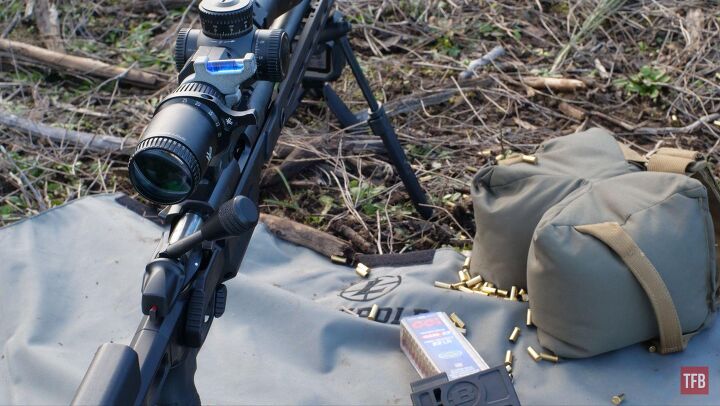
I’ve been taught that the off‑season is where most hunts or shooting competitions are actually won. Once your tags for the season are filled or the ranges start slowing down for winter, and the big rifles are back in the safe, most hunters and competitors suddenly have more free mornings and time to get set up for the next season. But burning centerfire ammo, barrels, and components at winter prices feels like lighting money on fire, almost just for the entertainment. I’m a huge believer, however, that a properly set‑up .22 LR trainer lets you rehearse every part of your hunting (or general marksman) process without beating up your shoulder, your barrel, or your wallet. Today, we’ll go over what I think that looks like.
More Rimfire Report @ TFB:

The Rimfire Report: Tips for Building an Off-Season Rimfire Trainer
I am sure there are those out there who 100% disagree with me, but in my experience, rimfire trainers work because for those who are willing to put in the physical work, they allow for high‑frequency, low‑cost repetitions of the fundamentals that actually decide whether a shot lands where it should. With almost no recoil, bad habits like flinching, heel‑driving the stock, and yanking the trigger are easy to see and correct, instead of being hidden by the intensity of the competition or hunting environment and the adrenaline that is involved there. On the economic front (very important to me), the gap is even wider. When .22 LR is a small fraction of your hunting ammo cost, shooting a couple of hundred rounds over winter becomes a casual habit instead of a budget discussion for all but the most fortunate of shooters. Spread across weeks, that volume does more for your hunting performance than a single “zero it and forget it” trip right before season.

Action Options
In today’s rimfire market, we’re fortunate to have access to several actions that are especially well‑suited to hunting and competition trainers because they mirror common centerfire patterns in size, control layout, and even bolt throw. Much like anything else you’re trying to practice while using a stand-in, the closer those details match your main rifle, the more every repetition on the rimfire transfers directly to the gun you use during a hunt or a competition. So what do people use these days?


The B‑14R is my absolute favorite rimfire bolt-action trainer, and that’s why it's at the top of this very short list. The B-14R takes the rimfire trainer idea even further by delivering a customizable rifle that closely mimics a Bergara/700‑pattern centerfire in length, weight, stock shape, and magazine form factor. For shooters already using Bergara or other 700‑footprint rifles, it allows hard bolt cycling, safety manipulation, and position work that feels almost identical to their big‑game rig due to the sheer weight of the rifle’s barreled action alone, which weighs in at a whopping 4.3 lbs, making it one of the most “serious” trainer options on the market. However, the huge downside with this one is that it's probably the most expensive of the bunch at just a few Jacksons above $1,000 for the basic rifle. Mine has climbed into the $4,000 territory simply due to my accessory choices. Not for the weak of wallet.
CZ‑pattern Rimfires

Long-loved rifles like the CZ 457 family and similar rimfires are indisputably some of the most popular options for those who favor classic, smooth sporter rifles. Their short, fast bolt throw, positive feeding, and traditional stock lines feel a lot like many popular lightweight mountain rifles, especially when set up with matching slim scopes and simple slings. If you’re trying to mimic grandad's hunting rifle, this is a good place to start, and CZs, even though they’ve come a long way in terms of technology, can still be had for around $675 if you’re looking for a more traditional hunting rifle. However, if you’re a competition-oriented guy, CZ has also stepped into that world with a completely dedicated PRS package for about $2,100.
Tikka Rimfire Actions
Just as good as the others, but often forgotten by Americans, is Tikka’s line of rimfire actions feature everything from modern tactical rifles, rigs setup for PRS and NRL style matches to mroe traditional rifles that attempt to echo the classic ergonomics of Scandinavian hunting rifles, with smooth multi‑lug‑like bolt feel, low bolt lift, and clean, adjustable triggers that I think rival even Begara’s and Savages adjustable rimfire triggers. The more recent introduction of the Ace line of rifles (in the TFBTV video above) really homes in on the “modern” rimfire shooter and has a price to match. Much like CZ, prices vary greatly depending on where you want to start.

Hopefully, I’ve made it clear that when it comes to gun selection, the unifying theme is predictability. In addition to being some of the most reliable and accurate options on the market, these rifles will almost guarantee that your trainer’s adaptability, bolt lift, throw length, safety, magazine operation, and overall handling match your “work” rifle. In essence, what we’re trying to do is give you less to “re‑learn” when it is a real animal or target the scope instead of a 1” grid paper target.

Ammo and What You’re Really Practicing
No .22 LR load will perfectly clone the ballistics of your perfectly set-up .308, 6.5, 6mm Creed, even your magnum hunting rig, so the smarter approach is to think in terms of training volume rather than ballistic matching at 1:1 distances for the real thing. Bulk or better yet, on-sale standard‑velocity .22 LR is ideal for volume and is often what a lot of NRL and even rimfire PRS shooters use as their standard competition ammo when they need to. It’s inexpensive, widely available, and accurate enough to keep you honest on 2–3 inch targets at 50–75 yards during training, and sometimes even better if you’re lucky enough to find a lot of CCI standard that really jives with your rifle’s current barrel. This is the fuel for most of your positional, transition, and time‑pressure work, where the priority is reps, not super tiny groups.

On the flip side, but still just as expensive, premium match-grade ammo or refined small‑game loads come into play when you want to tighten things up and demand more discipline from yourself when you’re trying to train pure accuracy or test out your rig in a new configuration. If years of testing various types of rimfire ammo right here on The Rimfire Report have taught me anything, higher‑quality rimfire ammunition usually shows less vertical spread and more predictable behavior. In the wind, which matters once you shrink targets or stretch distance, this matters even more if you want to remain sane in your confidence levels in both your marksmanship and your rifle’s mechanical accuracy.

Closing Thoughts
As a closing set of thoughts, while weather and clothing do not need a full section, I think they matter enough to be mentioned. Whenever you can, run your trainer in the same kind of layers and gloves you actually hunt in so you can catch any issues with trigger access, sling interference, or sight picture before opening day. A box of CCI Standards on a cold, gusty day will quickly reveal whether your “perfect” setup still works once you are bundled up, the wind is whipping, and it's sprinkling a fine mist of rain constantly (or maybe it's a torrential downpour). What I’m saying is that those lessons are much cheaper for me to buy with rimfire than with missed chances on a once-in-a-lifetime hunt or a competition where I want to perform well.

With honest performance combined with the proper rifle, optic, ammo, and drill choices, your winter trainer stops being a toy and can transform into the backbone of your year‑round hunting or competition preparation, and oftentimes free up funds for a secondary line of competition or maybe even some proper training courses.
Obviously, I’d love to hear all of your thoughts on this specific topic. Do you use a dedicated rimfire trainer, or are you fortunate enough to be loading and or purchasing loads of 6mm Creedmoor or 7mm Rem Mag that you can “plink” with? As always, thanks for stopping by to read The Rimfire Report, and we’ll see you again next week!

Reloader SCSA Competitor Certified Pilot Currently able to pass himself off as the second cousin twice removed of Joe Flanigan. Instagram: https://www.instagram.com/ballisticaviation/
More by Luke C.


![[SHOT 2026] ATI Introduces the Schmeisser 50 Round Glock Mag Extension](https://cdn-fastly.thefirearmblog.com/media/2026/01/22/05291/post.jpg?size=350x220)

![[SHOT 2026] Franchi MULE - Scout-Style Utility Rifle for Work & Play](https://cdn-fastly.thefirearmblog.com/media/2026/02/05/00441/shot-2026-franchi-mule-scout-style-utility-rifle-for-work-play.jpg?size=350x220)


![[SHOT 2026] Magpul New Releases](https://cdn-fastly.thefirearmblog.com/media/2026/01/21/23481/shot-2026-magpul-new-releases.jpg?size=350x220)

Comments
Join the conversation
I built my Savage Mk 2 out to be similar to my Bergara HMR. What I've found is that I enjoy the 22LR over my 6.5 Creedmoor. Even the expensive 22LR ammo is significantly cheaper than buying centerfire ammo. More shooting at a lower overall cost. I love my big guns but I'm a rimfire guy at heart.