TFB Review: Glock 17 Gen6 - First 1,000 Rounds

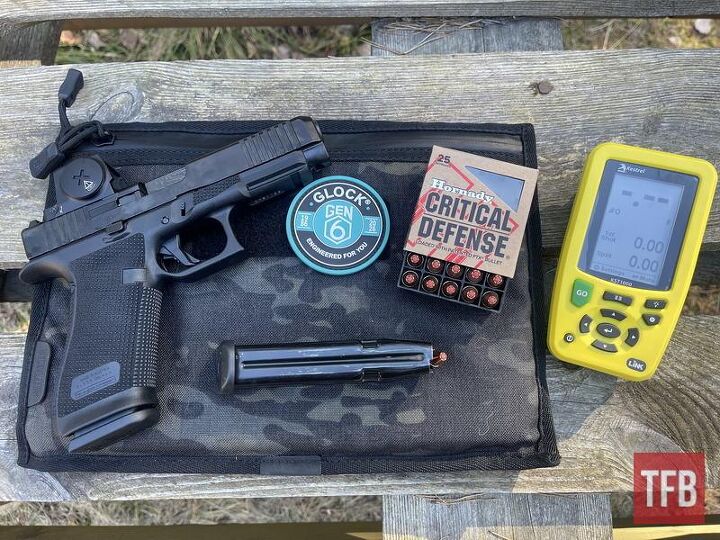
When Glock announced the sixth generation of its iconic striker-fired polymer pistol series in December 2025, the firearms community responded with the usual mix of cautious interest and the usual skepticism. For me, the release was really bad timing, as I had just bought another G45 Gen 5. Was this a genuine leap forward, or just a facelift on an already mature platform? I decided the best way to answer that question wasn't a bench test or a controlled range session. It was to throw a brand-new, straight-out-of-the-box G17 Gen6 into the deep end of a two-day beginner practical shooting course and see what happened. One thousand rounds later, we have some answers.

Useful background information and disclaimer: This Glock 17 Gen 6 was bought from one of Glock’s European dealers, with no special price or other attachments, and was tested in Europe. The full name on the box is: Glock 17 Gen6 OR FS. Until now, Glock has had no idea about this review.
The Setup: No Coddling Allowed
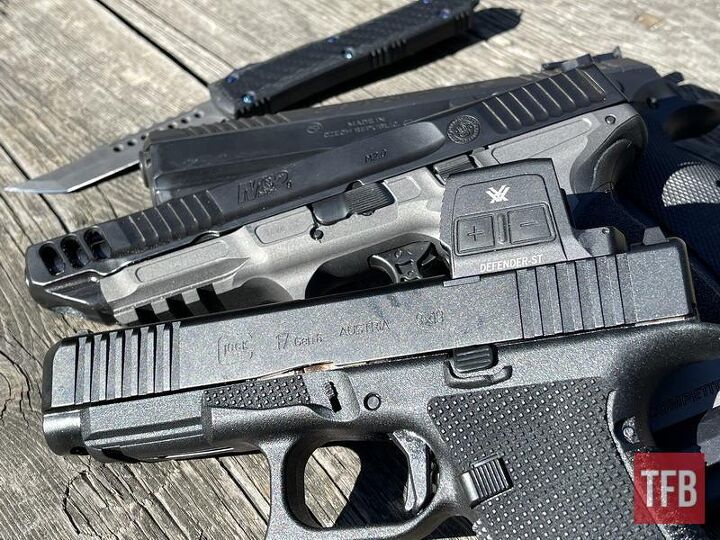
Our test pistol was a factory-fresh Glock 17 Gen6 in 9x19mm. I mean that literally; it came straight out of the box with zero lubrication applied and no manipulation of any kind beyond mounting an optic and running a brief zeroing session. No function-check lube, no wipe-down with oil, no cleaning, nothing.

I’m not saying that’s how the manufacturer or anyone else recommends how to do it, just explaining the basis of the review. I wanted to know what a first-time buyer who simply unpacks a Gen6, slaps a red dot on it, and heads to a course can expect.
The optic mounted for this test was the new Vortex Defender-ST Enclosed Solar Micro Red Dot, which fits directly onto the Gen6's optic-ready slide using the included polymer adapter plates. More on both the optic and the mounting system later.
The Course: A Real-World Stress Test
The course was a two-day introduction to practical shooting (IPSC basic course, which is mandatory in some countries), designed specifically for beginners. It covered the full spectrum of fundamental skills: basic accuracy drills, static reloads, emergency reloads, strong-hand-only shooting, weak-hand-only shooting, and shooting on the move. Exactly the kind of curriculum that puts a pistol through its paces in ways a static bench test never can.
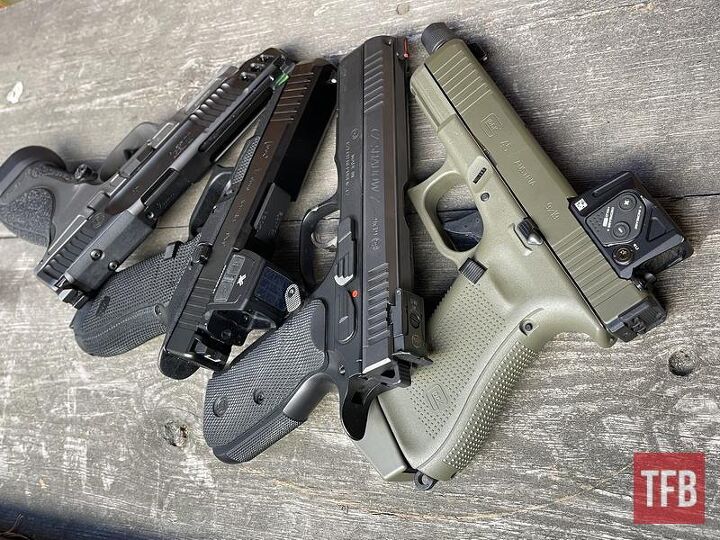
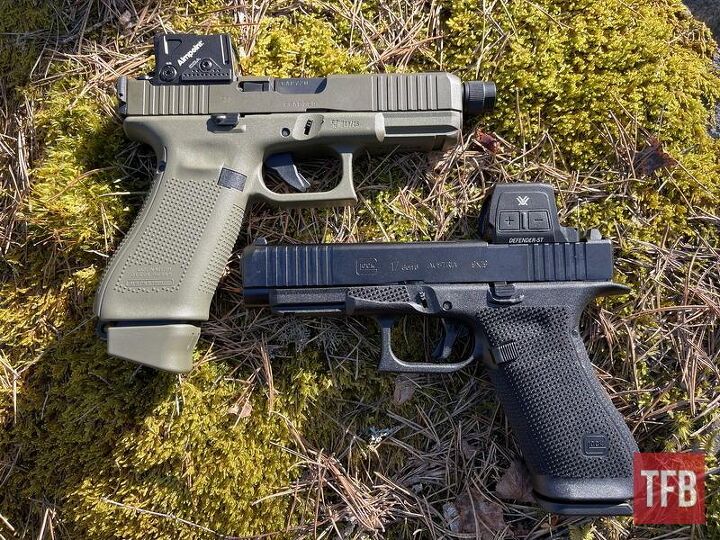
Normally, such a course requires about 400-600 rounds to complete, depending on the maturity of the individual(s). Of the 1,200 rounds fired with this pistol, 900 were fired indoors using GECO's Lead Round Nose Copper-Plated 9mm Luger, 8.0g / 124gr.

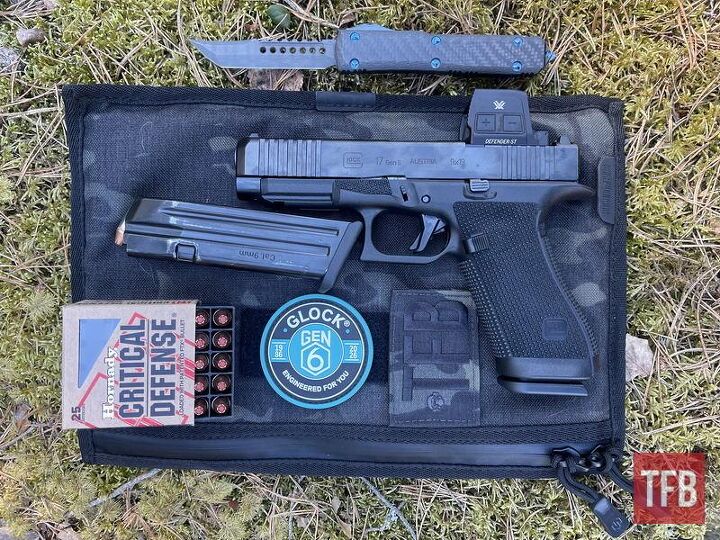
The remaining 300 rounds or so were Hornady Critical Defense FTX 115gr, which we saved for a dedicated accuracy and V0 chronograph session at 25 meters. More on those results in a separate article, but the short version: accuracy was excellent and there were zero malfunctions with the Hornady ammunition.

During most of that testing, I used the 18-Round Glock Metal Magazine by Mec-Gar, which worked 100%. So if you see a metal magazine here and there in the images, you know it’s not from Glock.
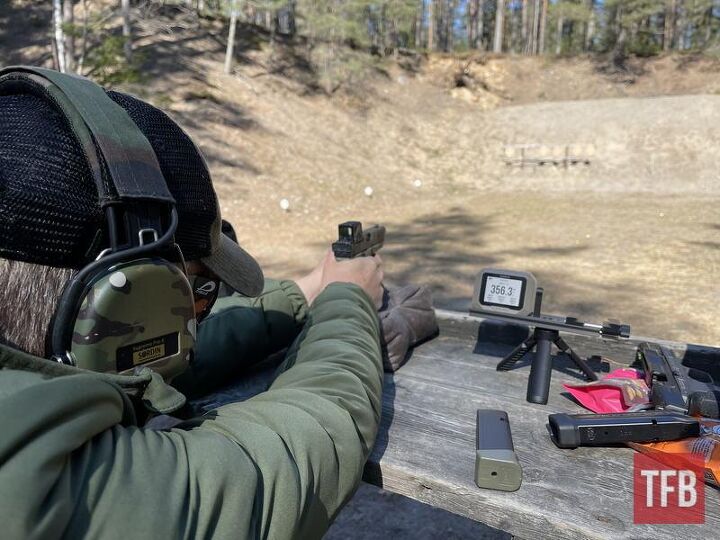
The GECO LRN-CP load is worth discussing in some detail, because it isn't just any practice ammo. GECO's copper-plated lead round nose line is their Green Fire variant, a non-toxic primer formulation specifically designed for indoor ranges where lead and smoke exposure is a significant concern.

The Green Fire primers are well known in European shooting circles with a reputation for being on the soft side of the primer sensitivity spectrum, meaning guns with lighter-than-optimal firing pin strikes (could be worn) tend to generate more failures to fire with this ammunition than with conventional primers. In other words, if a pistol is going to choke on primer sensitivity, GECO Green Fire should find that weakness. The security companies that use the same indoor range have had some issues, but I am unsure which Glock 17s they are using - but it’s definitely not the Gen 6. If I had to guess, they’re using somewhat used Gen 4s.

The Glock 17 Gen6 found no such weakness. Over 900 rounds of GECO LRN-CP Green Fire, across two full days of training, with a gun that hadn't seen a drop of oil since the factory, there was not a single ammunition-induced malfunction.
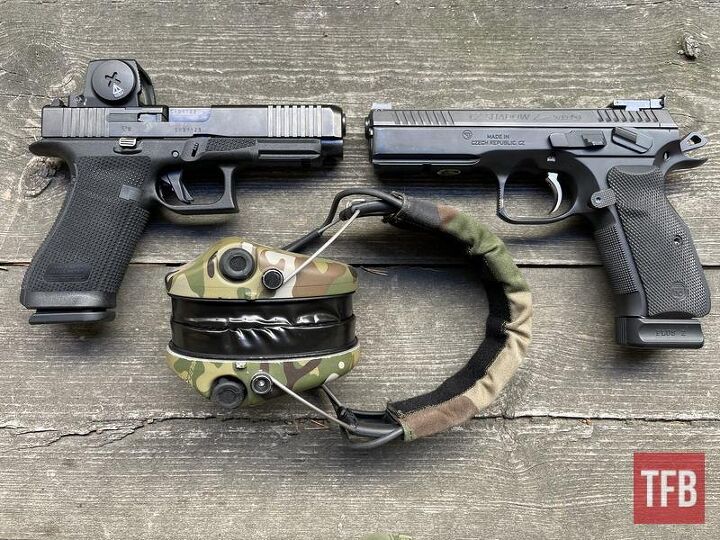
There was a worn-in Glock G45 COA with a Timney Trigger on the course as well, and it didn’t have any malfunctions either. A friend and I had our share of issues with the Glock Timney trigger, so we’re back to the Glock Competition ones since just recently (on other guns than mentioned here).
What About Those Stoppages?
Here is where honesty matters. The course did see some stoppages, but they were entirely intentional. Other instructors and I, as is standard practice in beginner IPSC courses, seeded dummy cartridges into the magazines at various points throughout the two days. The purpose is not to test the gun, but to test the shooters: when the gun goes "click" instead of "bang," the correct response is to immediately take the trigger finger out of the trigger guard (safe direction, muzzle discipline), then diagnose and clear the stoppage before continuing. It is one of the most effective drills for building proper safety habits and reflexes under the low-level stress of a timed course of fire. Simply put, people who don’t develop this reflex won’t get approved. They may require more training, or they may decide IPSC isn’t for them.
The Gen6 Itself: What's Actually New?
Glock describes the Gen6 as engineered around user feedback, and having now put serious rounds through it, that claim rings true. The changes are evolutionary rather than revolutionary (which is entirely consistent with Glock's historical development philosophy), but they address areas where shooters had legitimate criticisms of the Gen5.
RTF6 Grip Texture
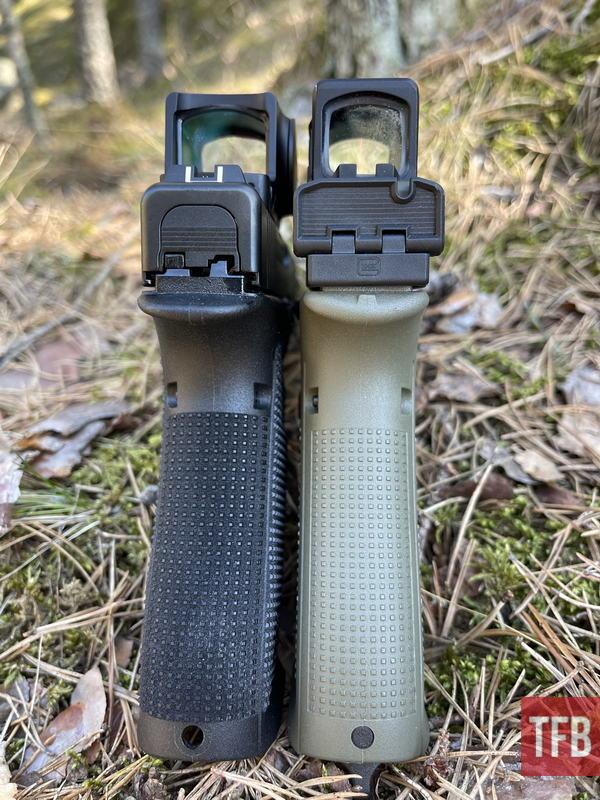
The most immediately obvious change is the new RTF6 surface texture, which Glock has extended significantly compared to the Gen5, including onto new areas like the thumb rest and the sides of the grip. The texture manages to be noticeably more aggressive than its predecessor without becoming too punishing during extended shooting sessions. After 500 rounds on day one, the grip felt as secure as it did on the first magazine, which matters considerably when your hands are working hard through weak-hand and on-the-move drills.
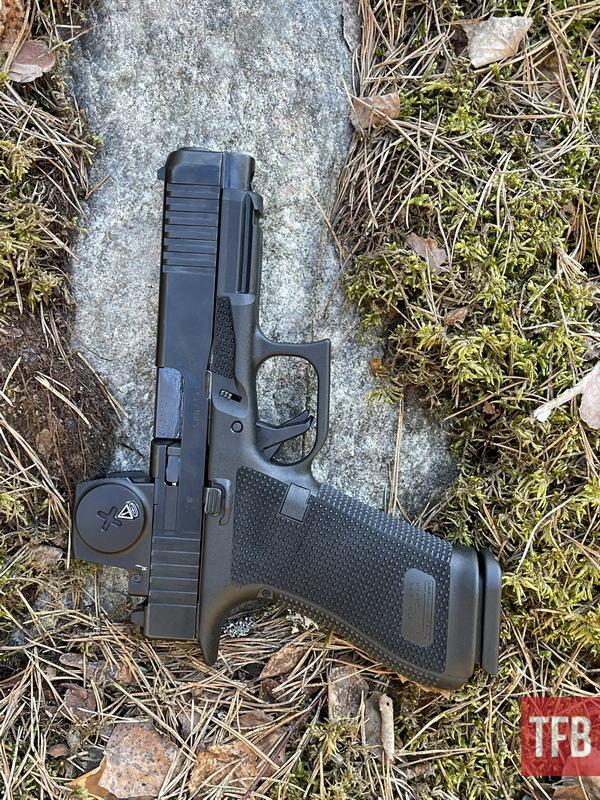
We asked a number of course participants to handle the Gen6 and give us their impression of the grip. The response was consistent and enthusiastic; most said they really liked it. That aligns with our own assessment. The grip simply feels good in the hand.
Palm Swell and Beavertail
Glock has given the Gen6 frame a slightly convex shape on the sides (what they call a palm swell), which contours the pistol to the natural curvature of the hand. Combined with the enlarged beavertail that allows the shooter to ride higher on the frame (closer to the bore axis), the grip geometry represents a genuine improvement. High grip = better leverage on the recoil impulse = faster return to target. For a beginner IPSC course where split times matter at least a little, this is not a trivial benefit.
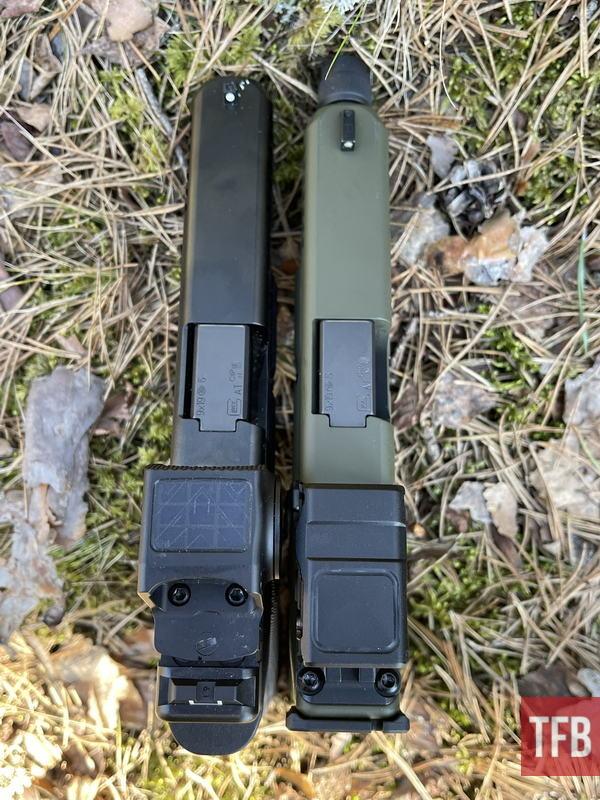
When I compare it to my Glock 45 Gen5, my hands always choose the Gen6 version. It just feels more natural, and “better”, for lack of finer words.
Undercut Trigger Guard
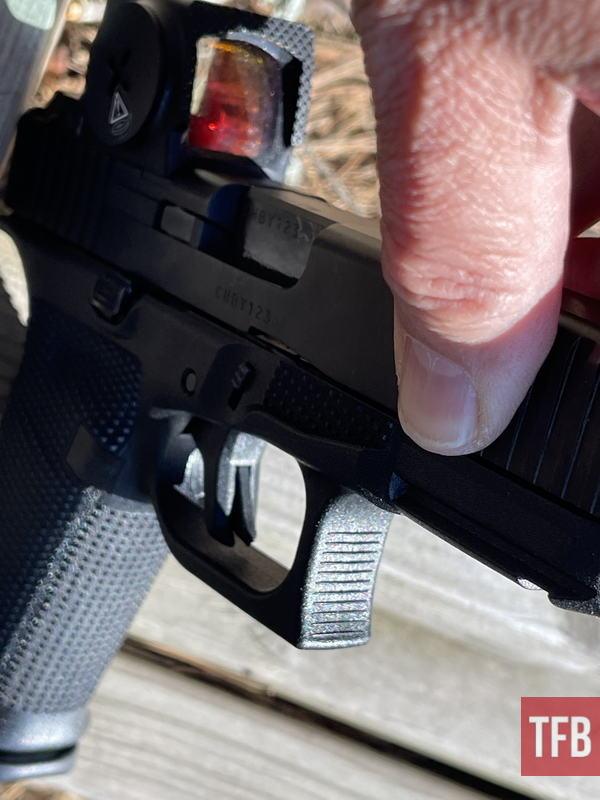
The deepened trigger guard undercut works in concert with the beavertail to maximize grip height. During the shooting-on-the-move drills in particular, the locked-in feel of the grip should end with a better pistol control. In my opinion, the texture could probably have been a little more aggressive.
Thumb Rest
The Gen6 adds a textured, extended thumb rest on both sides of the frame. This seems to have been the most debated feature in online discussions since the pistol launched.
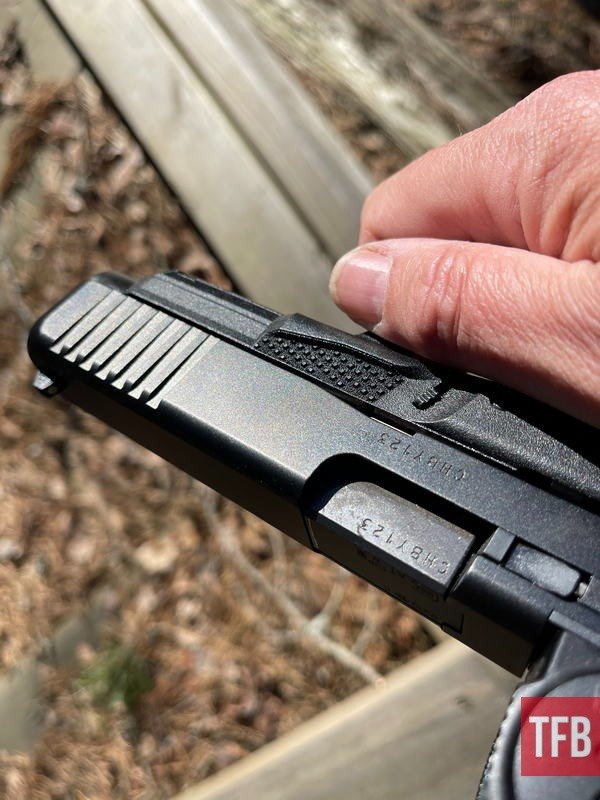
Having shot with it somewhat extensively, we find ourselves firmly in the pro-thumb-rest camp. It provides a consistent reference point for hand placement, improves control during rapid fire, and helps maintain a high grip position, with a lot of flesh (for friction) on the gun.
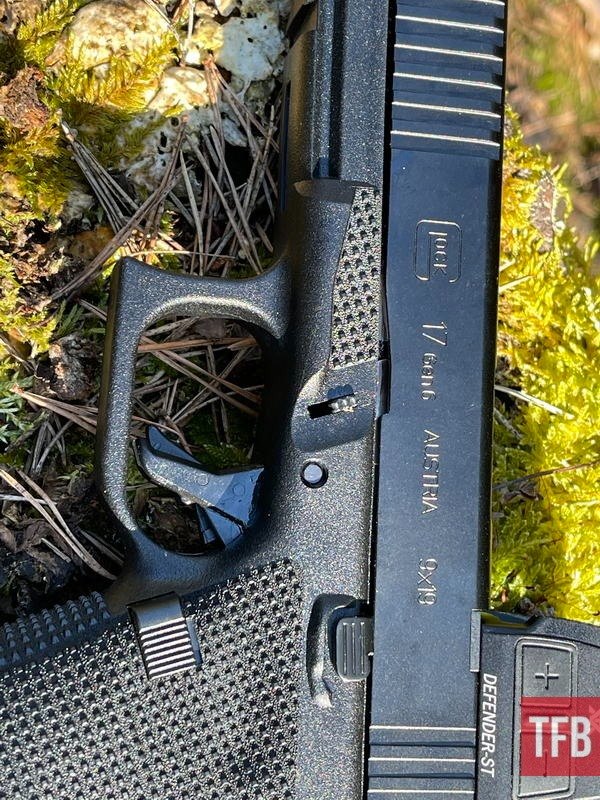
An important note: Now having used the definition “thumb rest” myself, I want to clarify that yes, that’s where most people and I put our left thumb (right-handed shooters). However, it seems there's a misconception among many that this is a large, protruding device as permitted in the Open division. It is far away from this! Unless you put a strong side pressure on the gun and the side texture, you’re going to slide off during recoil.
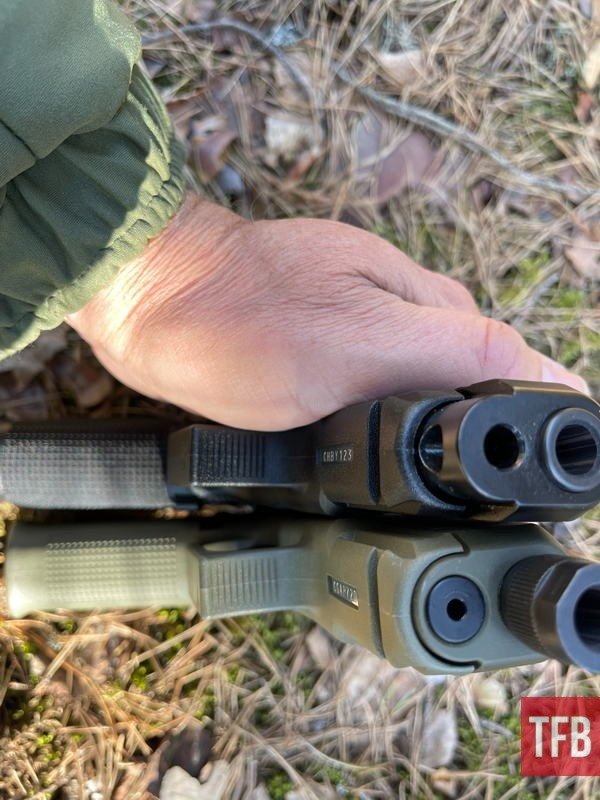
Flat-Faced Trigger
The Gen6 ships with a flat-faced trigger as standard, a design choice that has become increasingly common in the practical shooting world. It should shorten the effective reach to the trigger for shooters with smaller hands and promote consistent finger placement on the trigger face. The trigger pull itself is classic Glock, approximately 1,980 grams, with around 5mm of pre-travel before the break and a 5mm reset. It is a polymer trigger, and it has that characteristic Glock springiness that takes some getting used to if you're coming from a metal-trigger pistol. It does the job. If you know how to find your reset and keep it for the second shot, you’re going to get good hits.
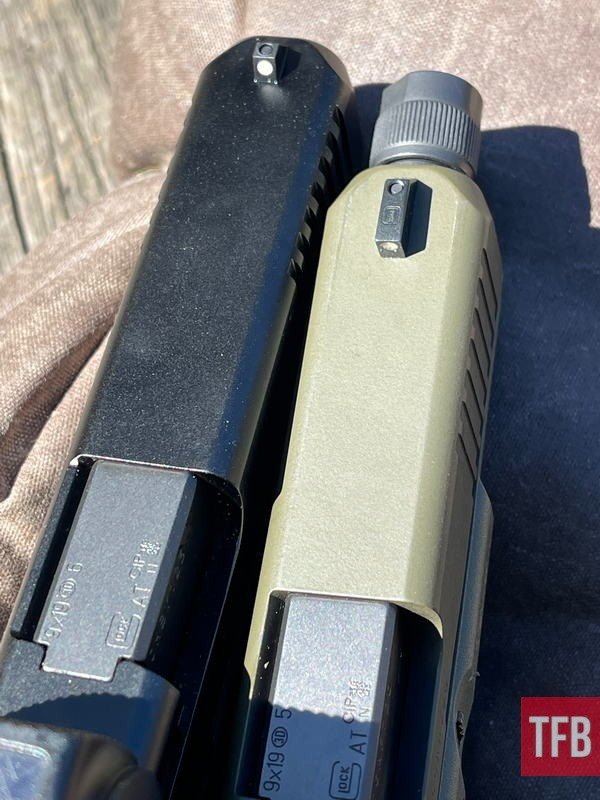
Slide Serrations
Both front and rear serrations are said to be cut more deeply into the Gen6 slide than on previous generations. The result is more positive engagement during manipulations, press checks, cycling the action, tap-rack-bang drills, and it was used for sure during the reload drills that formed a significant portion of the course curriculum.
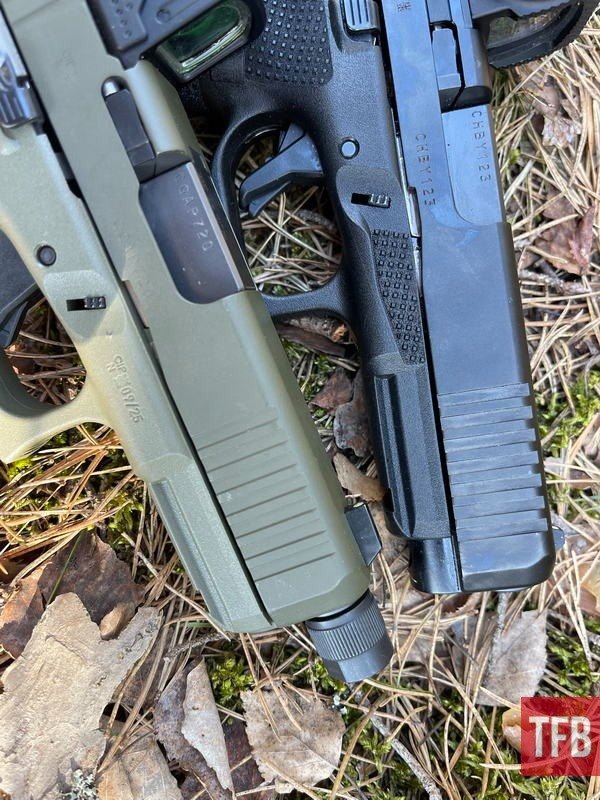
I always teach people NOT to rack the gun holding or pushing the red dot optic. Not because it will break, but your fingers might be dirty and it’s a bad habit. In an emergency, or an extremely time-tight stage, do as you wish!
Optic-Ready System
Every Gen6 ships optic-ready as standard, with a purpose-designed cutout in the slide and three included polymer adapter plates covering common red dot footprints. The system is engineered to mount optics lower in the slide compared to the MOS arrangement of the Gen5, which improves durability by reducing the lever arm on the optic during recoil.
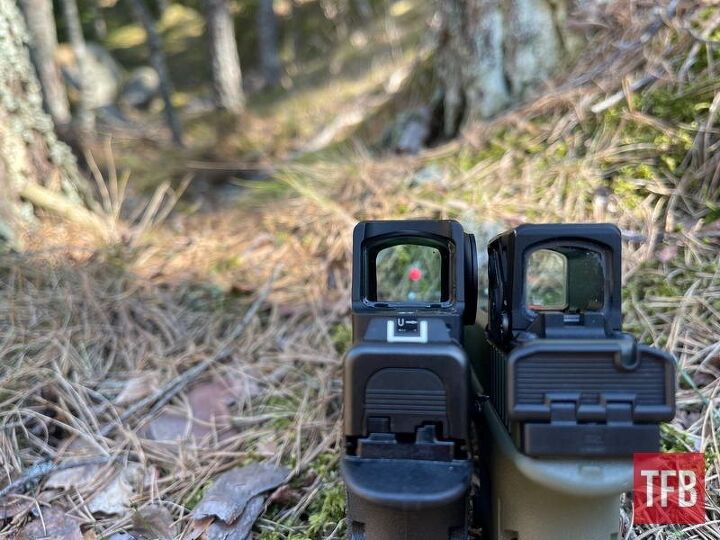
According to Glock, long-term testing confirms the two mounting screws are sufficient to maintain zero over extended use, provided shooters use OEM optic screws rather than the cover plate screws (which are a different length). My take is that the Aimpoint COA A-Cut solution would be my preference, but it doesn’t exist yet for the Gen6.

For more details on the differences between the Glock 45 Gen5 COA & Gen6 Optics Ready, check TFB’s previous article.
The Vortex Defender-ST Enclosed Solar Micro Red Dot
The optic on our test pistol was the new Vortex Defender-ST Enclosed Solar Micro Red Dot (MSRP $529.99), which is one of the more interesting new entries in the micro red dot market. The "enclosed" designation refers to a fully sealed emitter housing; the lens assembly is protected against impact, dust, and moisture by an enclosure rather than being exposed as it is on traditional open-emitter designs.
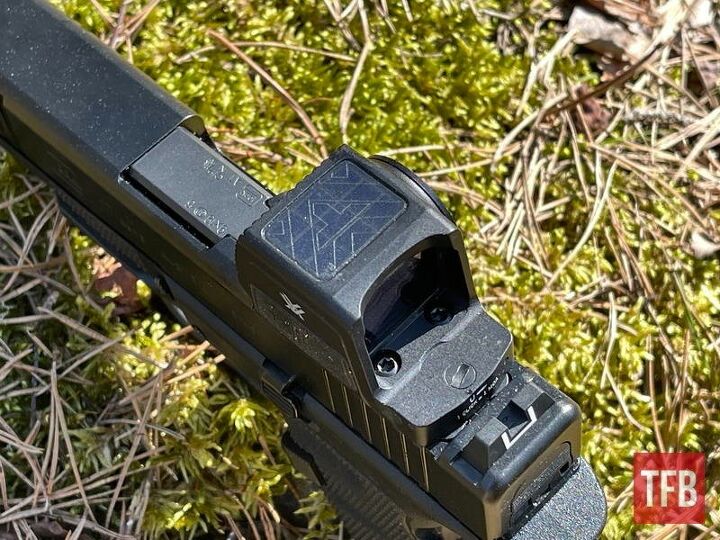
This matters on a pistol that will see a lot of hard use, because open emitters are vulnerable to fouling from case gas blowback, dirt, and the occasional contact with a holster or table edge. Not to mention rain, for those who shoot outdoors anytime.

Power management is handled by a combination of battery and solar charging, which means the Defender-ST can harvest ambient light to maintain the dot without constant battery drain. The reticle is multi-reticle configurable, allowing shooters to select from several dot configurations to suit their preference and lighting conditions. My preference for these optics has always been dot only.

Over two full days of training, the Defender-ST performed without any issues whatsoever. The dot remained visible and consistent under the overhead lighting of the indoor range, returned to zero after the zeroing session without drift, and survived the inevitable contact with the VX7 holster, bags, and the general chaos of a busy training day. It integrated cleanly with the Gen6's optic-ready system and required no shimming or adjustment to sit flush.

For a brand-new optic on a brand-new pistol that had never previously been run together, the combination worked seamlessly from the first shot. I know that two days is not conclusive for an optics review, but I thought it would be of interest if people had questions about the optic.
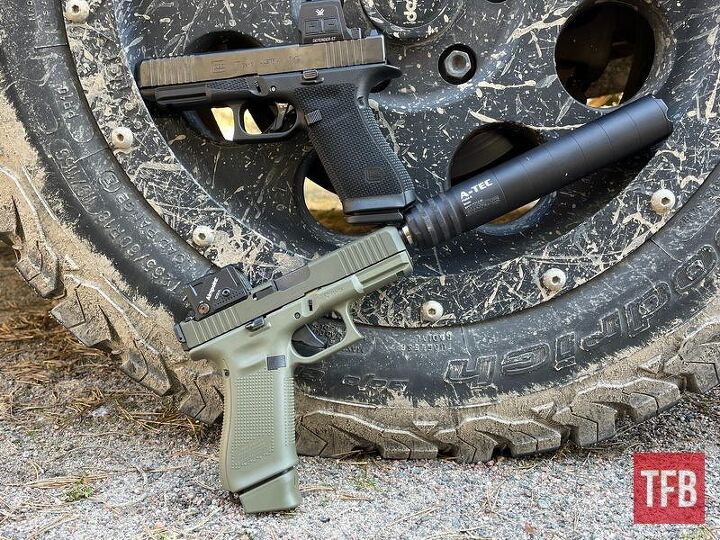
As an instructor, I’ve had people arrive with their own gun and their new optic, where the optic ended up falling off. This takes valuable time away from the main reason why we’re all there - to train shooting.
Accuracy: A Preview
While the full accuracy and chronograph data from the Hornady Critical Defense 115gr session at 25 meters on an IPSC Mini Target (about 60% of the size of an IPSC Classic target) will be covered in a dedicated follow-up article, we can report here that the results were genuinely impressive.
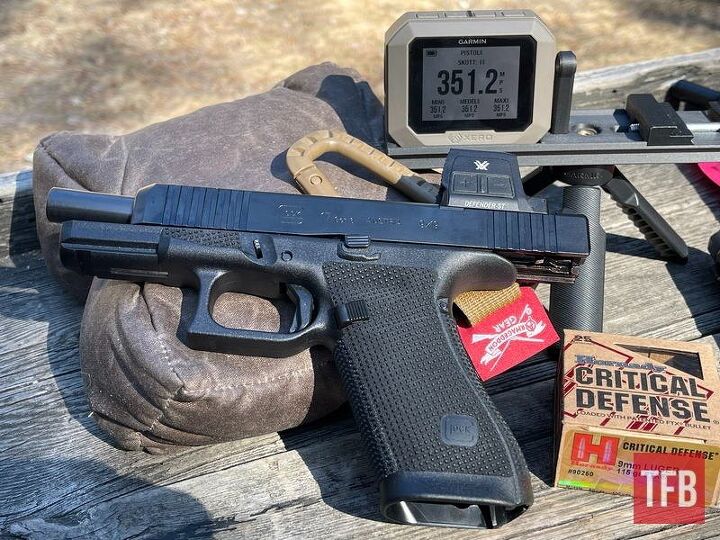
Using an Armageddon Gear bag as support, the G17 Gen6 produced tight enough groups at distance, and I’m sure any deviations are down to shooter error and Glock’s trigger (I have to blame something, and that trigger got a lot of blame over the years - right or wrong). Shooting a micro red dot at 25 meters is a significantly different experience than irons, and the Defender-ST's clear, crisp dot made precise aiming straightforward.

The Bottom Line
A thousand rounds through a beginner IPSC course is a legitimate test. The drills are varied, the round count is high, the ammunition chosen for the indoor portion was specifically the kind that challenges primers, and the gun was never lubricated from the factory. The Glock 17 Gen6 handled all of it without complaint.
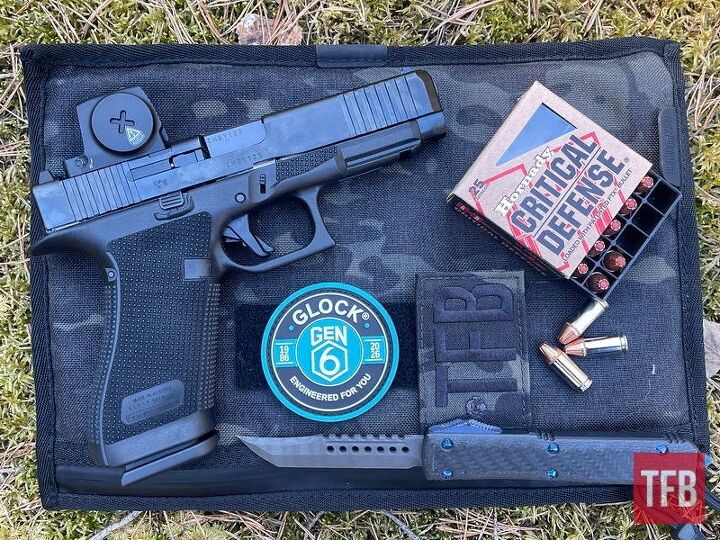
In my opinion, cheered by others, the Gen6 ergonomics are a genuine step forward. The RTF6 texture, palm swell, undercut trigger guard, enlarged beavertail, and thumb rest combine to create a pistol that feels better in the hand than its predecessors, is easier to control under recoil, and inspires confidence during rapid-fire and on-the-move work.

As an owner of two G45 Gen5s, I say this without prestige. The near-universal positive reaction from course participants who handled the grip is not a coincidence; Glock did their homework on this one.

The flat-faced trigger is a sensible addition, but I can’t really feel a huge difference compared to the Gen5s. The deeper slide serrations are welcome, but I have no issues racking my Gen5s really. The native optic-ready system is a clear improvement over the MOS approach for pistols that will run red dots permanently.

And the reliability? Flawless. Nine hundred rounds of notoriously primer-sensitive non-toxic training ammunition, dry out of the box, not a single malfunction. That is, after all, the one thing Glock has always had to offer. The Gen6 hasn't changed that.

Is the Glock 17 Gen6 OR FS the perfect Glock? For most, the answer is likely yes, but for me, no. I’m eagerly awaiting the Glock G45 Gen6 with the Aimpoint COA and a threaded barrel for the full experience. So yes, I’m also sold on the Gen6 and its new features.
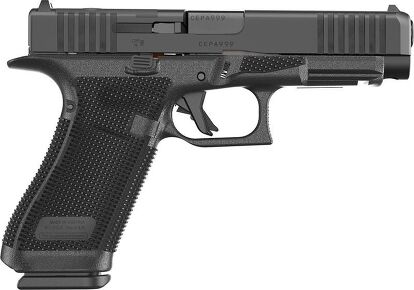
Glock 17 Gen6 Pistol
Further information on the Glock Gen6 family: eu.glock.com/en/Technology/Gen6
Vortex Defender-ST Enclosed Solar Micro Red Dot
GECO Lead Round Nose Copper-Plated 9mm Luger 8.0g
Hornady Critical Defense FTX 115gr 9mm
We are committed to finding, researching, and recommending the best products. We earn commissions from purchases you make using the retail links in our product reviews. Learn more about how this works.
Ex-Arctic Ranger. Competitive practical shooter and hunter with a European focus. Always ready to increase my collection of modern semi-automatics, optics, thermals and suppressors. TCCC Certified. Occasionaly seen in a 6x6 Bug Out Vehicle, always with a big smile.
More by Eric B


![[SHOT 2026] 4-Lb 308 Bolt Gun – The Weatherby Mark V Backcountry Capra](https://cdn-fastly.thefirearmblog.com/media/2026/01/21/13301/post.jpg?size=350x220)


![[SHOT 2026] Black Rain Ordnance Introduce US-Made AK - Freedom Fighter](https://cdn-fastly.thefirearmblog.com/media/2026/02/02/10191/shot-2026-black-rain-ordnance-introduce-us-made-ak-freedom-fighter.jpg?size=350x220)
![[SHOT 2026] Nosler 400 Legend Whitetail Country & Reloading Bullets](https://cdn-fastly.thefirearmblog.com/media/2026/01/27/20381/post.jpg?size=350x220)


![[SHOT 2026] Precision Armament TiTrex Silencers](https://cdn-fastly.thefirearmblog.com/media/2026/01/24/23001/post.jpg?size=350x220)

Comments
Join the conversation
I was slow to move to a red dot. Growing up we only had “irons”. However, the optic has improved my target acquisition. Perhaps my eyes are not as good as they once were. Enter Toby Kieth song!
The Gen6 (G17 COA) trigger sucks. Glock needs a performance Trigger for the Gen6. Until that happens, I'll keep carrying my Gen5 GGSP G45.