SILENCER SATURDAY #319: Wet Work – Shooting Quietly With Tiny Suppressors

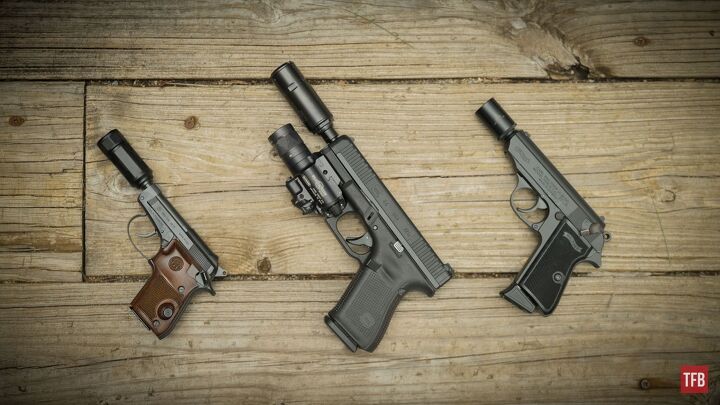
Good evening everyone and welcome back to TFB’s Silencer Saturday brought to you by Yankee Hill Machine, manufacturers of the brand new YHM 338 Bad Larry Suppressor. Last week we took a look at the current state of the ATF eForms system and NFA application approval times. This week we take a look at wet work – or shooting with an ablative material – to improve the performance of small suppressors. Let’s take a look at the pros and cons of shooting wet.
More @ TFB:- Beretta Bobcat Covert – .22LR
- Walther PPK/S – .22LR
- GLOCK 43 – 9mm
- GSL Technology Pill Box – .22LR
- Hansohn Brothers Mod-F4 – .22LR
- Dead Air Odessa 9 – 9mm
SILENCER SATURDAY #319: Wet Work – Shooting Quietly With Tiny Suppressors

I own quite a few firearm/suppressor combinations that would be considered to be impractical by most shooter’s standards. In this category are small silencers, or modular suppressors configured into their smallest forms, that prioritize size over sound reduction. I will admit that childhood James Bond fantasies have been the driving force behind some of my purchases. Ok, a lot of my purchases.
To counteract the lack of internal volume – the space inside the suppressor – we can use a few different techniques to improve sound performance. The first is the use of rubber or silicone discs, called wipes, that creates a seal after the bullet passes through, preventing the escape of gases and noise. When designed correctly, the effect is dramatic, making “movie quiet” silencers in small packages. Unfortunately, because the bullet makes contact with the wipes, accuracy and velocity issues can become an issue, making these setups viable only at short ranges.

The second option is what silencer nerds like to call “running wet”, or adding a small amount of liquid inside the suppressor. This liquid is an ablative material that slows and cools expanding gases and reduces the amount of resulting noise.
Wet Work ( noun)
- work involving water or wet substances
- work involving murder or assassination
Obviously we are talking about the first definition today, but I do find it ironic since “assassins” have probably used ablative liquids in their suppressed firearms over the years.
Ablative (noun)
- A sacrificial material that is vaporized to slow the progress of a reaction.
This is my definition of an ablative material in the context of silencers; most of the available definitions were focused on medical procedures or rocket engines.
The problems with ‘running wet’ start with the fact that the added fluid only lasts for a few shots before needing to be refilled. It can also be a messy process, spraying dirty vapor over the shooter’s hands or face. Interestingly, here are some innovative processes of using an ablative being developed. For example, the Discreet Ballistics Pop-Stop CO2 cartridge system that injects gas directly into the blast baffle area of a suppressor.

If you decide that you want to try using a little liquid in your silencer, let go through a step-by-step process to avoid some common mistakes and costly errors.
First, check with your suppressor manufacturer to make sure that your model is compatible with using an ablative material. You should read the user manual anyway, but if it’s not explicitly listed, you may need to give them a call.

Second, ‘running wet’ is typically used with subsonic and lower pressure rounds. The sonic crack with supersonic ammunition will negate any benefits of using an ablative material. In addition, adding a liquid to a supersonic rifle caliber suppressor could increase pressures and run the risk of damage or injuries. I have only seen one rifle caliber suppressor discussing wet use in the user manual – the KAC NT4 – and I still haven’t got the courage to try it personally.

Next, properly ensure that the source of ammunition is removed from the firearm and that the chamber is clear. Remove the suppressor from the barrel and add the fluid through the attachment end. Do not add fluid through the chamber and down the barrel. Do not add the fluid from the muzzle end. Do not add the fluid with the silencer still attached to the firearm.
Acceptable suppressor ablative materials:
- Water
- Wire pulling gel
- CO2
- Spit
- Mountain Dew
- Flammable liquids (alcohols, solvents, fuels, etc)
- Solids
- Powders
- Anything that came off, or out of, a cat.
Find a method that will deliver a measured amount of liquid into the suppressor like a syringe. About one mL is all that is needed; do not overfill the silencer. The effect of the ablative material should last between 5-10 shots.

At the end of the range session (or mission), disassemble the suppressor and use a mild cleaner to remove any fluid residue, Inspect for damage, lubricate lightly and reassemble.

‘Running wet’ is most effective at eliminating first round pop, the mixture of oxygen and unburnt powder that creates a secondary explosion and noise. Adding an ablative material also works best in combination with wipe-equipped suppressors since the fluid can stay trapped on the inside for a longer period of time.
Adding a little water to a subsonic .22LR setup can make a huge difference in the silencer’s performance. I recommend giving it a shot.

Thanks for reading. Be safe, have fun, and we’ll see you next week for another Silencer Saturday.

Silencers - Science Pete@thefirearmblog.com
More by Pete



Comments
Join the conversation
I've heard that shaving gel also works well. My own inclination at this point would be something like Ballistol.
I just find it amusing that the wet technology that was popular in the late 1990s is making a comeback. People are realizing that if you want a can that is both compact and quiet, this is the way to do it. What would be interesting is a can designed to retain the coolant - perhaps lined with a sponge. Or wipes that are just solid enough to keep the coolant in - perhaps made of paper.
[slowly crumples up patent application for cat hair based silencer packing material, single tear running down cheek]
Couldn't first round pop be eliminated on a one-shot-at-a-time basis with a can of keyboard cleaner spray and a roll of masking tape?