Modern Personal Defense Weapon Calibers 010: The 9x19mm and 9x21mm Russian Special AP

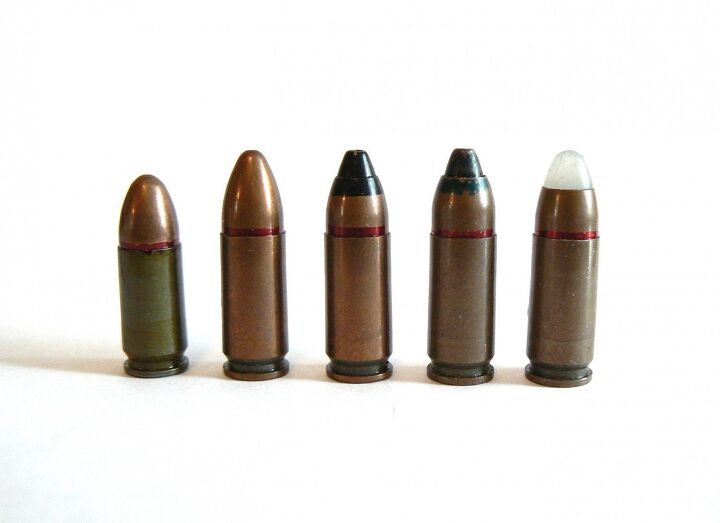
One potential solution to the problem of a suitable anti-armor pistol and submachine gun round is to take the existing ammunition system and introduce one or more new kinds of ammunition which provide additional armor piercing capability through higher muzzle velocity and tougher core material. This is the route taken in Russia, where in the mid-1990s was introduced several loads for the Western 9x19mm caliber, as well as a new but fairly conventional round, the 9x21mm, also with optional AP load.

Three major steel-cored AP loads exist: In the 9x19mm, there is the 7N21, launching an 82gr bullet at a little over 1,500 ft/s. Also in 9x19mm, the 7N31, which launches a 65gr bullet at nearly 2,000 ft/s. In 9x21mm, the 7N29 which loads a 103gr bullet at about 1,350 ft/s. These three loads give us a very convenient cross-section of the ballistic possibilities for full-caliber 9mm AP rounds, so let’s take a look at how they perform:


Because of their lightweight bullets, these rounds also weigh less than standard 9mm. 9x19mm 7N21 AP weighs 9.3 grams per shot, the 7N31 8.3 grams, and the 9x21mm 7N29 weighs 11 grams.
The primary advantage of these AP loads is their low round weight relative to regular 9x19mm, good ammunition size and characteristics for use with pistols, relative to 5.7x28mm and 4.6x30mm, and backwards-compatibility with existing platforms, which also allows the use of proven JHP projectiles for use against soft targets.
The primary downsides are poor energy retention vs. 9mm ball, and poor armor piercing capability beyond 50m versus the 5.7x28mm and similar rounds. Recoil, as we’ll see later, sits in-between 9mm ball and 5.7x28mm. Therefore, I feel that this sort of ammunition should only be considered if armor-piercing capability is needed primarily in the pistol and machine pistol, and not if the round is also intended to defeat armor at ranges beyond 50m when used with carbines and submachine guns.
Nathaniel is a history enthusiast and firearms hobbyist whose primary interest lies in military small arms technological developments beginning with the smokeless powder era. He can be reached via email at nathaniel.f@staff.thefirearmblog.com.
More by Nathaniel F


Comments
Join the conversation
Will we see also the 6.5CBJ?
7 Penna?
Generally I believe in straight walled pistol cartridges, even for AP; more tail cross section to soak up energy off of the propellant gas molecules inside the barrel hole.
All else being equal though esp. pressure and bullet weight, I think a narrower bore/projectile will give less peak recoil. So if absolutely trying to squeeze out a little more ME at a given level of controllability, bottlenecks could still make sense. Maybe.