TFB Review: Is the SG Timer 2 Worth the Cash?


Eric B. already ran a solid first look at the Shooters Global SG Timer 2 last year, so this isn't going to be just a rehash of his review, although I largely agree with most of his initial assessment of the timer. After spending real time with it over the last couple of months, especially through the Drills Application and its Shotisize AI shot-analyzing client, what stands out to me is less about the hardware and more about how much of a system you're actually buying into. That's what I want to focus on here.
As someone who has been shooting competitively for virtually all of my adult life, I've used a lot of shot timers over the years, and the SG Timer 2 is one of the most feature-dense options on the market right now, which seems to be the direction that a lot of shooting peripherals are taking. In terms of overall build quality, I'd put it right alongside something like the Kestrel KST1000. Similar premium feel, similar price bracket, but with a major key difference - the software that pairs with it.
More from Shooters Global @ TFB:

On the Range
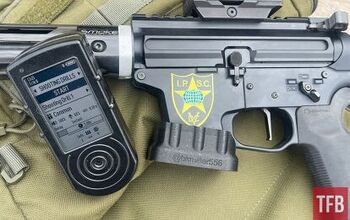
As an actual shot timer and given its rather ritzy price, this thing, naturally, works, and it works well. The first thing you'll notice is the beeper. It is loud. Like, no excuses, you will hear it on a busy range. That alone sets it apart from a lot of mid-tier timers from ages past, where I’d often struggle to hear the buzzer go off amongst the rest of the background range noise.

Shot detection is also very tunable. Similar to the shot timer I’ve been running for the past year and a half, the KST1000, you can dial the shot detection in pretty precisely for your environment, which is great outdoors or when running suppressed. Where things get a little mixed is indoor or dry fire use. Like most timers in this category, it can struggle once you're dealing with echo and other shooters nearby. Dry fire is usable, but expect false positives, gear shifting, holstering, all the usual culprits. That's not unique to this timer (the KST1000 has the same issue but seems less sensitive to holster noise), but it's still worth mentioning if that's something you care about. I typically don’t dry fire under a timer very often.

The integration with the application means you can take some of the drills from the app itself, and then “forward” or transfer them to the shot timer. This basically allows you to keep your phone, which can be a distraction or a burden, in your range bag while you focus on your training. If the shot timer is still connected to your phone during this process, it’ll automatically transfer your runs to your phone and sync them to your account and profile for performance tracking. If you film your runs, or your dry fire, it’ll record those inside the gallery for you to export later, with or without the SG overlay. In fact, the application syncs a lot of stuff every time it connects your timer to your phone, as seen below.
Peripherals & Their Software
This is where the SG Timer 2 separates itself from the regular shot timer crowd and where my eyes start to glaze over. There's a ton of functionality here: profiles, presets, shot logging, app control, online features, you name it, and all of that is tied to an account that will inevitably send you more marketing emails and likely cost you a dozen dollars a month in subscription fees you’ll probably forget about sooner rather than later. The app also allows you to synchronize the beep from your timer with any connected Bluetooth hearing protection.


Here's the thing though, Shooters Global has done things correctly in my opinion. Compared to something like the Kestrel KST1000, which is my current gold standard, the SG Timer 2's simple, no-app functions are basically the same. You still get a beep, adjustable sensitivity, split times, and par timers right on the device, a backlit display, and durable construction to boot. The KST1000 mostly treats its companion app as a utility, something you open occasionally to push a firmware update and otherwise stays out of your way.

The SG Timer 2 has all of that too, standard, out of the box. What it also has is a much larger layer of features stacked on top when it's paired with the app, some of which live on the timer, some of which live only in the Drills app, and some of which only make sense when you're using both together. That's where the complexity actually comes from. It's not that the core timer is hard to use. It's that figuring out what lives where, and whether you even need it, takes some time. One important example here is its integration with the Shotisize Feature, which allows the shot detection to work directly with your phone’s camera and the shot timer rather than the AI, which means you’ll spend a lot less time hunting around inside of the footage to delete errant shot detections.

For some shooters, especially those reviewing their performance or sharing their stuff online, that's awesome. For others, it's going to feel like overkill. I'll be honest, I land closer to the second camp. I’m no stranger to posting what I do online, but I'd rather have the core function of the timer be to do its job and treat the app as a completely optional addition rather than load-bearing software for the system. The SG Timer 2 politely asks you to consider engaging with a bigger ecosystem to get the true full value out of what you paid for, but to keep that up, it also requires a subscription. You get way more in here than is even useful for just pistol shooting; the app even has digital DOPE cards if you need them.

The “Average” Shooter
I think, even when compared to more affordable options, the SG Timer 2 really has earned its price tag (at least for me) in solo or small group training or competition. It's one of the handiest and most durable timers I've used in that context, even when compared to the more ruggedly designed Kestrel option. The magnetic belt clip, although still a novelty feature for a shot timer, is probably still one of the cooler things about it. If you’ve got the scratch, I think either of the two top-tier timers, SG Timer 2 included, is an easy recommendation if you appreciate a quality-built product that does what it says on the box.

If you're the kind of shooter who likes tracking progress, reviewing video, and refining drills over time, there’s even more incentive to add the SG Timer 2 to your training gear. If you just want a beep and split times, it's probably more than you need. I compete a fair bit, and I definitely don’t feel like I’m using “all” of the features, and that's fine, especially if your shooting proclivities change from time to time as mine do.

However, if all of this sounds like more timer than you're after, you've still got options. The Kestrel KST1000 is the closest comparison in terms of build quality, but it keeps the app in a pure supporting role rather than a core part of the experience and tends to appeal more towards those who want dead simple durability and reliability, along with some adjustability. I have yet to need a single firmware update since I’ve owned it, and I doubt I’ll ever need or remember to download one anyway. Meanwhile, there have been at least two distinct firmware updates for the SG Timer 2, both of which downloaded and installed without hassle through the mobile application.

If you want to go even more basic and save some money, the humble CED7000 has been a staple in USPSA and IPSC circles for years and still gets the job done with zero app involvement at all. Finally, the AMG Lab Commander has Bluetooth capability, but no app support and still runs on regular AAA batteries. There are also a handful of decent phone apps out there for shooters who just want something functional and don't want to spend real money on a dedicated timer. None of these match the SG Timer 2 feature for feature, but that's kind of the point. Sometimes less connectivity and a lower price tag is exactly what you're after.

Finally, there's no getting around it. This is an expensive timer. Much like the KST1000 we’ve been mentioning throughout this article, the hardware contained inside of these highly advanced and truly modern shot timers alone, I think, justify the price when you compare it to other options on the market that hover around the $150+ range. Again, Eric's original review already made a strong case for that. Where I'd add a caveat is the app situation. The subscription model (~$5 a month) does take a bit of the appeal away for me, especially if you're only planning to use the timer's basic functions and don't care about the extras like me or only want one single feature from the application itself that’s behind a paywall that contains much more.

Final Thoughts
The SG Timer 2 is one of the most (if not the most) capable shot timers out there right now, especially if you're willing to lean into everything it offers. It's powerful, flexible, and integrates well with tools like Shotisize, but it also asks more from the user than most timers do, and if you’re the type of person who has trouble attaching things to emails, you should probably steer clear of this one and opt for something much simpler (and more affordable). Even for those of us who are more tech-savvy, there's a learning curve, and there's a bigger ecosystem to buy into than the hardware alone suggests. I’ve been using the SG Timer 2 and Drills app combo for a few months now, and I still think I have much to discover within the phone application and the timer itself.

Either way, as has already been said several times by other writers here at TFB, this is a perfectly capable, genuinely handy shot timer, and if you're going to spend the money, it's the kind of "buy once, cry once" purchase that should serve you well for a long time.
Reloader SCSA Competitor Certified Pilot Currently able to pass himself off as the second cousin twice removed of Joe Flanigan. Instagram: https://www.instagram.com/ballisticaviation/
More by Luke C.




Comments
Join the conversation
It’ll match that goofy yellow Beretta APX shown last weekend.