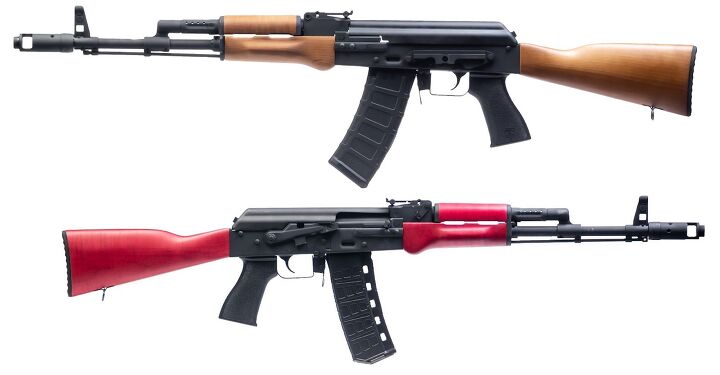
#5.45x39
The Soviet AK-74 Inspiration

The U.S. Small Caliber High Velocity concept started in 1950 with a study, then evolved into testing and evaluation. By the late 1950s, they discussed a .22 caliber rifle with respectable accuracy at 300 yards. The Army Infantry Board brought Armalite’s Eugene Stoner, designer of the AR-10, who impressed the board in 1956. They showed him the ballistic research and asked him to scale the rifle down for an experimental .22 cartridge. This evolved into the .223 cartridge, which emerged when the AR-10 was scaled down into the AR-15 in 1957. Typical engagement ranges from the last several wars led to the conclusion that engagement typically took place within 300 yards.

The AK-12 Plus - An Ambitious Attempt to Push an AK Beyond Its Limits

A recent development unveiled by Kalashnikov.ru was the Kalashnikov Concern's “AK-12 Plus,” a revealing example of how Russian ambitions to increase the effective range of their current assault rifle designs are driven by a realization of the need for improved accuracy and increased range without changing to a larger caliber quite yet. Presented as a “Plus” configuration package, the concept was intended to turn the standard AK-12 into something far more specialized than a conventional infantry rifle. Yuri Trutnev, the deputy prime minister of the russian federation, requested this program.
Inside Russia's RPL-20 Machine Gun
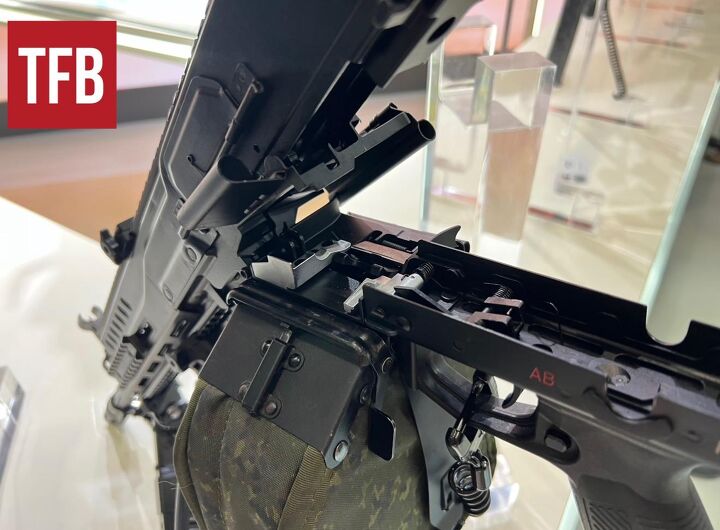
The RPL-20 follows typical Kalashnikov design trends but features a unique bottom-feed tray cover arrangement rather than a conventional top-feed tray cover. The weapon is chambered in 5.45x39, a cartridge well known for its relatively mild recoil impulse and soft shooting. When paired with the RPL-20’s overall weight and operating system, the result is a firing impulse that appears unusually smooth. In the video, the recoil impulse appears consistent with a rearward push, similar to a constant-recoil system. However, it is unlikely that the RPL-20 employs a true constant recoil in the technical sense for such a short receiver.
Hidden in Plain Sight - Russia’s Unidentified LMG
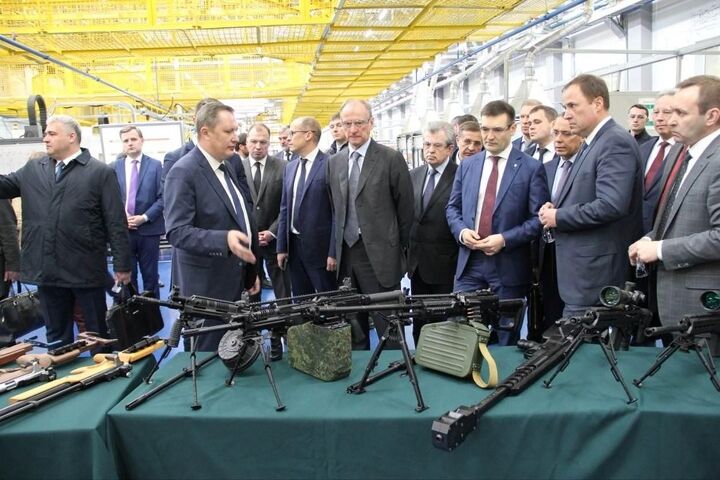
In 2019, the Russian news agency RG.RU released a photo of several new products from Kalashnikov Concern. The weapons were displayed during a visit by Nikolai Patrushev, Secretary of the Security Council of the Russian Federation, where the diversification and reduction of the military-industrial complex were among the topics discussed. The image showed several different weapons, including the RPK-16, an early prototype of the RPL-20, the 12.7x10⁸/12.7x99 SV-18 large-caliber sniper rifle, and a pair of SVCh sniper rifles in different flavors. In the center of the photo sat a unique-looking light machine gun that had not yet been publicly identified. To this day, its designation has not been officially released to the public, and details about the weapon and the program behind it remain behind closed doors.
The New Russian OTs-142 5.45 Belt Fed LMG

What we can do is assemble the clearest picture available: the OTs-142 appears to be a compact, squad-level belt-fed support weapon in the same family of experiments that produced the OTs-124 and OTs-128 (the Alatau-family projects which I covered earlier), where designers at TsKIB SOO and related Tula bureaus have been rethinking how to deliver automatic fire with modern ergonomics and unusual feed arrangements.
The Russian SAW - The Kord 5.45 Light Assault Machine Gun
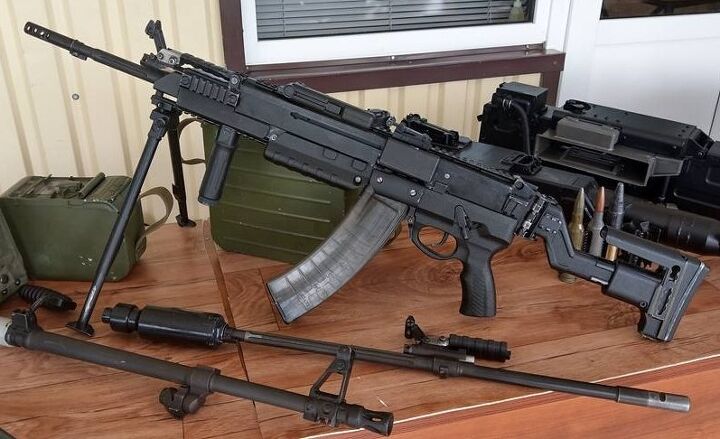
In December 2010, the Russian Ministry of Internal Affairs initiated the Tokar research and development program, followed by Tokar-2 in 2016, to create a 5.45mm light assault machine gun. This initiative was likely influenced by the capture of IWI Negev light machine guns from the Georgian Army during the 2008 Russo-Georgian War. One of the primary requirements for the Tokar-2 was to integrate a dual or combined feed system that would utilize both a magazine and a belt. JSC "V.A. Degtyarev Plant" (ZID) developed the Kord 5.45 light machine gun.
Possible Future For Russian Ammunition - Lightweight 5.45

As ammunition development progresses, various approaches are being explored. Some manufacturers focus on creating stronger cartridge cases to achieve the necessary pressure for lobbing projectiles at adversaries. Others prioritize making ammunition lighter, making it easier for soldiers, simplifying logistics, and reducing costs. This weight reduction benefits military operations and presents significant economic advantages for taxpayers, fostering optimism about the new designs and their potential to revolutionize the defense industry.
The Russian RPL-20 Light Machine Gun
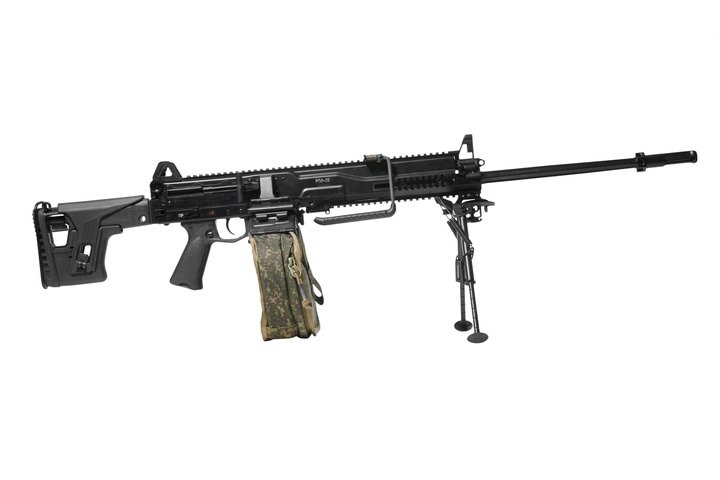
The RPL-20, a lightweight, belt-fed machine gun, is a testament to Russia's renewed interest in earlier Soviet technological innovations. The history of belt-fed light machine guns at the Kalashnikov Concern can be traced back to 1971 with the introduction of models such as the PU, PU-2, and PU-21. Drawing inspiration from the Belgian Minimi, these earlier models aimed to increase the RPK’s firepower. However, the dual-feed system has since been eliminated, simplifying manufacturing and enhancing the weapon's reliability. The RPL-20, with its lightweight design, is a promising addition to this lineage.