#**


"Why Didn't He Design Anything Else?" Looking at Mikhail Kalashnikov's Forgotten Firearms Portfolio

Last weekend, I took the major arguments of Kalashnikov conspiracy theorists head on, and one of those – which I hear rather frequently – is why he did not design any other weapons besides the AK-47.
What's Wrong with Lever Guns?

Imagine an alternate universe in which Hollywood has spent decades making genre movies in which every single main character uses a Borchardt C93, and now factories are cranking out almost nothing but cast steel facsimiles of Borchardts to meet the demand based entirely on these movies. All other semiauto pistol designs never took off in sales and remained curios with the exception of the Roth-Steyr M1907 which had a production run of about a million units over a century, and which hasn’t been made since 1997. The other exception is the Gabbett-Fairfax Mars, which remains in limited production and is used only where people need more power than 7.65mm Borchardt.
Where to Draw the Line? Managing the Weight of Next Generation Universal Calibers Using a Weight Calculator
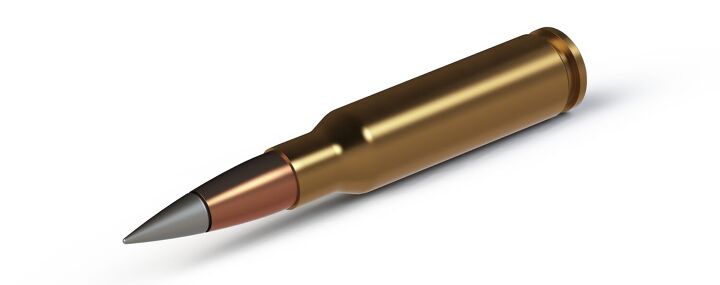
How can one balance the trade-offs inherent in ammunition design to create a true one-caliber infantry weapon system that is both effective and lightweight? This is a question I’ve been exploring for close to a decade, and writing about for over four years. The question is extremely compelling to me because so much is demanded of the answer: Unlike with two-caliber systems, all the needs of the infantry must be met with one single caliber configuration, so each and every dimension must be carefully measured to allow the lowest possible weight, which is arguably the most important single characteristic of small arms ammunition.
Lightning Review: Sticky Holster LG-2 for Glock 19 (and Other Pistols) – The Best "Universal" Holster There Is?

The Glock 19, along with its close clones and equivalents, is in my opinion the ideal “universal” civilian pistol. Small enough to carry concealed, but large enough to shoot well, the Glock can serve equally well as an every day carry gun or as a home protection tool. These features, plus Glock’s reputation for reliability and durability, as well as the company’s nigh indestructible magazine pattern make the Glock 19 my default recommendation for anyone looking for their first “jack of all trades” pistol.
BREAKING NEWS: Liberty Ammunition LOSES M855A1 EPR Appeals Lawsuit in Federal Claims Court, US Army CLEARED

The United States government has won a major firearms-related victory in Federal appeals court today, regarding claims of patent infringement by Liberty Ammunition, LLC. Liberty had claimed that the US Army’s M855A1 EPR and M80A1 EPR projectiles infringed on its patent, US 7,748,325 for a multi-piece construction projectile. The claims court this case was submitted to ruled in favor of Liberty, but today that decision has been overturned by the Federal appeals court, which is the “final word” on the case (unless it somehow gets taken to the Supreme Court, an unlikely event).
Modern Intermediate Full Power Calibers 018: The 7.62x54mmR Russian
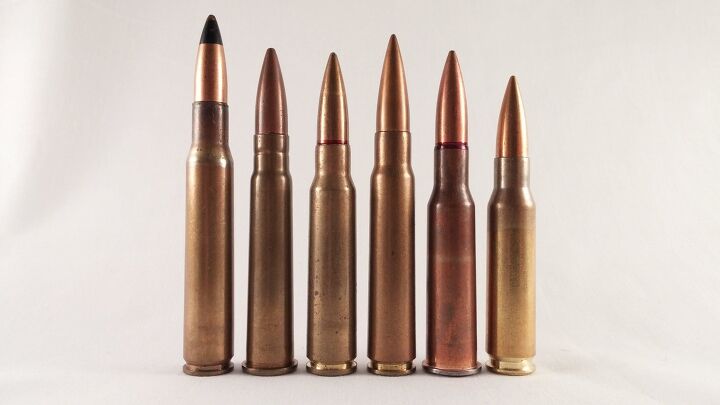
Modern? Sure, but let’s take a step back… Way back. It’s 1890 and smokeless powder has just been invented. There’s this guy named Rubin going around and spreading the gospel of the small caliber, high velocity .30″ bore round. You’re in Imperial Russia; what’s your country to do to keep up with this new tide of ammunition innovation?
Modern Intermediate Full Power Calibers 015: The 7.62x51mm NATO

Shouldn’t “Modern Full Power Calibers” be its own series? No, because then there would only be two episodes! So instead, we’re rolling today’s two most popular full power .30 cal rounds into the series on intermediates, primarily as comparison pieces. There are really two pieces of information I want to disseminate with this, which are the answers to “how do these full power rounds compare with intermediate calibers?” and “how do they compare against each other?”
Taking a Look Inside the Army's DEVASTATING New M80A1 7.62mm Round

Previously, courtesy of The Wound Channel we got our first looks at the stellar ballistics of the 7.62mm M80A1 EPR round, which proved to combine excellent fragmentation with good armor penetration and barrier blind characteristics, while being extremely consistent. Now, TFB has received ten M80A1 cartridges, so I decided to dissect one of them to take measurements of the new round and its 130gr EPR projectile.
A Ballistic Mystery: Small Calibers Wound Instead of Kill?

Today I want to address something that has come up in small arms ammunition development several times in the past 150 years: The small caliber bullet problem. For the sake of this article, I’ll characterize this problem as a perceived trend recognized on several occasions of small caliber (below 0.277″/7mm) cartridges producing wounds that are ineffective at stopping or killing the enemy.
Ballistics 201: Introducing a New Way of Thinking About Terminal Effectiveness – Force, Energy, and Work

One of the primary focuses of my study of modern small arms has been that of their terminal effectiveness, i.e. their “lethality” or “wounding”, although neither of these latter terms are exactly correct. Over the past several years, I have read a good deal of scientific and medical documents, first hand accounts, and treatises by experts, to come to the opinions I have today about the subject; Opinions which – I should note – are still evolving.
Ballistics 101: What Is Pressure?

In the first article discussing the mechanisms by which a firearm locks its breech, we mentioned briefly two quantities that are important for small arms design: Pressure, and bolt thrust. The latter we’ll discuss in a later installment, but today we’ll discuss pressure, and why it is important for both the downrange performance of a bullet, and the design of a firearm’s mechanism.
Forgotten Franchis: More Obscure Italian Military Automatics
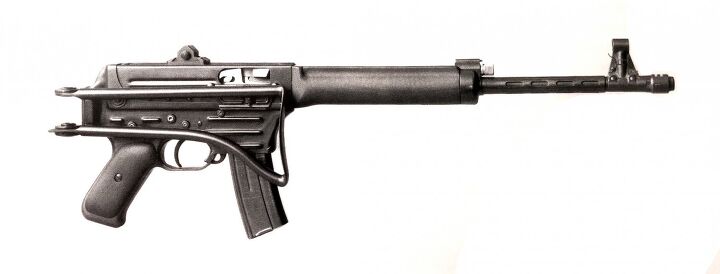
While today the Italian company Franchi is not a heavy-hitting military small arms manufacturer, in the mid-1950s the company did produce some very interesting rifles, carbines, and submachine guns for the military market. The most recognizable of these is the LF-57 submachine gun, a simple blowback submachine gun very similar in design and appearance to the contemporary Walther MPL. Like that weapon, the LF-57 used a heavy, overhanging bolt to control cyclic rate of fire down to about 500 rounds per minute. The LF-57 ultimately wasn’t a huge success for Franchi, and only a few nations (including Italy) bought it.
Is There Room for a Traditional Civilian Semiauto Rifle?

We live in a world today that is completely inundated with AR-15 pattern rifles. In 2016, for just five Benjamins – sometimes even less! – you can purchase your very own fantactical black rifle and rely on it to work when you need to and shoot where you mean to. I won’t try to say otherwise: The AR-15 series is a great design, and it deserves its place at the center of the US civilian market.
Deputy Sheriffs, Lieutenant Colonels, and the Manual Safety: Context and Grey Matter in Pistol Development

Earlier this week, my fellow TFB writer Pete M wrote a post arguing that a manual safety has no place on the modern defensive handgun. I think he’s right for the most part, but I’d like to explore something he didn’t consider.