Fedorov Light Machine Guns
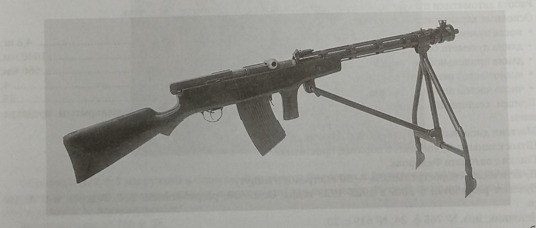
Continuing my coverage of machine guns and automatic rifles, I’ll delve into the history of the Fedorov machine rifle. The 1905 Russo-Japanese War displayed the significance of machine guns, highlighting that a higher volume of fire would pave the way for future weapon developments. In 1905-1906, Vladimir Grigorievich Fedorov developed his first self-loading rifle in 7.62x54. Fast forward to 1913, when he created a semi-automatic self-loading rifle and a new 6.5mm cartridge he designed, which featured improved ballistics but could not be mass-produced due to the outbreak of World War I.
The 1913 pattern rifles modified to use Madsen magazines were employed in the war, chambered in 7.62x54 and issued to a newly formed special rifle company to maximize the effect of the weapon system, similar to what the Germans did in World War II with the inital MP-44 testing and fielding but the Germans had more success. However, the broader Russian military regarded the Fedorov rifles as a remedy for the shortage of light machine guns during the opening stages of the war. However, the Fedorov was not a substitute for a light machine gun.
The Fedorov 1916-pattern rifle was designed to use 6.5x50SR Japanese Arisaka cartridges, which were available to Russia at the time. The Petrograd Cartridge Plant began producing these Japanese cartridges in 1916, and later, they were manufactured at the Podolsk plant. The 6.5mm caliber can be considered an intermediate caliber, unlike the standard 7.62x54. This smaller caliber reduces recoil, resulting in lighter ammunition and a lighter weapon overall. For decision-makers, this translates to lower production costs and fewer materials needed for manufacturing.

During the war in 1915, Fedorov was part of a military-technical delegation that visited allied nations to acquire weapons for the war effort. This delegation examined various foreign weapons, including the French CSRG M1915 Chauchat automatic rifle and its deployment, which inspired him to modernize his design. As a result of this trip, Russia ordered 5,600 French Chauchat automatic rifles, with the first deliveries arriving on January 1, 1917. Fedorov subsequently modified his semi-automatic self-loading rifle into a select-fire automatic rifle, known as the 1916 pattern. However, his work was interrupted in 1917 due to the turmoil following the near collapse of the Russian economy, which the October-November Revolution and the Russian Civil War exacerbated.

The Fedorov assault rifle began production in 1918 for use during the Russian Civil War. However, its innovative design did not gain significant recognition then, and further development was halted. It wasn't until World War II that the true potential of such weapons was realized. Production of the Fedorov assault rifle ended around 1925-1926. Additionally, the production of the 6.5mm Japanese cartridge at the Podolsk plant came to a halt in 1925.

In 1919, following World War I, he began designing a new individual automatic weapon, later recognized as one of the first assault rifles, as it fits the modern criteria. However, 6.5x50SR as an intermediate power cartridge is a stretch. For the period, it fits our modern terminology. The Fedorov assault rifle features a select-fire mechanism and operates with a short-recoil action. It has a locked breech secured by two side-locking plates and fires from a closed bolt. The 1919 pattern also featured a 25-round magazine to give an appropriate amount of ammunition with a select-fire weapon. The 1919 pattern featured a vertical grip to improve ergonomics and controlability and was significantly redesigned to improve reliability and manufacturability.

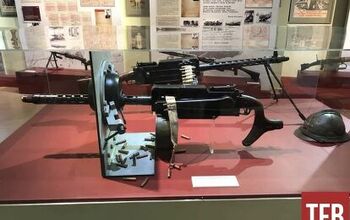
In the early 1920s, Fedorov worked with designers like V. A. Degtyarev to adapt his automatic rifle design into a light machine gun. The weapon already had a 25-round magazine and a select-fire capability. So, methods to improve its automatic capability to increase the volume of fire. First was installing a bipod. This was followed by a Lewis active forced air-cooling system to improve air flow over the barrel with an increased rate of fire. A Maxim water-cooled system was tested to cool the barrel with rapid fire. A version was also developed with a slightly longer, more traditional air-cooled ribbed barrel under a perforated jacket. These were methods to maintain the temperature better, improve barrel life, and prevent cook-offs due to the system using a closed bolt design. One method to increase the weapons capacity was to introduce a 50-round pan magazine. The developments can be seen in features later used in the Degtyarev DP-27 light machine gun.

Between 1920 and 1924, 3,200 1919-pattern Fedorov assault rifles were produced. However, in 1928, the Fedorov assault rifle was unexpectedly withdrawn from service with the Red Army and put into storage.

In the early 1920s, the Red Army had no room to have multiple different cartridges in service; cost and logistics forced the Red Army to select one. Post World War I, Russia had multiple foreign-designed weapons using various types of foreign ammunition, this was an effort to simplify logistics. Standardization in mid-1924 established the Red Army's use of the Russian 7.62x54mm rifle cartridge and the discontinuation of the 6.5mm Japanese cartridge. Using a non-standard cartridge was the reason for terminating the Fedorov rifles' production, though there have been experimental 7.62x54 versions as late as the mid-1920s.


Many early weapon designers were ahead of their time. However, authorities often failed to recognize the significance of their innovations and how to integrate them into military force structures, which required time as methodologies and doctrines evolved. One such designer, Fedorov, played a pivotal role in developing small arms by introducing advanced materials and concepts related to the assault rifle, automatic rifle, and ballistic performance, now known as intermediate caliber weapons. Unfortunately, the military systems of the time were not equipped to fully exploit the advantages of his rifles, which may have led Russia to pursue a different path in small arms development. While the Fedorov served as a light machine gun or automatic rifle, it may not have been the most successful design; nevertheless, it had the potential to be a practical infantry assault rifle if fielded at scale. Although Fedorov's design was not successfully implemented on a large scale, his influence on subsequent designers is immeasurable.

Sources:
https://www.kalashnikov.ru/oruzhie-novogo-tipa-avtomat-fyodorova/
https://www.kalashnikov.ru/dela-ochen-i-ochen-mnogo-zato-dushoj-ya-spokoen/#easy-footnote-17-63053

Lynndon Schooler is an open-source weapons intelligence professional with a background as an infantryman in the US Army. His experience includes working as a gunsmith and production manager in firearm manufacturing, as well as serving as an armorer, consultant, and instructor in nonstandard weapons. His articles have been published in Small Arms Review and the Small Arms Defence Journal. https://www.instagram.com/lynndons
More by Lynndon Schooler




Comments
Join the conversation
I've... never seen a five-legged bipod before.
Good article, love the pics especially the one with the water cooled versions on a rolling carriage. Wonder what those weighed?